
A manufacturer points to a green synthetic web test from 2 a.m. to deny a noon outage reported by the plant floor. What limits how far that green result can be taken?
Select an answer to reveal the explanation.
Short Explanation
A night-watch log that says the gate was quiet does not settle a complaint from noon. You limit the manufacturer's green synthetic result to the schedule the test actually ran. The trap is treating that early result as proof for every real user, as a capture of the database, or as a replacement for a waterfall during the reported outage.
Full Explanation
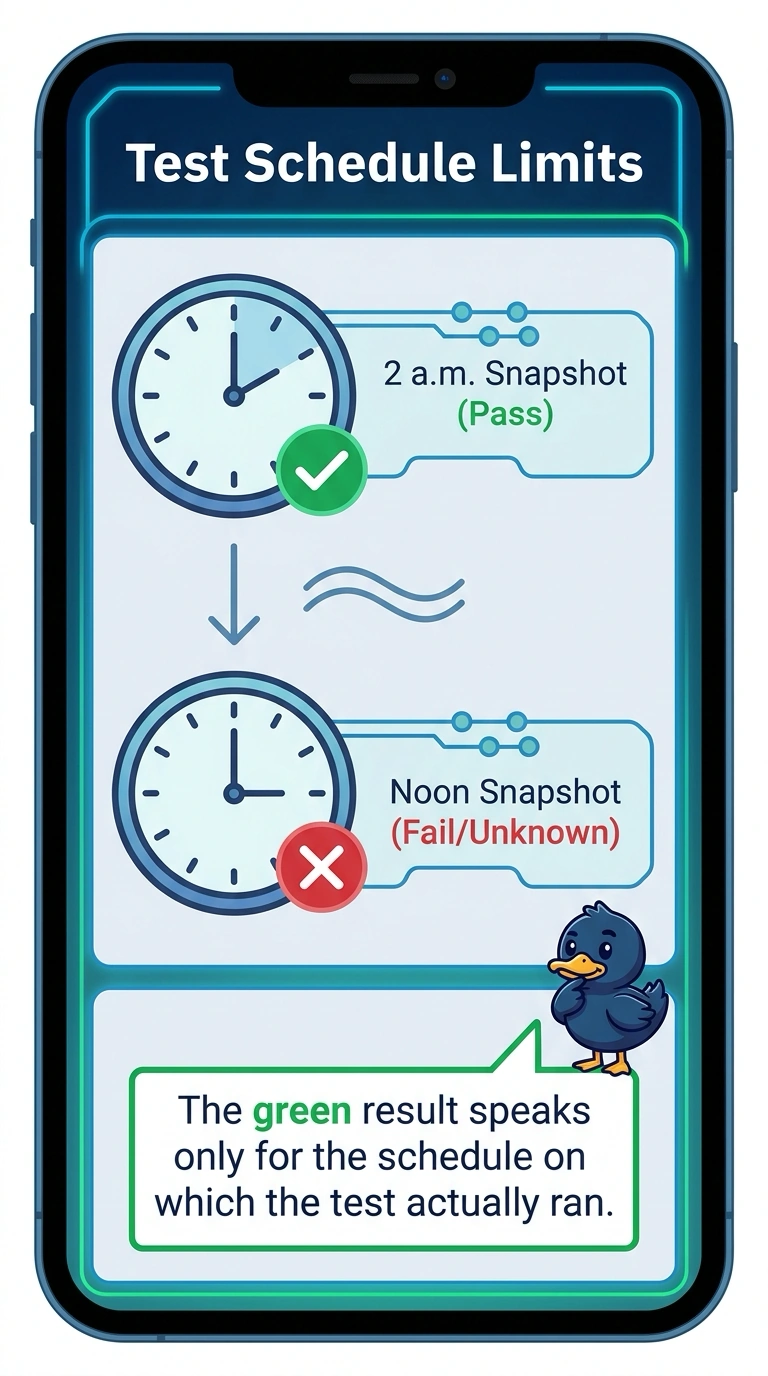
The synthetic test was green at 2 a.m., which describes the manufacturer's application at the time that run executed. The plant-floor outage was reported at noon, a different point on the clock, and a night result does not observe it. The schedule is part of what a synthetic test can show: the green result speaks only for the run that happened, not for every later hour. Treating the 2 a.m. success as proof for every real user, including the noon shift, extends one scripted sample across a part of the day the test did not cover. Treating the test as a packet capture of the plant database mislabels a web transaction; it did not capture database traffic at night, and it certainly did not capture noon. Treating it as a replacement for a browser waterfall on a real client during the noon report swaps away the measurement that would have been taken when the outage was reported. Exam caveat: a synthetic result is timestamped by its schedule, and a green night run cannot deny a noon report. Operational check: read the test's run time, place it next to the noon report, and collect a result from the hours the plant floor actually experienced before you close their outage.