
A bank's synthetic web test logs in with an account that skips a verification step every customer hits, and the test stays green. What limits the claim this green result can support?
Select an answer to reveal the explanation.
Short Explanation
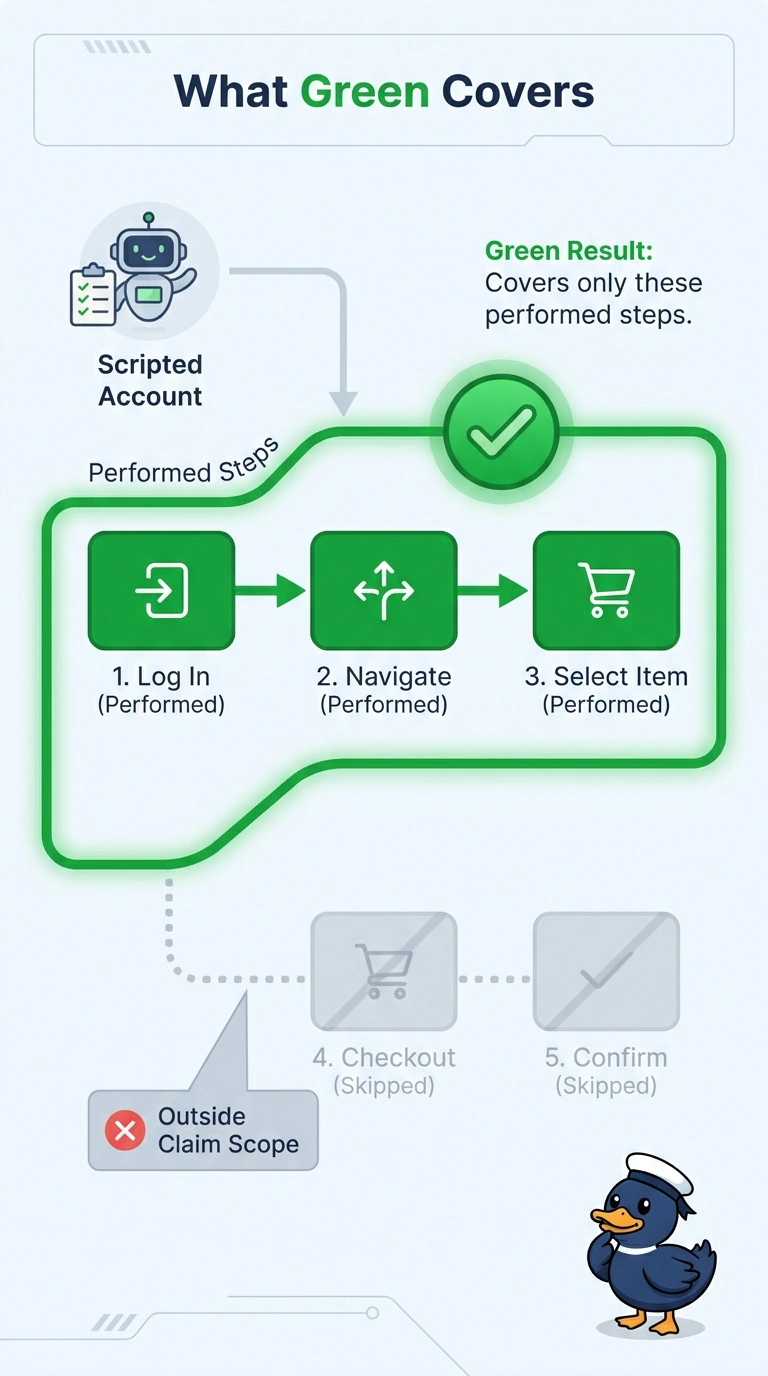
A rehearsal that skips the scene the audience came to see cannot certify the show. You limit the bank's green synthetic result to the steps the script actually runs, because the test account misses a step real customers hit. The trap is treating that result as proof for every real user, as a database packet capture, or as a stand-in for a real-client waterfall.
Full Explanation
The bank's test account walks a shorter journey than a real customer, skipping a verification step every customer hits, and the synthetic run stays green on that shorter path. The script never performed the skipped step, so the green result cannot speak about it. The claim only covers the steps the scripted account actually performs; completeness of the synthetic path is exactly the completeness of the script. Treating the green run as proof that every real customer finishes the journey, including the skipped step, turns a bypass account into the whole customer population. Treating the synthetic test as a packet capture of the banking database invents a measurement the web script does not take; a login transaction is not a capture of database traffic, and it does not make the skipped step visible. Treating the synthetic test as a replacement for a waterfall on a real customer browser drops the client who actually hits the verification step, which is the waterfall that would show that step. Exam caveat: a synthetic path that omits a real step is silent on that step, and green means the scripted steps succeeded. Operational check: walk the script beside a real customer journey, mark the verification step the account skips, and keep any claim inside the steps that were actually executed.