
On event days, a stadium hears application complaints that follow one guest from the seat to the concourse and stop when that person leaves. Which test should the team run?
Select an answer to reveal the explanation.
Short Explanation
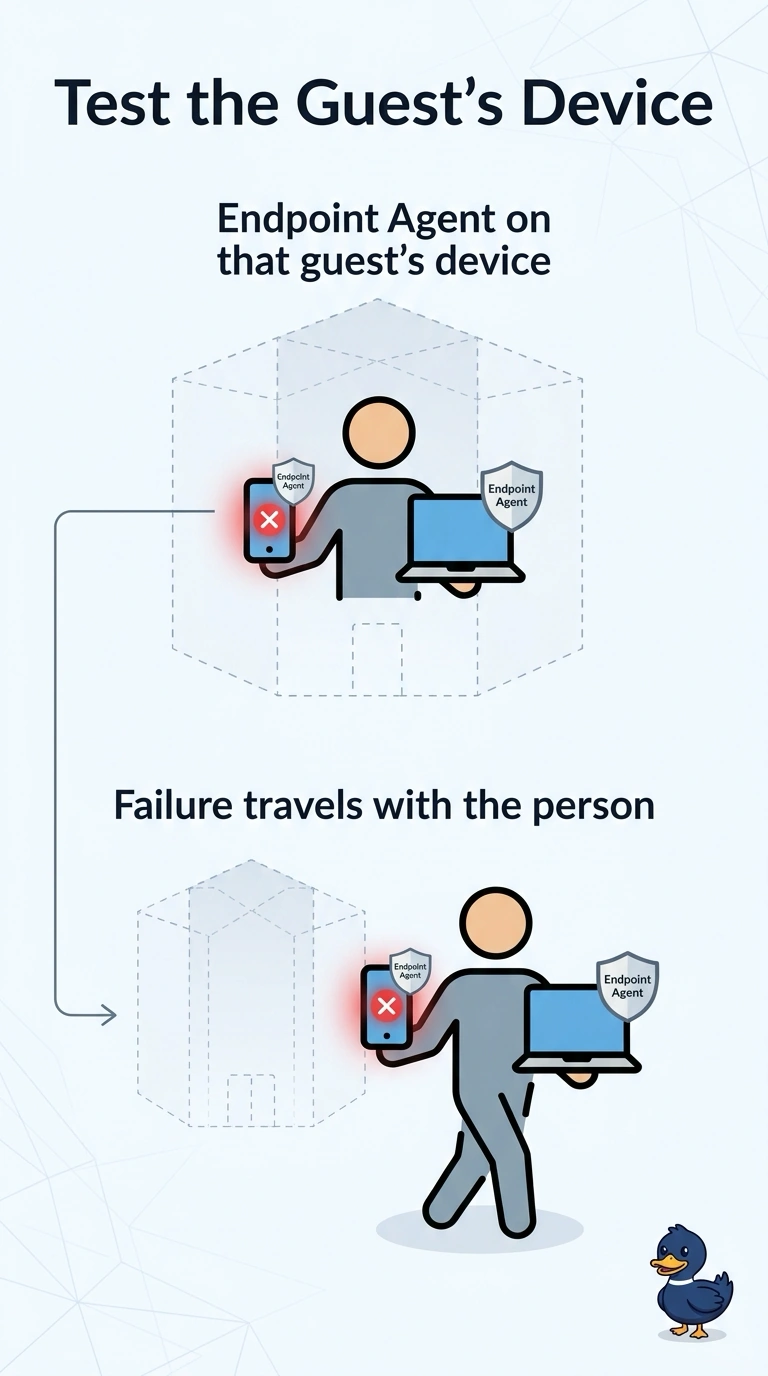
When the complaint walks out the gate with one guest, you test that guest's device. You run an Endpoint Agent test on the device the failure travels with, rather than on the building. A data-center Enterprise Agent, a cloud DNS probe, or a server page-load stays behind when the guest leaves.
Full Explanation
The complaints follow one guest from the seat to the concourse and end when that person leaves, so the fault is tied to the user device rather than to a place in the stadium. An Endpoint Agent test on that guest's device measures the path, the local network, and the application experience from the endpoint that moves with the failure. An Enterprise Agent in the data center that remains inside the stadium keeps testing one fixed location and will not reproduce a problem that departs with the guest. A DNS test from a cloud probe that does not move when the guest changes seats checks a resolver that is neither on the guest device nor on the guest's changing local network. A page-load test on a server that does not run on the guest device at the event loads the page from a host that never experienced the complaint. Exam caveat: a failure that moves with a person is an endpoint problem even when it is noticed inside a large venue. Operational check: run the endpoint test on the complaining guest's device, then note whether the failure continues after that person changes location and stops after they leave.