
Branch stores of a retailer are slow, and routing data shows the service prefix originated by an unexpected network. What should the team name as the cause of the slowness?
Select an answer to reveal the explanation.
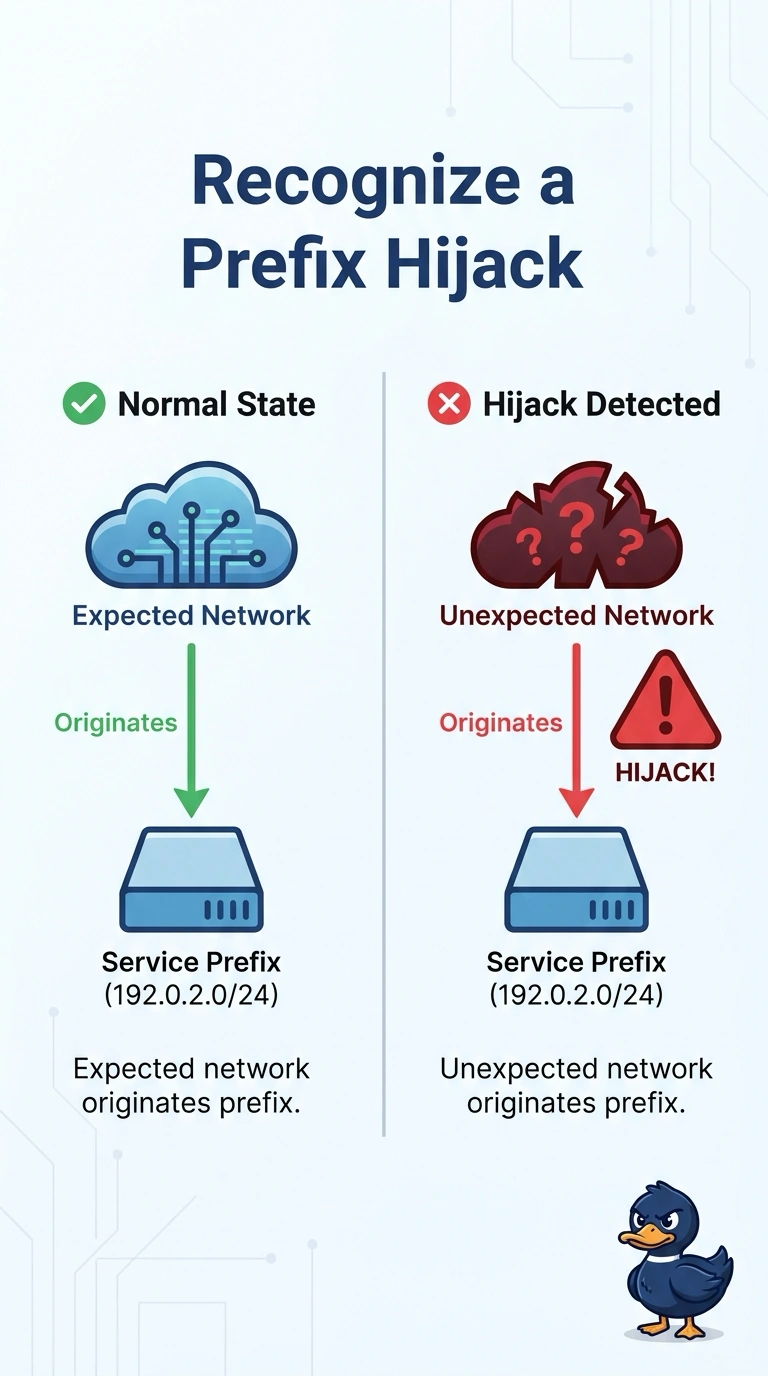
Short Explanation
If the lights flicker because someone else claimed your address, you name that claim instead of remodeling the shop. Branch slowness lines up with an unexpected network originating the service prefix, so the cause to name is the hijack. The trap is adding bandwidth, retuning QoS, or replacing store laptops while the routing evidence says the prefix was taken.
Full Explanation
Users at the branch stores are slow, and the routing evidence says the service prefix is originated by an unexpected network. That origin is a hijack, and it is the cause to name: traffic for the prefix is being attracted to a network that should not originate it, which is enough to explain the slowness. Too little bandwidth at the branches, to be fixed by larger circuits despite the unexpected origin, treats a route origin change as a local capacity shortage and leaves the hijack in place. A QoS policy on the branch routers that should be retuned during the slow period reorders local queues and does not restore the rightful origin of the prefix. Store laptops that should be replaced because users felt the slowness blame endpoints that did not originate the prefix and that would still be slow while the hijack remains. Exam caveat: slowness plus an unexpected origin is a hijack finding, and the slowness does not demote the origin change into a bandwidth or QoS story. Operational check: set the unexpected originating network next to the branch slowness window and confirm they coincide, then track the prefix back to the expected origin before any circuit upgrade, QoS edit, or laptop replacement.