
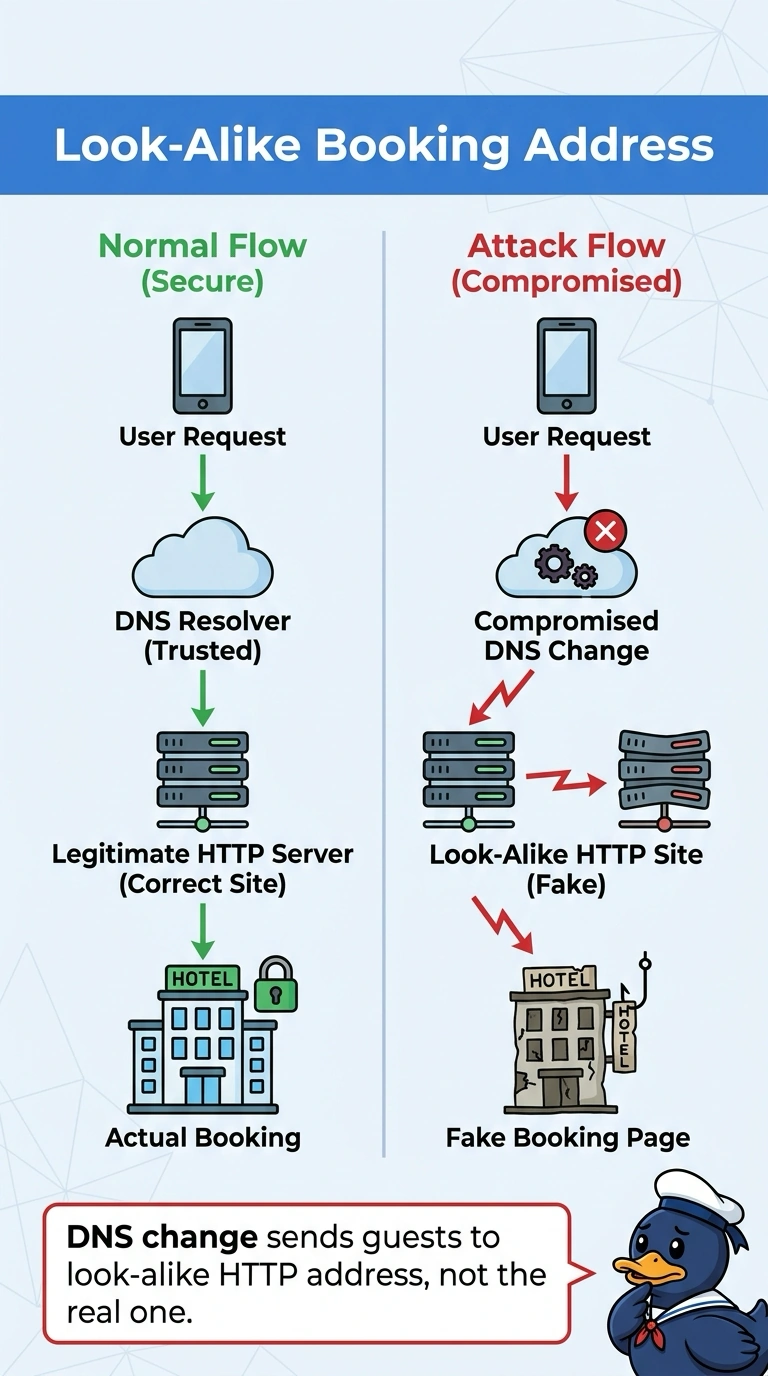
Hotel guests who request the chain booking name are sent to a look-alike address that still answers HTTP, while other names resolve as usual. Which response fits that evidence?
Select an answer to reveal the explanation.
Short Explanation
A street sign that points you at a look-alike store is a sign problem, even when that store still opens its doors. Guests who ask for the booking name land on an impostor that answers HTTP, which is a DNS change, not a slow circuit. The trap is buying bandwidth, retuning QoS, or replacing a guest laptop while the name itself is wrong.
Full Explanation
Guests who look up the chain booking name are directed to a look-alike address, and that address still answers HTTP, so the symptom is not a dead server. Other names resolve as usual, which means resolution for this name changed rather than the hotel uplink, the queueing policy, or one laptop. Treating it as a DNS change focuses the work on who is allowed to publish that name and on restoring the expected address. Adding bandwidth on every hotel uplink so the look-alike page feels faster would only help guests reach the impostor more comfortably. Retuning QoS so guest traffic is preferred over other hotel applications reorders local queues and does not correct the name that was returned. Replacing the guest laptop that opened the look-alike page assumes one device is misresolving, which does not fit a pattern that follows the booking name. Exam caveat: a site that still answers HTTP can look like a performance problem if you ignore where the name points. Operational check: compare the address returned for the booking name with the address the chain expects, and confirm other names from the same resolver still return their usual targets.