
A SaaS company finds internal route summaries visible to external peers, and latency for those prefixes collapsed at the same moment. What should analysts name as the cause?
Select an answer to reveal the explanation.
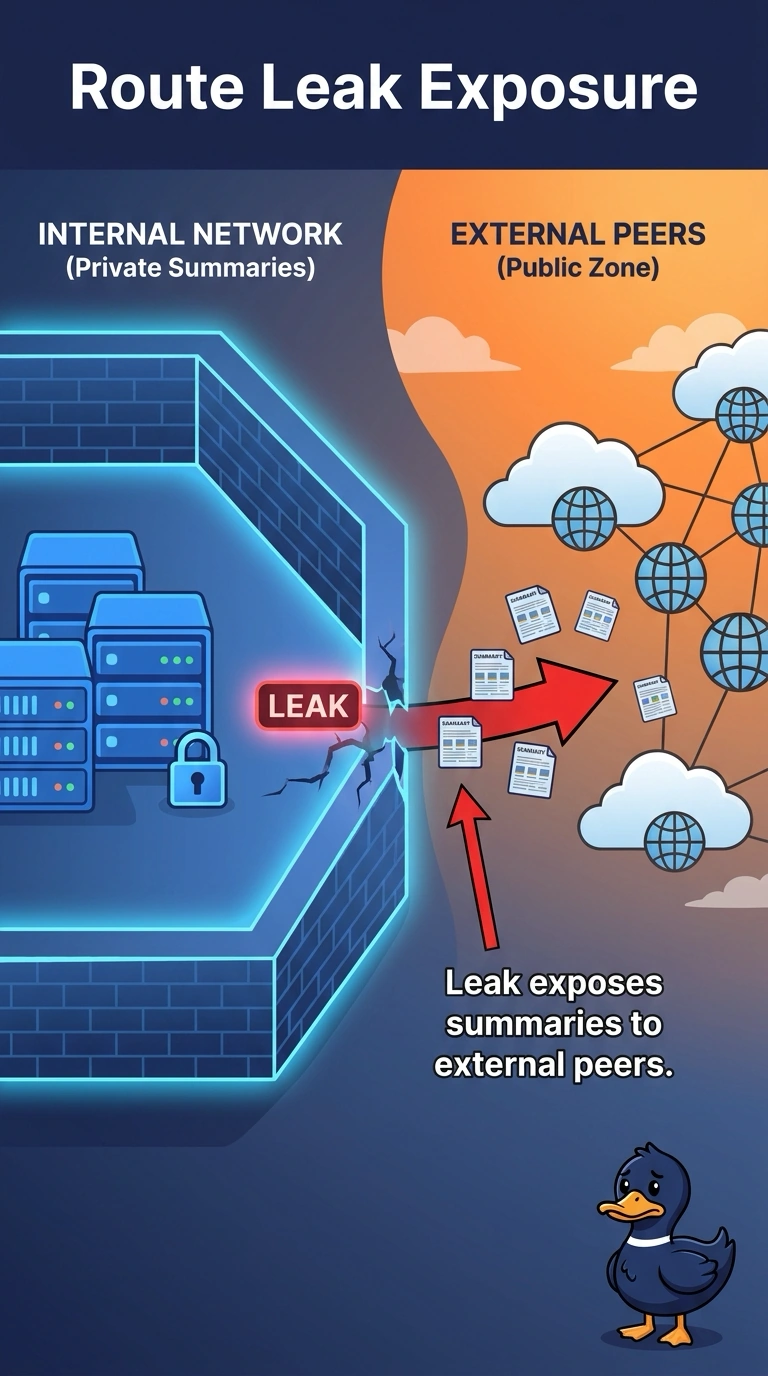
Short Explanation
Finding your internal mail scattered on the public sidewalk explains the mess better than buying a bigger mailbox. Internal summaries showed up to external peers and latency for those prefixes collapsed at the same moment, which is the leak. The trap is upgrading bandwidth, retuning QoS, or replacing a remote laptop for a routing leak.
Full Explanation
Internal route summaries are visible to external peers, and latency for those same prefixes collapsed at that moment. The shared timing identifies a route leak: prefixes that should have stayed internal were advertised outward, and forwarding for them changed as a result. Naming the leak keeps the work on filters, aggregation, and the peer that accepted the routes. A bandwidth shortage on the external circuit where latency for those prefixes changed would be a sustained local-capacity story, and it would not by itself publish internal summaries outside the network. A QoS mismatch on the leaked prefixes that a retune would fix reorders queues and does not stop the advertisement. A remote laptop that should be replaced for the staff who saw the change blames an endpoint for a routing advertisement that laptop did not originate. Exam caveat: a sudden latency collapse on specific prefixes, paired with those prefixes appearing externally, is a leak signature rather than a cue to add bandwidth. Operational check: confirm the leaked summaries are present toward external peers only for the affected window, and that latency for those prefixes moved in that same window and not as a week-long utilization trend.