
A logistics hub saw a route leak for about ten minutes, paths then returned to normal, and a teammate opened a month-long capacity project. Which response fits the evidence?
Select an answer to reveal the explanation.
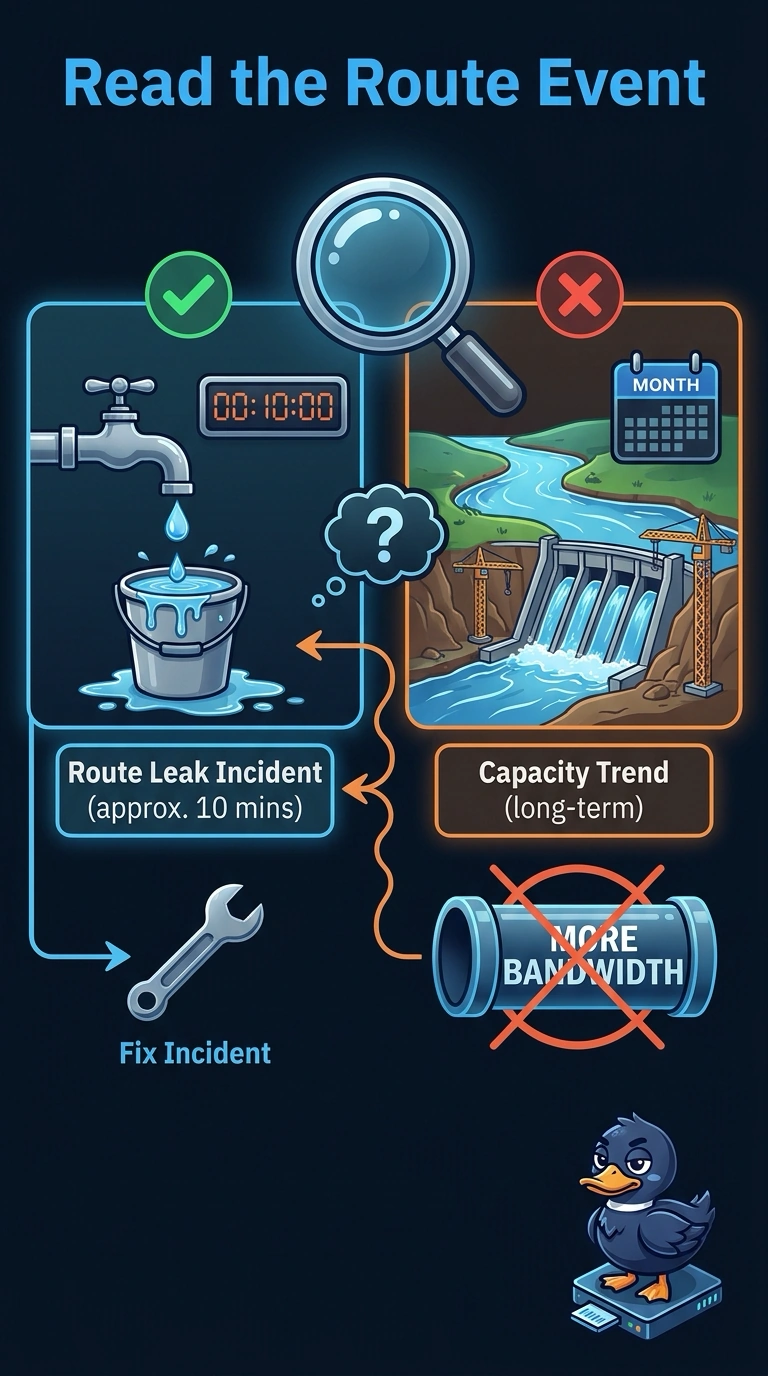
Short Explanation
A ten-minute cloudburst is a poor reason for you to redesign the drains for the whole year. The hub saw a route leak that came and went, so the evidence supports that leak rather than a month-long capacity trend. The trap is adding bandwidth, retuning QoS, or replacing a laptop for a routing event that already ended.
Full Explanation
The observation is a route leak that lasted about ten minutes and then cleared, with paths returning to normal. That is a routing security event with a short lifetime, not a standing shortage of hub capacity. Treating the leak as the incident keeps the response on the unauthorized or unexpected route advertisement and on why it was accepted. Opening a month-long project to add bandwidth at the hub assumes a durable demand problem, which a ten-minute leak does not establish. Retuning QoS so hub traffic outranks the leaked routes rearranges local scheduling and does not withdraw a bad route or explain how the leak was propagated. Replacing the laptop that noticed the short routing change blames the observer. The route data, not the client that displayed it, is what moved and then recovered. Exam caveat: a brief routing exposure can tempt a capacity story if someone looks only at the trouble ticket duration and not at the route returning to normal. Operational check: line up the leak window with interface utilization and confirm the path recovered when the leak ended, before any bandwidth, QoS, or endpoint replacement is approved.