
A manufacturer sees packet loss only toward one anycast site that is under attack, while paths to every other destination stay clean. Which response fits that evidence?
Select an answer to reveal the explanation.
Short Explanation
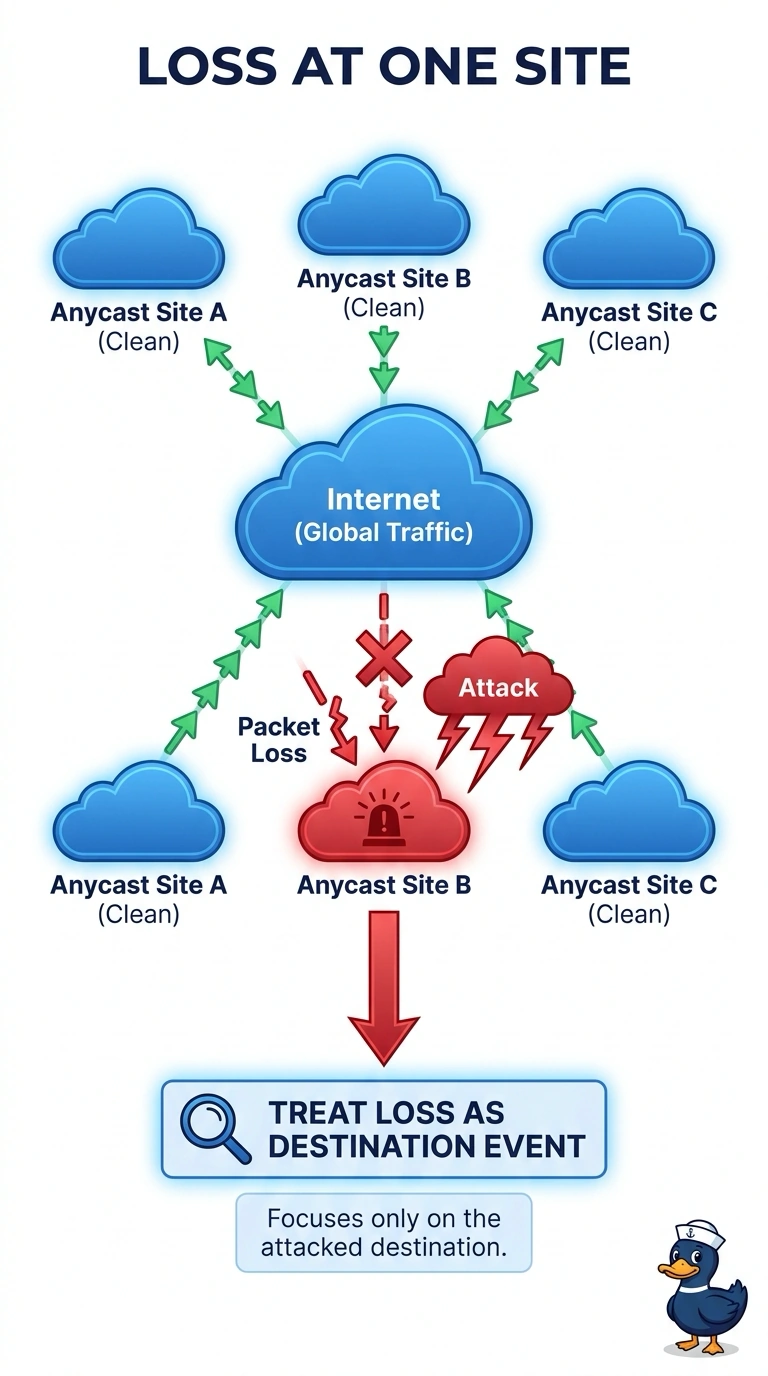
When only one shop on a street is closed, you do not repave the whole town. Loss that appears only toward the attacked anycast site is a destination event, and your other paths staying clean is the clue. The trap is funding bandwidth, a QoS retune, or a new laptop while that one site is under attack.
Full Explanation
Packet loss that shows up toward only one anycast destination, while the same manufacturer site still reaches every other destination cleanly, locates the fault at that destination. An anycast location under attack can drop traffic that arrives there without disturbing the rest of the plant paths. The healthy destinations are the control that rules out a local circuit, a local queue, and a single client. Adding bandwidth on the plant uplink would be the right move if loss were spread across many targets or if the uplink itself were full. Extra local capacity does not restore a remote site that is discarding traffic aimed only at it. Retuning QoS so plant traffic is preferred changes the order of local queues and leaves a destination-side drop untouched. Replacing the laptop that reported the loss assumes one endpoint is defective, yet any client aimed at the attacked site would see the same pattern. Exam caveat: a single-target chart can make a destination event look like ordinary loss, so the scope across destinations is what classifies it. Operational check: from the same agent, compare loss to the attacked anycast site with loss to destinations that are not under attack and confirm the elevation is limited to the attacked site.