
On a hospital campus the application team wants a code rollback, but path measurements show a denial-of-service flood toward the application and the running build is not the source of the loss. Which response fits the evidence?
Select an answer to reveal the explanation.
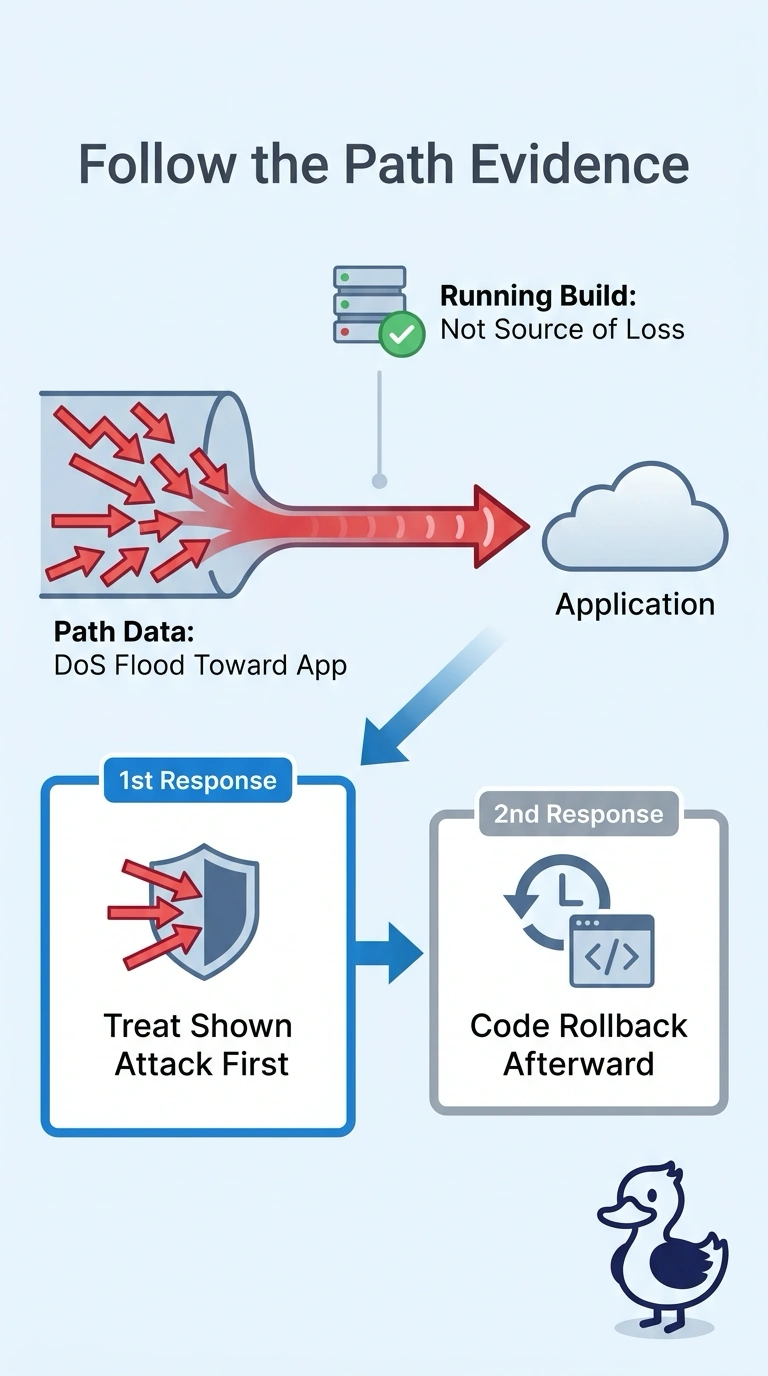
Short Explanation
If the building is on fire, you do not start by repainting the lobby. You treat the attack the hospital path data shows before any application code is rolled back. Extra bandwidth, a higher QoS class, or new clinician laptops do not stop that flood.
Full Explanation
Path measurements that show a denial-of-service flood, with the running build not sourcing the loss, identify a security event rather than a bad release. The response that matches the evidence is to treat that attack before rolling application code back. A rollback would replace a build the data does not implicate, while the flood continues. Adding bandwidth so the path has more room gives the flood a larger pipe and does not remove the attack traffic. Retuning QoS so the clinical application sits in a higher class can prefer some of its packets, and it does not stop the volume aimed at the application. Replacing clinician laptops treats endpoints as the failed component when they are the victims of a path that is being flooded; a new laptop on the same path will fail the same way. Exam caveat: a later finding might still involve the application, but the evidence in hand is the attack, so that event is the work to do now. Operational check: confirm the loss is unsolicited flood traffic toward the application, mitigate that traffic, and only then retest before anyone rolls code back. If the flood is still present, a new build will not restore the service.