
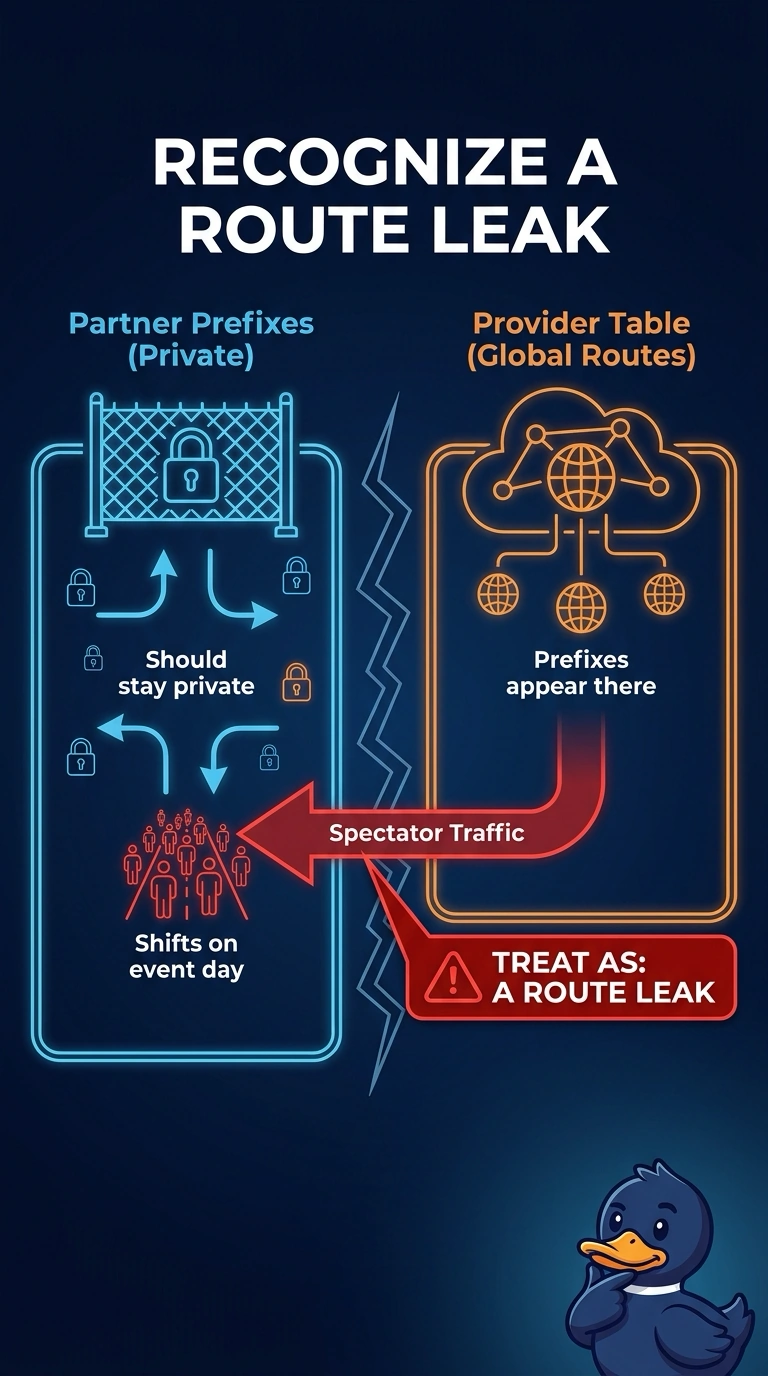
On event day at a stadium, partner prefixes that should stay private show up in the provider routing table and shift spectator traffic. What does that evidence indicate?
Select an answer to reveal the explanation.
Short Explanation
You can think of partner prefixes in the provider routing table as private mail delivered to the public post office. When that happens and spectator traffic shifts, you’re seeing a route leak. More bandwidth, a QoS retune, or replacement concession laptops won’t withdraw those prefixes.
Full Explanation
Prefixes that are supposed to remain with the partner but appear in the provider routing table have been propagated too far. That is a route leak, and it explains why spectator traffic shifts on event day. Buying more Internet bandwidth treats an incorrect route as though the stadium simply needed a larger path; extra capacity does not withdraw prefixes from the provider table. Retuning QoS to prefer the leaked event traffic would prioritize flows that are already going the wrong way, without stopping the provider from carrying the partner routes. Replacing concession laptops assumes the clients chose the wrong destinations. The clients are following routes the provider table is advertising, so replacement laptops would do the same. Exam caveat: confirm that the prefixes belong to the partner and were not intentionally advertised to the provider before treating the event as a leak. Practical check: compare the provider table with the intended export policy, filter the leaked prefixes, and confirm that spectator tests return to the expected destinations. If the prefixes remain in the provider table, bandwidth and endpoint replacement will not restore the path.