
A SaaS company with remote staff sees an unexpected more-specific prefix appear and pull their traffic off the provider path those sessions normally follow. Which conclusion fits the evidence?
Select an answer to reveal the explanation.
Short Explanation
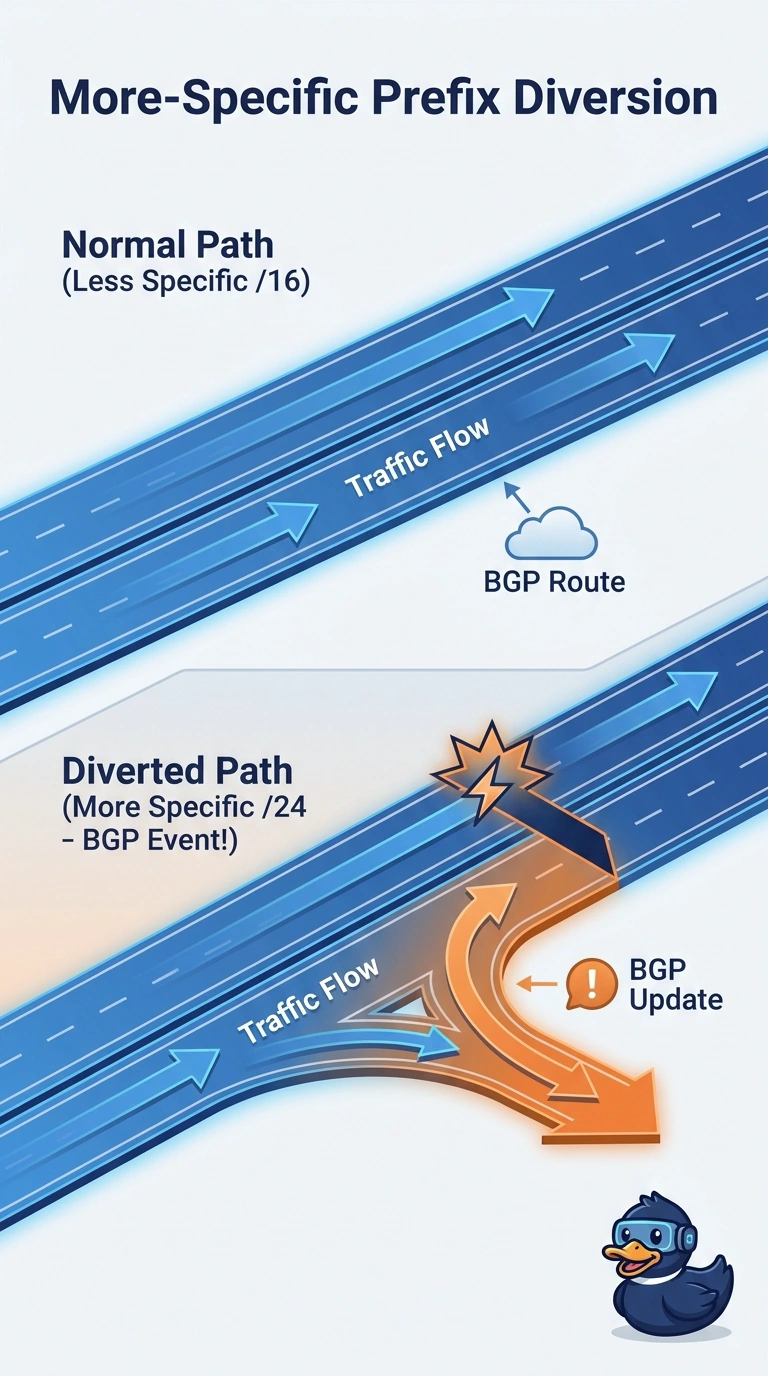
A more-specific road sign can pull drivers off the highway they meant to take. You treat that new prefix as a BGP event that diverted the SaaS company's remote staff. Adding bandwidth, retuning QoS, or replacing laptops does not explain why traffic left the normal path.
Full Explanation
Forwarding follows the longest matching prefix, so an unexpected more-specific prefix can pull sessions off the provider path they normally use. That change in the routing table is a BGP event, and it is the cause visible in the data. Adding bandwidth on the remote-access service assumes the new path is merely a slower version of the intended path. Extra capacity does not restore longest-match forwarding to the prefix that should have carried the traffic. Retuning QoS so the diverted traffic is marked higher changes how packets are queued on the path they have been pulled onto, and it does not remove the more-specific route. Replacing remote laptops blames endpoints for following a route the network advertised to them; every laptop that receives the same route will leave the normal path. Exam caveat: a sanctioned more-specific advertisement from the company's own change can look the same, so confirm the origin is unexpected before calling the event an attack. Operational check: compare the route toward the affected destinations before and after the prefix appeared, and confirm traffic returns to the normal path when that prefix is withdrawn. Until the routing table is corrected, bandwidth and endpoint swaps miss the cause.