
On event days at a stadium, the browser waterfall shows the document finishing quickly, then a late request that repaints the page long after that document. Which conclusion fits this waterfall?
Select an answer to reveal the explanation.
Short Explanation
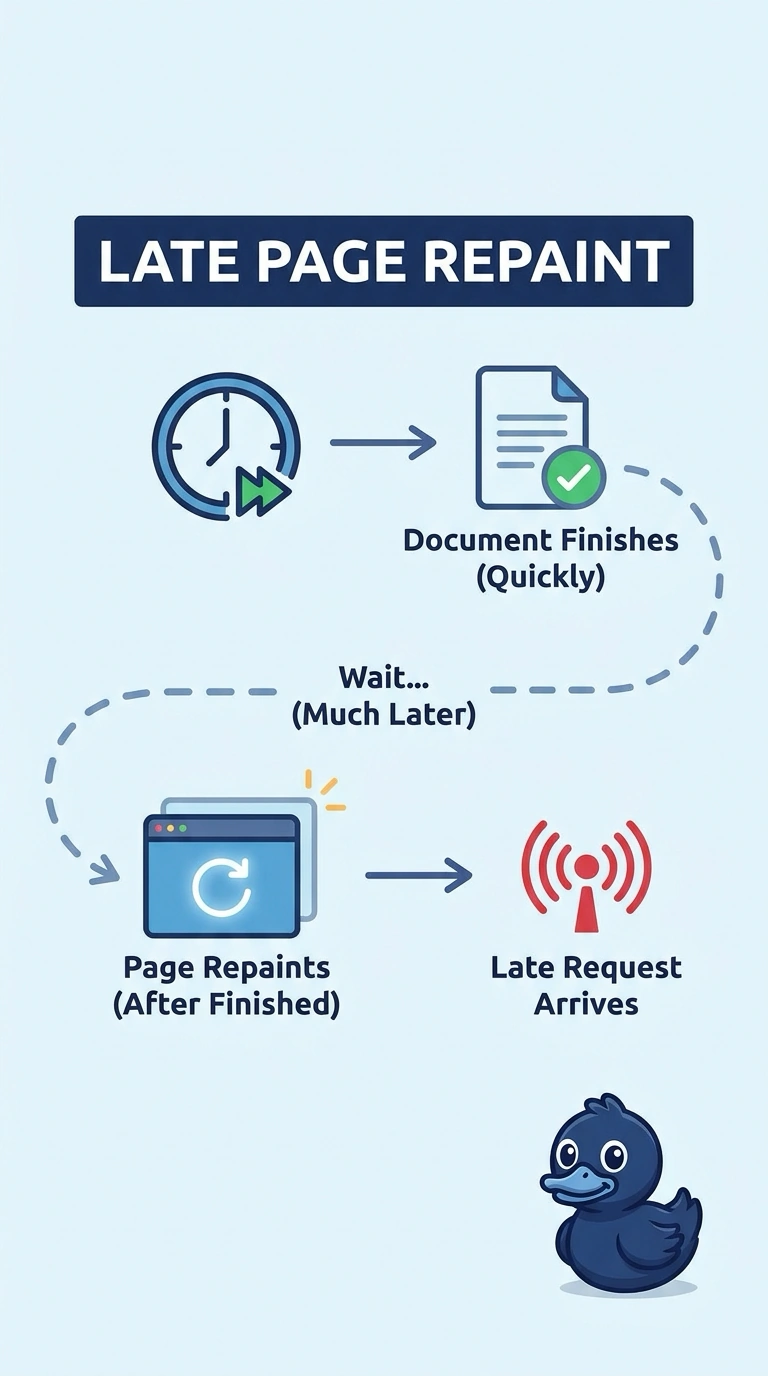
The menu can hit the table quickly while the kitchen ticket that changes the plate is still in the pass. You investigate the late request that repaints the stadium page after the document has already finished. The trap is a WAN loss alarm, a DNS hijack, or a QoS change when that late request is what the waterfall shows.
Full Explanation
The stadium document finishes quickly, which means the browser received the page itself without a long wait, and a later request then repaints what the visitor sees. The waterfall isolates that late request as the work that changes the page, so the conclusion follows the bar: investigate the late request, its URL, and why it starts or finishes so far after the document. A WAN loss alarm does not fit a document that arrived promptly; loss after the fact would need loss evidence, and the chart is showing a request that runs late, not a path that dropped the document. A DNS hijack would point the name at an unintended host, but a late repaint request on the event page is a timing and object finding, not a stolen resolution. A QoS change would alter a traffic class for that request, yet the waterfall has already isolated the late bar, and a policy edit is not the reading of a request that simply occurs late and then repaints the page. Exam caveat: a fast document plus a late request means the late request is the object to study, not an automatic loss, hijack, or QoS story. Operational check: identify the late request's URL and start time relative to the document, and confirm the repaint waits on that call before you escalate the stadium path.