
A hospital campus sees traffic toward its public site surge from many sources while real users time out. What should the team conclude from that pattern?
Select an answer to reveal the explanation.
Short Explanation
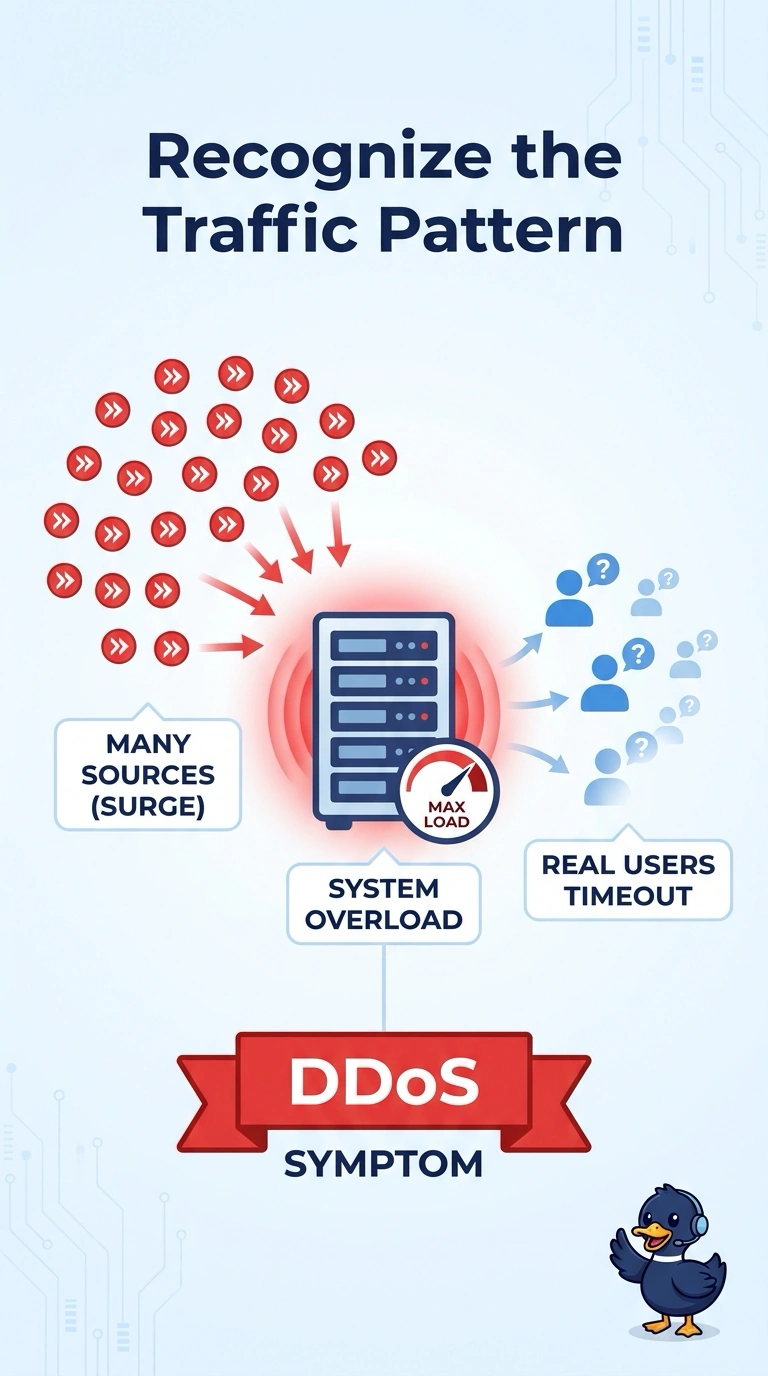
When a crowd rushes one door, swapping the door for a bigger one is not the first lesson. You should read many sources overwhelming the hospital site, with real users timing out, as a distributed denial-of-service symptom. Buying bandwidth, retuning quality of service, or replacing a laptop explains a different problem than the one this traffic shows.
Full Explanation
Traffic that explodes from many sources while real users time out is the shape of a distributed denial-of-service symptom against the public site. The sources are diverse and the impact is on legitimate users of that site, so the first reading is an attack filling the service, not a routine capacity shortfall. Ordering a larger circuit treats the timeouts as ordinary growth. Extra bandwidth may be part of a later response, but it does not explain a sudden surge from many sources, and it is the wrong first conclusion from this evidence. Retuning quality of service only re-marks or re-queues packets. It does not identify who is sending the surge, and a higher class for attack traffic can make the flood more effective. Replacing the user laptop assumes one endpoint failed. One laptop cannot account for traffic arriving from many sources or for timeouts that hit real users of the public site. Exam caveat: name the attack pattern before you prescribe bandwidth, marking, or an endpoint swap. Operational check: compare source diversity and timeouts on the public site with other hospital services that did not receive the same surge.