
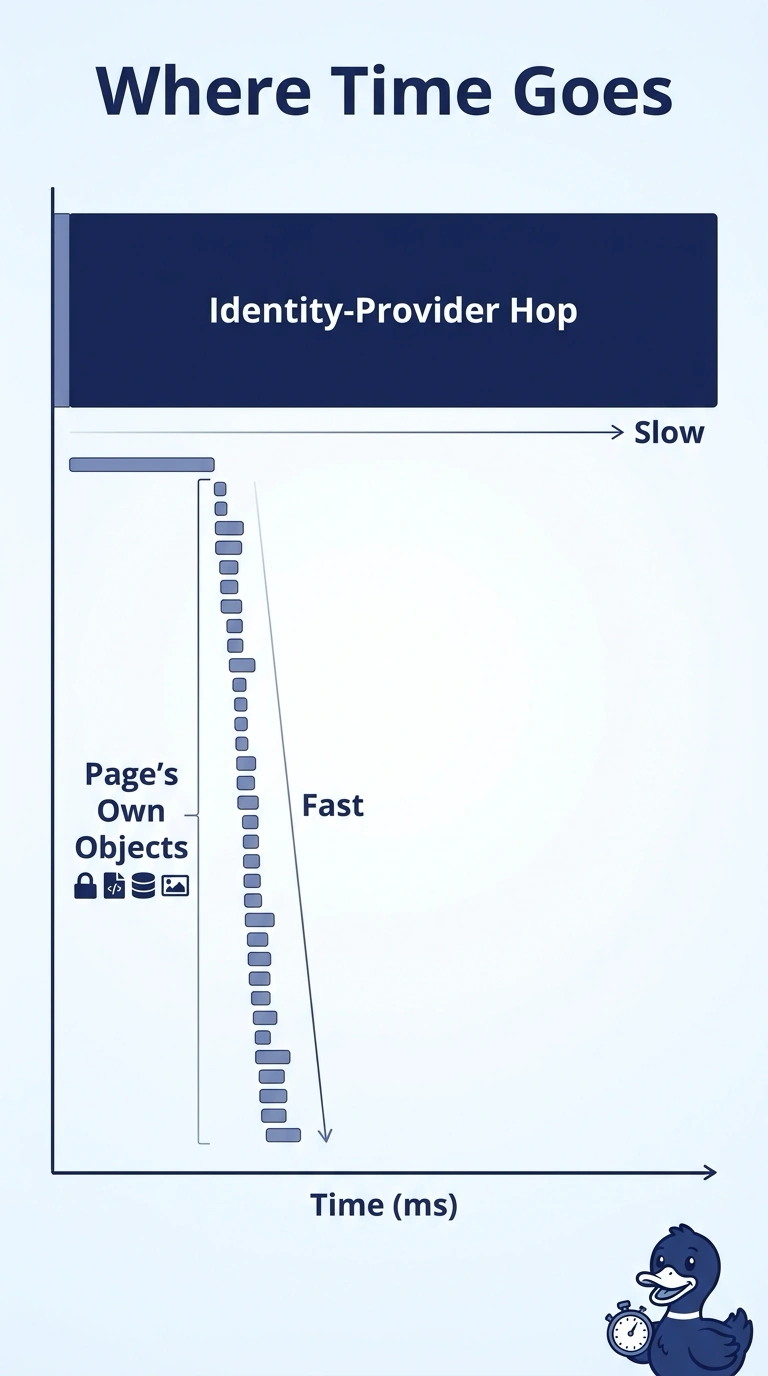
A government agency traces a slow benefits page in a browser waterfall. The page's own objects are short, and the long row is the call to the identity provider. Which conclusion fits this waterfall?
Select an answer to reveal the explanation.
Short Explanation
The wait at the badge desk can dwarf the walk down the hall. You name the identity-provider call as the slow hop because that row is the long one on the agency page. The trap is a WAN loss alarm, a DNS hijack conclusion, or a QoS change while the page's own objects are already short.
Full Explanation
The benefits page's own objects complete quickly, and the long row is the call to the identity provider, so the waterfall is spending its time on that hop. Identity time is part of the page even though the agency does not host that call, and the chart has already pointed at it. A WAN loss alarm does not fit a load whose other objects are short: loss on the path would not spare the page's own files and punish only the identity call. A DNS hijack conclusion needs an unexpected destination; a long but successful call to the identity provider the page is supposed to use is a slow hop, not a stolen name. A QoS change would retune a class for the identity traffic, yet the waterfall's finding is the long row itself, and a policy edit is a later project rather than the reading of this chart. Exam caveat: a long row to an identity provider is the identity hop, and short neighboring objects argue against a blanket loss, hijack, or QoS explanation. Operational check: select the long row, confirm the host is the identity provider, and note that the page's own objects stayed short before you open a path-loss investigation.