
A logistics hub finds regional tracking pages stay slow. The browser waterfall shows a long bar for images pulled from a distant image host, with the page's other objects much shorter. Which conclusion fits this waterfall?
Select an answer to reveal the explanation.
Short Explanation
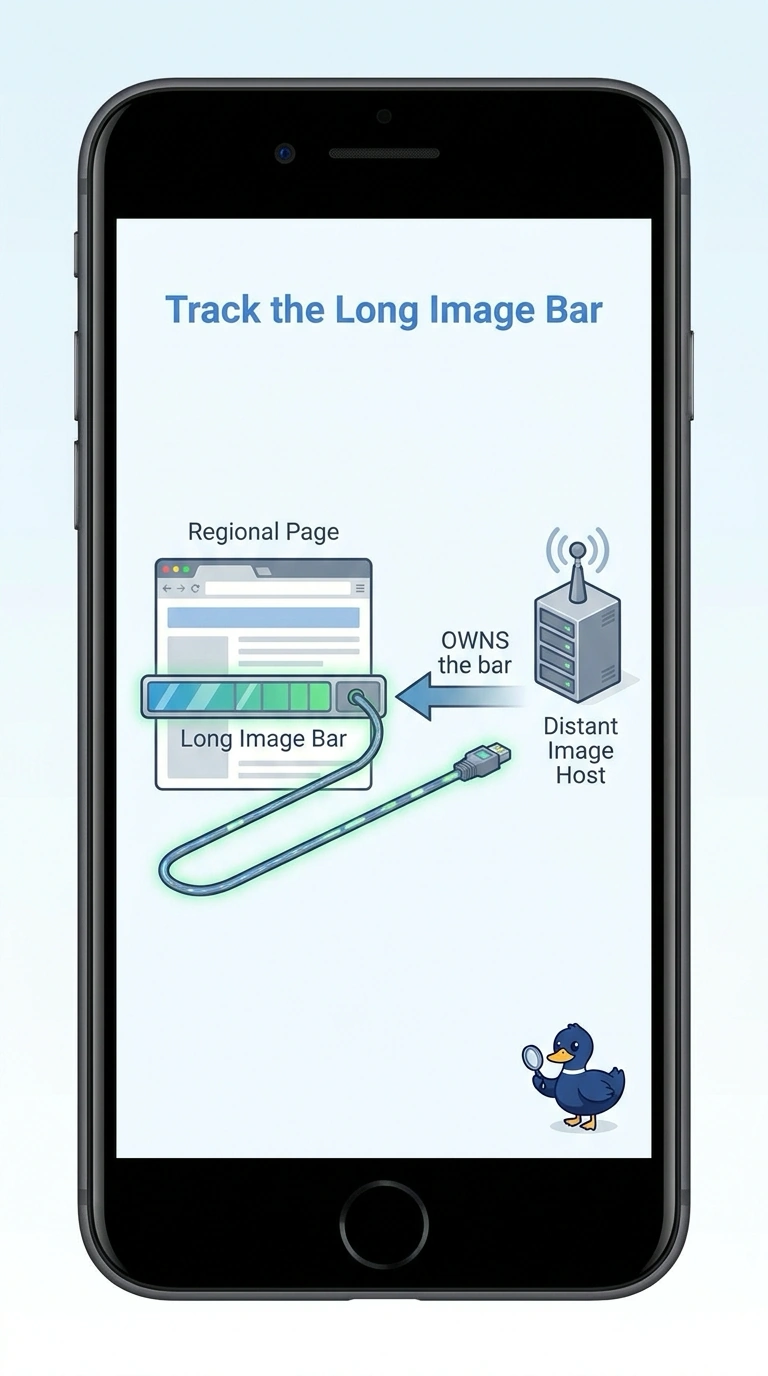
A photo that has to cross the country can arrive late even when the local road is clear. You treat the distant image host as the slow object because that host owns the long bar on the regional page. The trap is blaming WAN loss, a DNS hijack, or a QoS change for a transfer the waterfall already named.
Full Explanation
The regional tracking page spends its time on images that come from a distant image host, and the waterfall shows that host's bar as the long one while the page's other objects stay short. The object the chart names is the finding: that host is far from the reader, so the wait or the transfer belongs to it. A WAN loss alarm would fit if the path were dropping traffic across the page, yet the other objects complete quickly, which is not how a loss-dominated load looks. A DNS hijack conclusion would mean the image name resolved to an unintended host; the waterfall is showing the distant image host the page is built to call, and the bar is long because of that fetch, not because the name was redirected to an attacker. A QoS change would retune a class of service, but the chart has already identified the host, and a policy edit is not what the long bar is saying. Exam caveat: a long object or a long server wait on one host is read as that host, not automatically as path loss, a hijack, or a QoS project. Operational check: read the hostname on the long image bar and confirm it is the distant image host before you escalate a path-loss or QoS ticket for the regional page.