
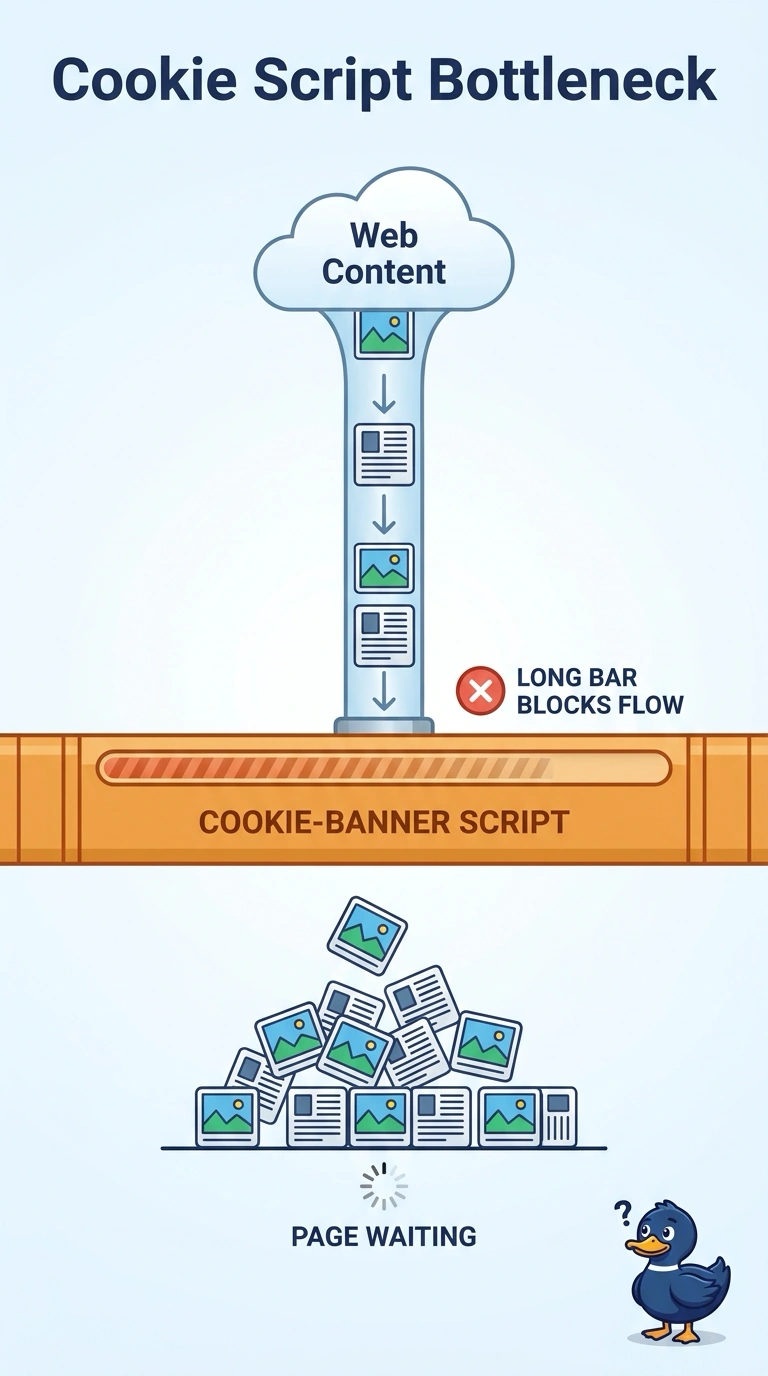
A manufacturer opens a browser waterfall for a slow supplier portal. The document and the other objects finish quickly, and the long bar is the cookie-banner script. Which conclusion fits this waterfall?
Select an answer to reveal the explanation.
Short Explanation
The longest booth line at a fair does not mean the highway into town is closed. You read the manufacturer's long waterfall bar as the cookie-banner script that stretches across the chart. The trap is a WAN loss alarm, a DNS hijack story, or a QoS change when that script is the slow object.
Full Explanation
A browser waterfall attributes time to objects. Here the document and the other objects finish quickly, and one bar, the cookie-banner script, stretches across the chart, so the page is waiting on that script. The path is already delivering the rest of the portal, which is the opposite of a loss pattern spread across the load. A WAN loss alarm would be the reading when the chart showed loss on the path, not when a single script is the long bar and its neighbors are short. A DNS hijack conclusion would require the name to land on an unexpected host; a slow cookie-banner script on the supplier portal is a long object, not evidence the name was stolen. A QoS change retunes a traffic class, but the waterfall has already named the slow object, and reclassifying traffic does not explain a script that simply takes a long time to run or to arrive. Exam caveat: when the waterfall shows one slow object or a long wait on that object, stay with that object instead of jumping to path loss, a hijack, or a class-of-service edit. Operational check: open the long bar, confirm the URL is the cookie-banner script, and compare its duration with the short document before you open a loss or QoS investigation.