
A university portal waterfall shows compressed objects that stay small and uncompressed duplicates of those same objects that dominate the download. Which finding should the team treat as the cause?
Select an answer to reveal the explanation.
Short Explanation
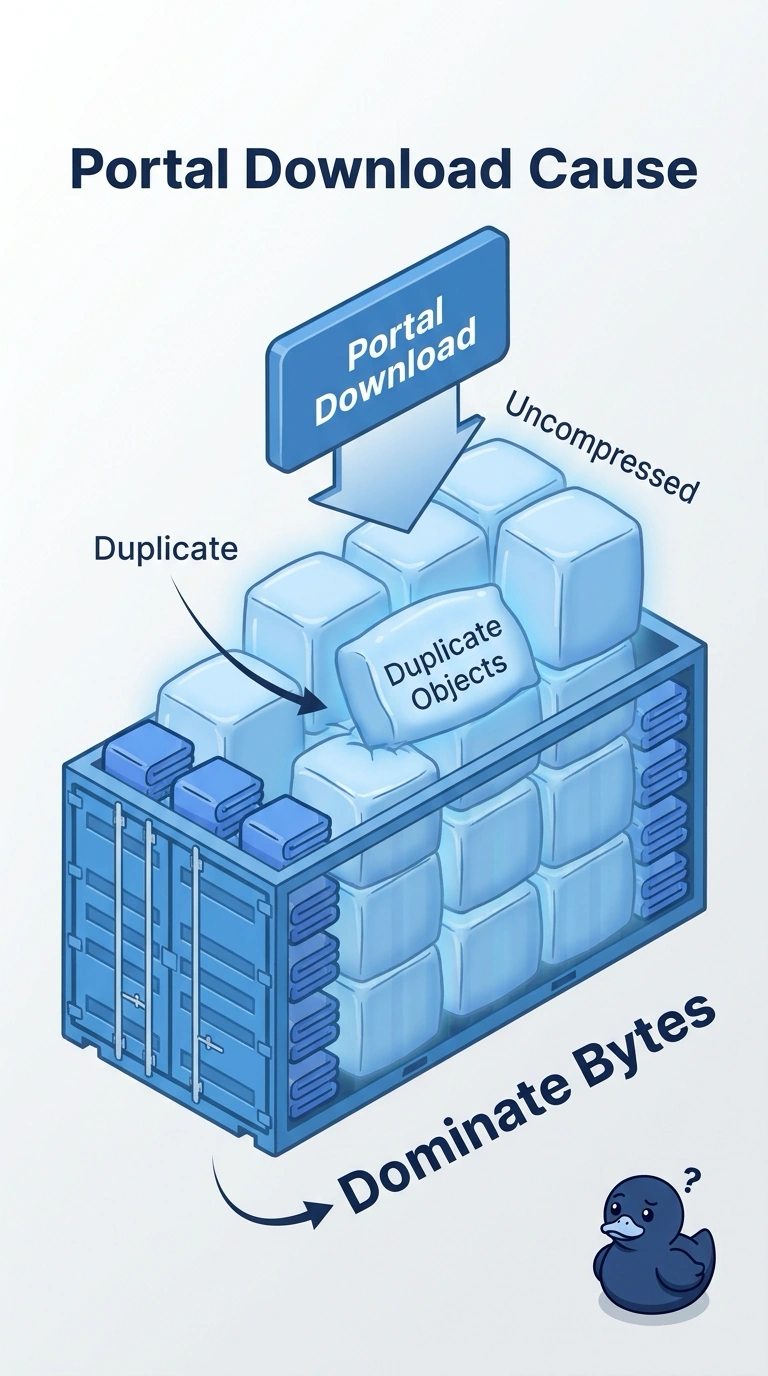
Shipping the same goods in an expanded crate, rather than folded flat, is why the truck filled up. You treat the uncompressed duplicate objects as the cause, because they dominate the download while the compressed copies stay small. A loss alarm, a DNS hijack story, or a QoS change does not shrink those objects.
Full Explanation
On a waterfall, transfer time tracks bytes moved when the path itself is not dropping traffic, and an uncompressed copy of an object is a larger transfer than the compressed copy of the same object. The uncompressed duplicate objects that dominate the bytes in the portal download are the cause, because the chart shows those duplicates carrying the bulk of the bytes while the compressed versions stay small. A WAN loss alarm that treats the larger uncompressed objects as loss on the path confuses size with loss. More bytes take longer on a healthy path, and the compressed copies of the same objects show that the path can deliver the smaller form quickly. A DNS hijack conclusion drawn from the size of those uncompressed duplicate objects does not follow from object size. A hijack would send the name to an unexpected destination, not expand a payload the portal itself served. A QoS change aimed at the large objects instead of how those objects are transferred reorders forwarding and still leaves the uncompressed bytes on the wire. Exam caveat: compare compressed and uncompressed copies of the same object before treating a long transfer as path loss. Operational check: on the portal waterfall, compare the byte size of each compressed object with its uncompressed duplicate and confirm the duplicates account for the dominant transfer.