
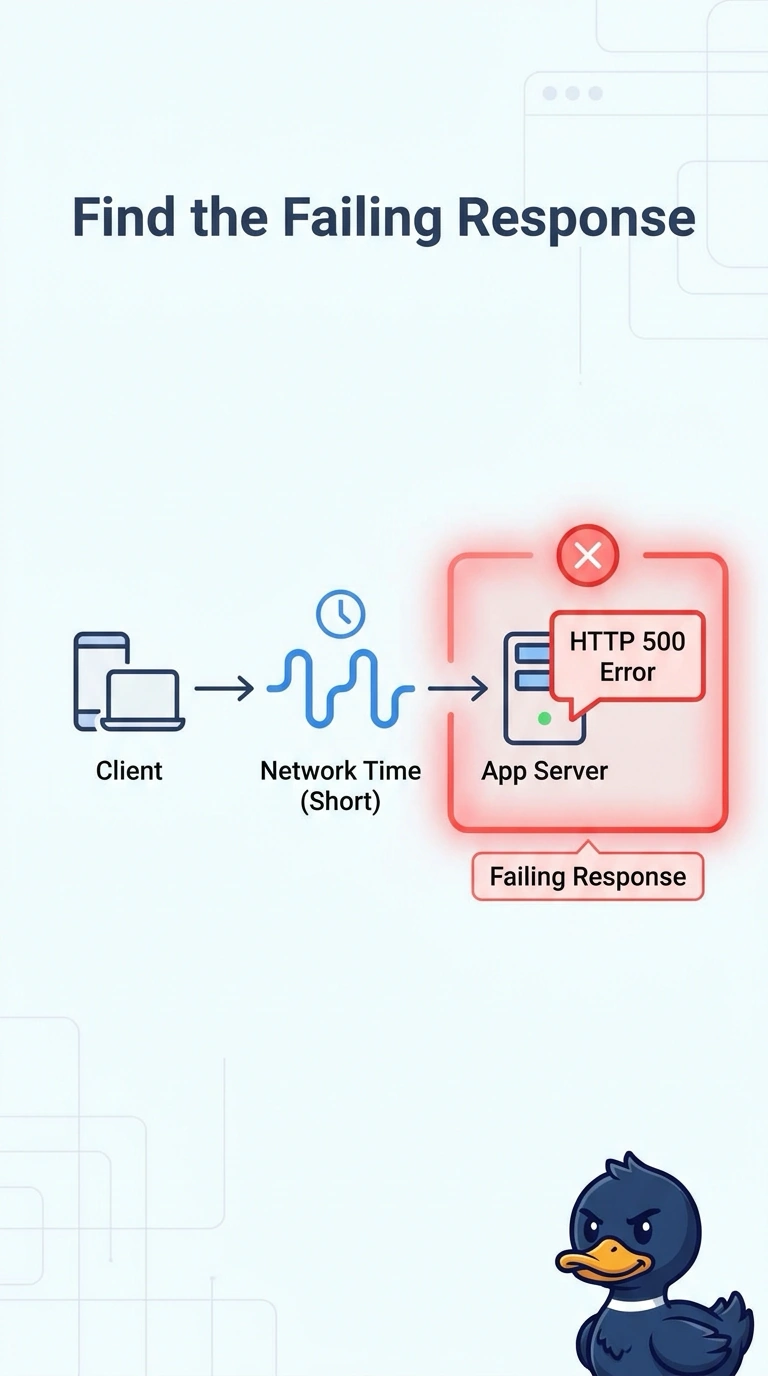
A retailer with branch stores captures a browser waterfall where network time is short and one call returns HTTP 500. Which finding should the team treat as the cause?
Select an answer to reveal the explanation.
Short Explanation
The truck can arrive on time while the kitchen still sends the order back. You treat the HTTP 500 as the application response, because the waterfall shows a short network time on that call. A WAN loss alarm, a DNS hijack conclusion, or a QoS change does not explain a server error on a fast path.
Full Explanation
HTTP 500 is an application or server error returned after the request arrived, and a short network bar means the path already completed the exchange quickly. The application response that returned HTTP 500 while the network time stayed short is the cause, because the waterfall separates a fast network from a failed application result on that one call. A WAN loss alarm opened because the failed call still occupied a short slice of network time treats any network time at all as loss. A short, completed exchange is the opposite of a loss signature, and loss would not by itself produce a structured HTTP 500 from the application. A DNS hijack conclusion based on the HTTP 500 returned by that single application call misreads a server status as a forged name. A hijack would point the name at an unexpected destination, whereas this call reached an application that answered with its own error. A QoS change aimed at the call even though the waterfall shows the network time as short retunes the path for a transfer that is already fast and cannot change the application status. Exam caveat: read the response status beside the network timing; a fast path with an application error is an application finding. Operational check: on the branch waterfall, confirm the failing call shows HTTP 500 and that its network time is the short portion of the bar.