
A carrier wants one Catalyst SD-WAN overlay, over the public internet, that reaches both an AWS VPC and an Azure virtual network, with one policy for every branch. Which model is that?
Select an answer to reveal the explanation.
Short Explanation
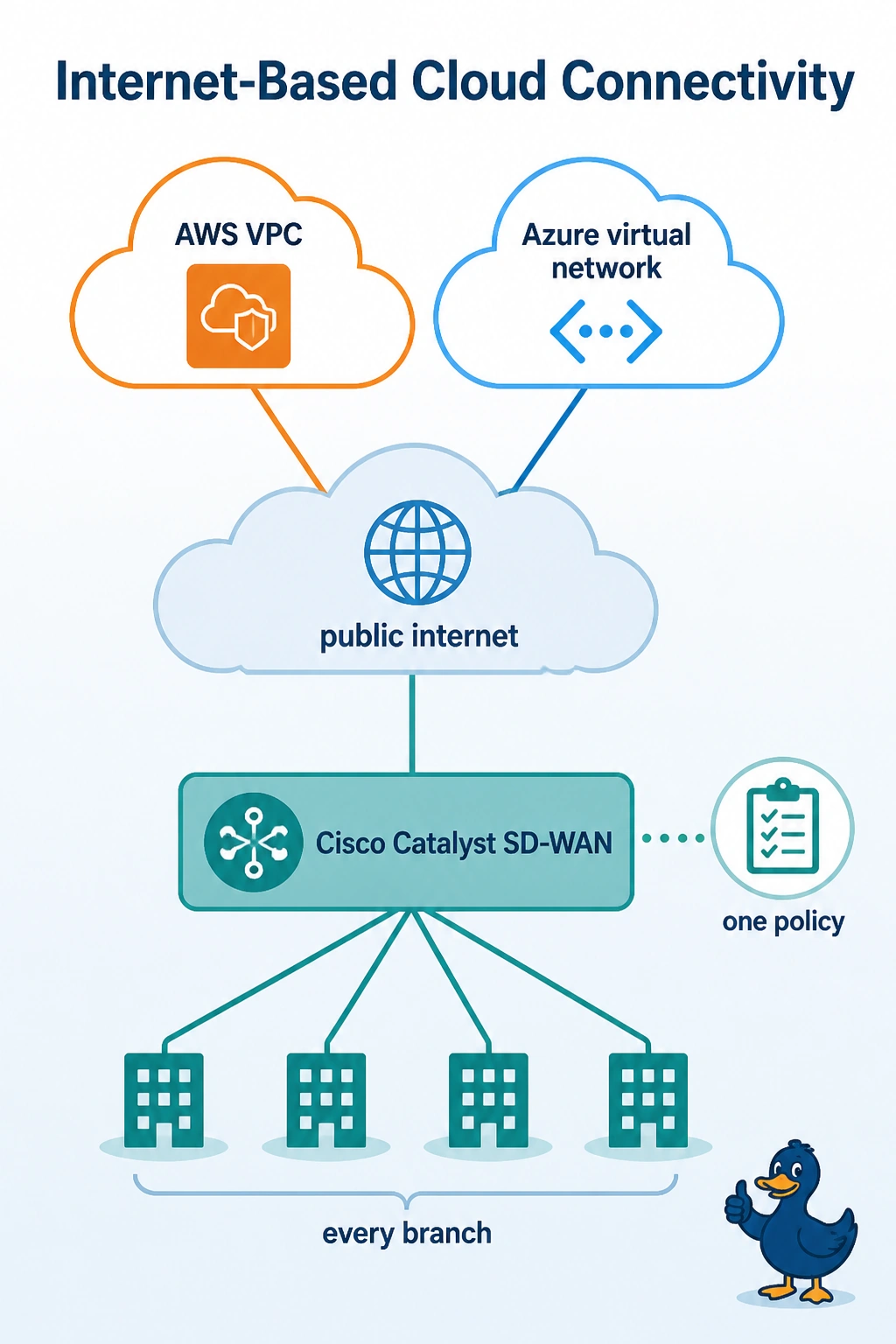
You’re looking for one internet-based overlay and policy that reaches both clouds, so use Cisco Catalyst SD-WAN cloud connectivity to AWS and Azure. Standalone native IPsec from each branch lacks controllers and a shared overlay policy, while an MPLS handoff is not the public internet. Direct laptop access to public status pages reaches websites, not the private cloud networks.
Full Explanation
Cisco Catalyst SD-WAN internet-based cloud connectivity keeps branches in one overlay and uses centralized policy to reach both an AWS VPC and an Azure virtual network. The public internet is the underlay toward the cloud gateways, matching the carrier’s requirement for one overlay and one policy across both providers. Standalone native IPsec from each branch to each provider VPN gateway can carry traffic, but without controllers it does not provide the requested controller-managed overlay and shared policy. An MPLS handoff into both providers supplies private connectivity, so it fails the requirement to use the public internet. Direct internet access from user laptops to public AWS and Azure status pages reaches websites, not the private VPC and virtual network. Exam caveat: a single overlay could later use a private interconnect for one cloud, but this scenario specifies internet-based connectivity to both. Practical check: verify that branch edges show BFD to the AWS and Azure cloud gateways and that one centralized policy governs both paths.