
A platform team is documenting two endpoints on the same router: one address triggers a reboot action for a device, and a second address returns that device's configuration object so it can be read or replaced. The architects want new engineers to see how the two call styles are actually shaped. Which statement correctly contrasts the action-style call with the REST resource call?
Select an answer to reveal the explanation.
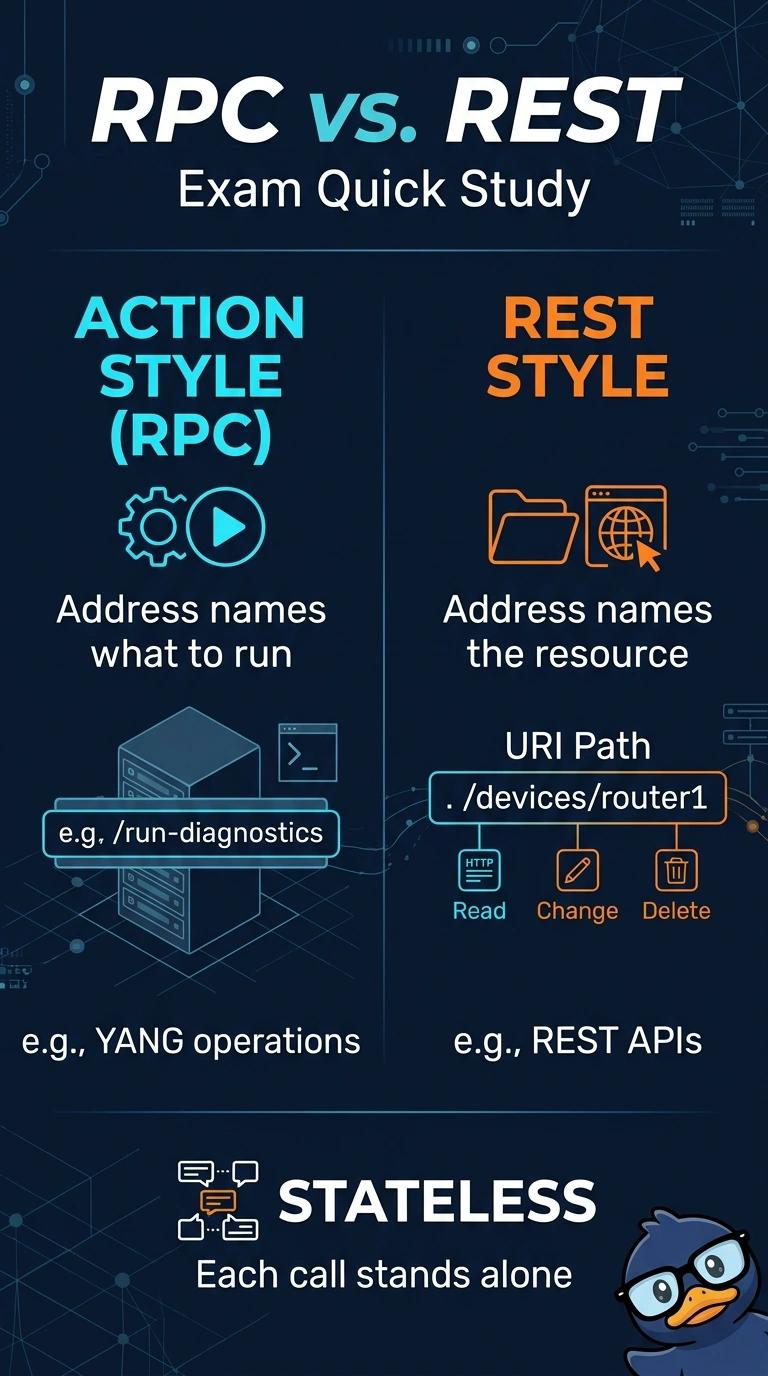
Short Explanation
You can tell the styles apart by asking whether the call names an operation or targets a resource. An action call invokes an operation, while a REST call targets a resource and uses standard methods such as GET and PUT; the target makes the distinction clear.
Full Explanation
The correct statement distinguishes the call styles by what the call targets: an action-style call names an operation to perform, such as rebooting, while a REST call targets a resource, such as the device configuration, and uses standard methods to act on it. Sending the reboot as POST to the device URI while reading configuration with GET and replacing it with PUT uses a familiar command pattern, but the URI identifies the device rather than naming the reboot operation, so it misses the distinction being tested. Naming the reboot operation and treating configuration as a resource, but reading it with GET and updating it with PATCH, gets that distinction right; however, PATCH conventionally applies a partial modification, not replacement of the configuration object as specified. Naming the reboot operation but reading configuration with GET and replacing it with POST also gets the distinction right, but POST is commonly used to submit data or create subordinate resources, not as the standard method for replacing an existing resource; PUT is conventional for replacement. Exam caveat: HTTP method conventions are not absolute, and an API can define PATCH or POST differently, so judge the methods by the stated contract. Practical check: inspect the API specification for the target URI and each method’s documented effect, especially whether an update replaces the whole configuration or changes selected fields.