
After building a configuration template in Catalyst Center, a network engineer must deploy it to one managed device with VLAN parameters supplied at run time, then confirm from the API that Catalyst Center actually finished applying it. Which API call sequence performs the template deployment and the status check?
Select an answer to reveal the explanation.
Short Explanation
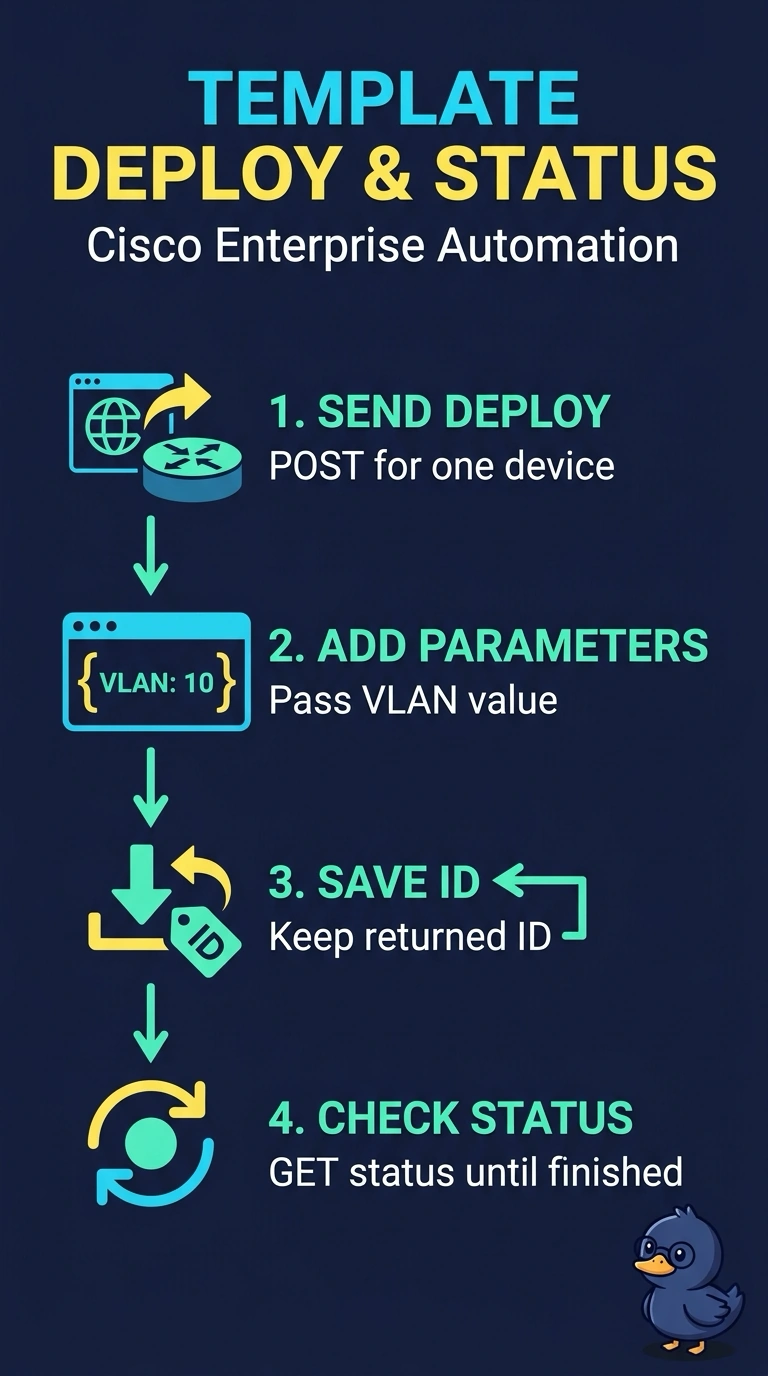
Deploying a template starts a background job, so use the deployment ID returned by the request to check its deployment status until it reports completion. It's like taking a claim ticket to the counter while your order is already in the kitchen. Version history and discovery jobs track other things, so neither reports the deployment's status.
Full Explanation
Template deployment works in two steps because applying a template is a background job. POST to the deploy endpoint with targetInfo identifying the managed device and carrying the run-time values the template requires, such as the VLAN number. The response provides a deployment ID; use it with the template deployment status endpoint to check progress until the deployment reports completion. Sending the deploy request without required run-time parameters does not provide the values needed to apply the template. Template version history describes authoring state, not whether a device received a deployment. Discovery job status tracks a different workflow. API paths and field names can differ between API versions, so use the version-specific deployment and status endpoints documented for your Catalyst Center release.