
A retail chain runs Meraki MR access points across 120 stores and has hired an analytics vendor that needs the raw wireless observations detected in each store, delivered continuously rather than pulled from periodic reports. The vendor only accepts data posted to an HTTPS endpoint it provides. Which Meraki capability should carry those observations to the vendor?
Select an answer to reveal the explanation.
Short Explanation
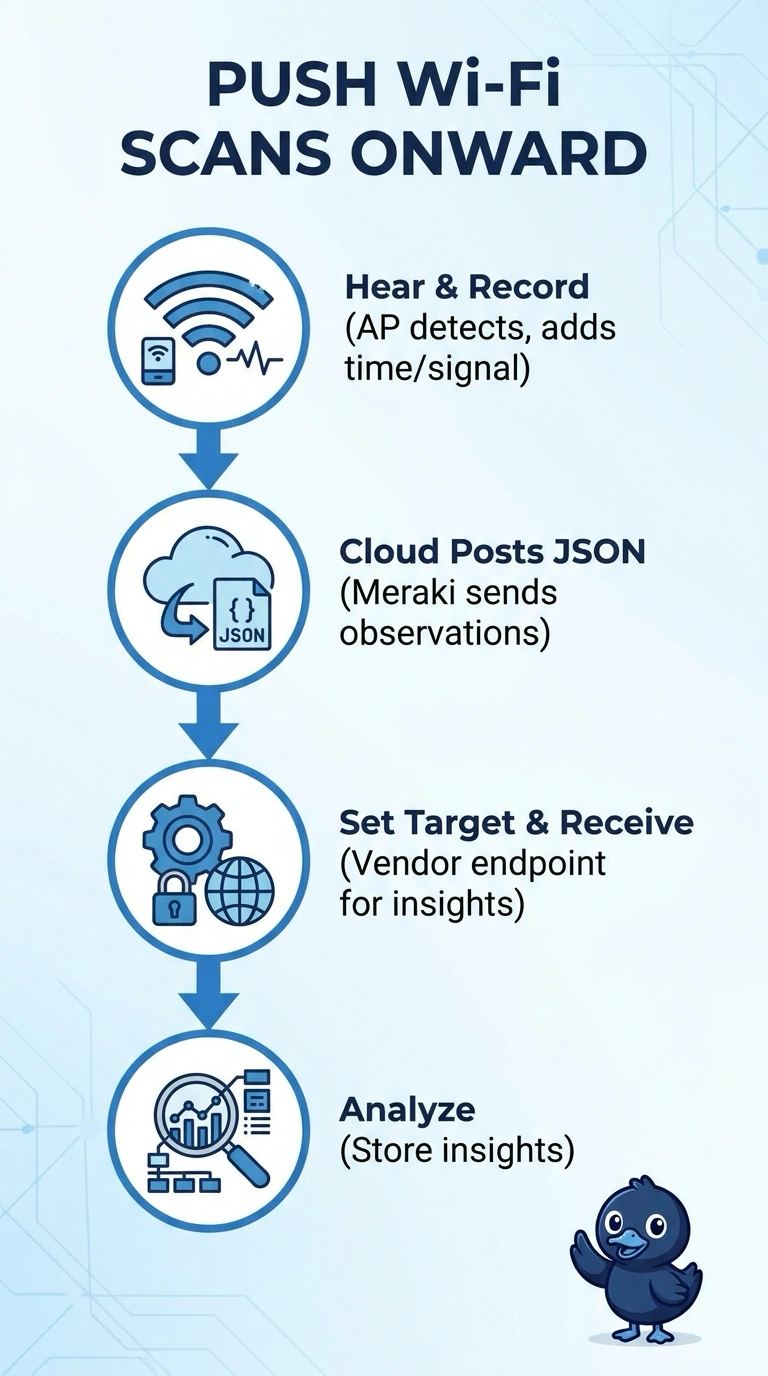
Enable the Scanning API so Meraki pushes each store’s wireless observations as JSON to the vendor’s HTTPS endpoint. It’s like a delivery route that brings the data to the vendor, sometimes in batches, instead of making them fetch reports.
Full Explanation
Meraki's Scanning API is designed to send wireless observations to an outside analytics receiver. You configure a receiver URL and shared secret, and Meraki sends JSON data based on observations detected by access points. This push model fits a requirement to deliver data to a third party, though it should not be described as an instantaneous stream. The alert webhook sends notifications for configured alerts, not passive wireless observations. The Dashboard API wireless client list reports associated clients, not all devices detected over the air, and requires the vendor to poll. A daily presence summary is a processed report, not a continuous push of observations. Privacy rules govern what may be collected, so confirm that the fields forwarded are permitted in each region.