
A hospital runs 240 access switches that are configured one CLI session at a time. The team is moving a guest VLAN policy to Catalyst Center so the policy is authored once, deployed to every switch without per-device edits, and checked for drift after rollout. Which operational difference between traditional and controller-based networking does this shift show?
Select an answer to reveal the explanation.
Short Explanation
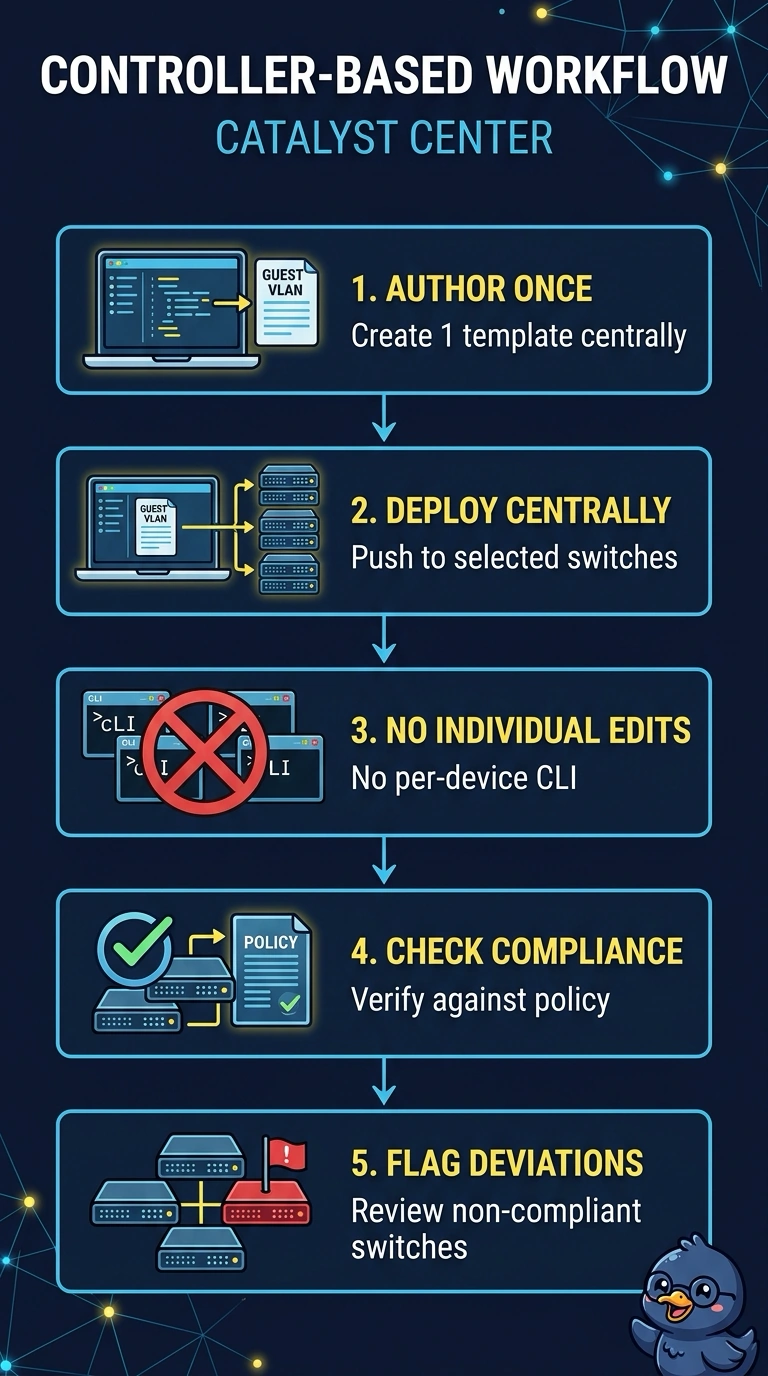
You picked the model where the guest VLAN configuration is authored centrally, deployed to the switches, and checked against a configured compliance policy. That replaces device-by-device configuration and manual drift checks with centralized deployment and compliance monitoring.
Full Explanation
Catalyst Center can deploy configuration templates to selected devices and assess configuration compliance when the relevant compliance policy is configured. This supports a workflow in which the guest VLAN configuration is authored centrally, deployed to the switches, and checked for deviations. If engineers still author the configuration device by device, the rollout remains manual. If they read each running config to verify deployment, verification remains manual. If they deploy the template separately to each switch, application still requires per-device work. These capabilities depend on the chosen configuration and compliance setup; they do not mean every controller-managed change is automatically deployed or checked without configuration.