
A hospital merged networks where Campus A runs OSPF and Building B runs EIGRP, with two distribution switches doing mutual redistribution that recently caused route feedback, suboptimal paths and flapping. Metrics must translate sensibly and loops must be prevented while keeping both protocols. Which redistribution design with loops, metrics and filtering best stabilizes the boundary?
Select an answer to reveal the explanation.
Short Explanation
You've got two networks echoing each other's routes like gossip in a hallway, so you'll set seed metrics and share only what you really need. Use route tags as little name badges to spot what's already crossed over so you don't send it back.
Full Explanation
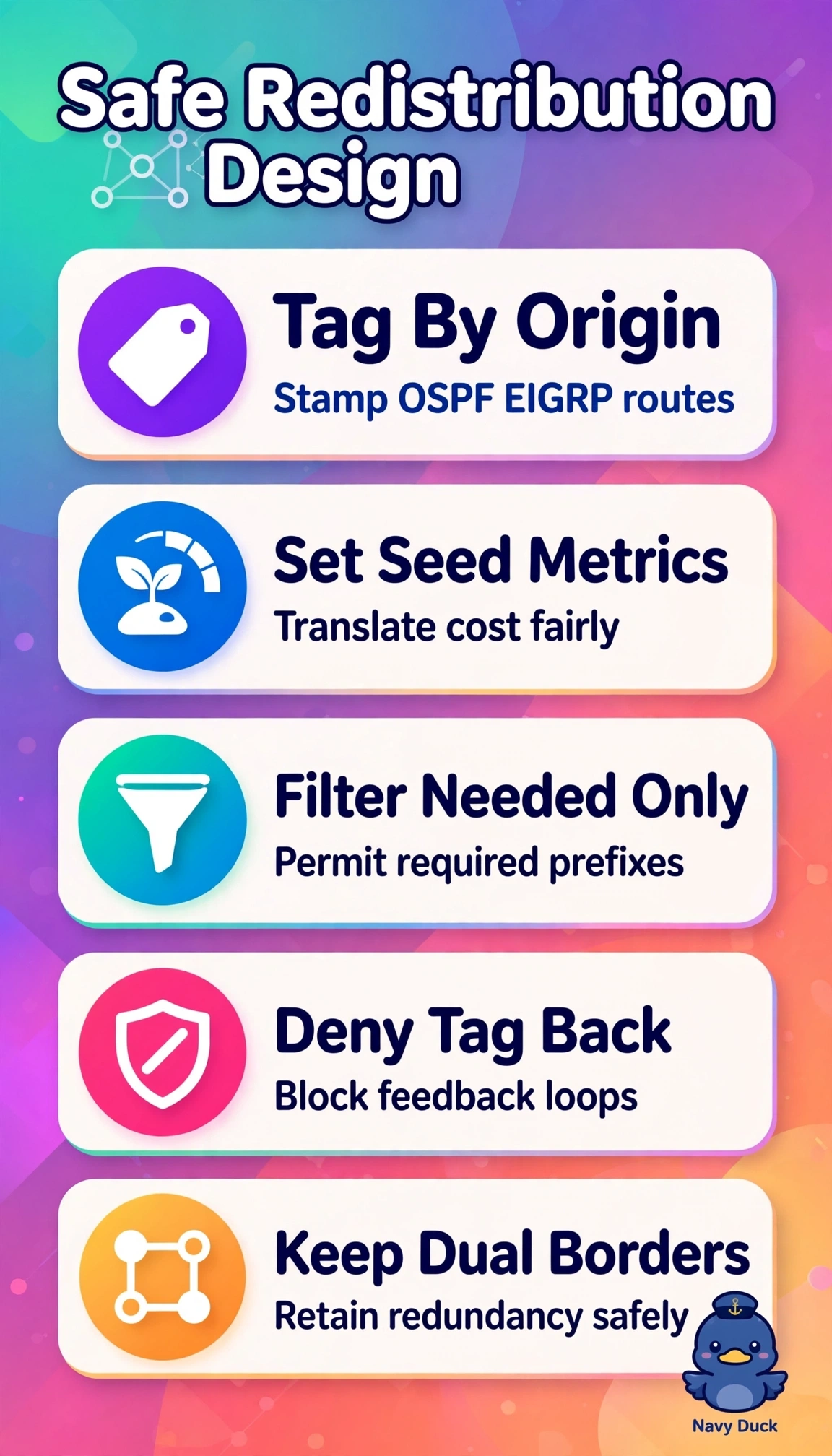
Route tags mark redistributed prefixes by origin, prefix lists filter so only needed routes cross, and seed metrics provide deterministic cost translation, while denying tagged routes from re-entering their source protocol at the second border prevents feedback loops and suboptimal routing with redundancy intact. Mutual redistribution of all routes with defaults fails by concept because without filtering or tags each border re-advertises what it learned, creating persistent feedback, inflated tables, and metric unpredictability. Setting identical administrative distances fails by concept because distance only influences local preference, not loop prevention, and equalizing it removes the deterministic primary-backup behavior needed at dual boundaries. Single-point redistribution without tags fails by concept because it creates a single failure domain and still lacks loop identification if a future second point is added, sacrificing resiliency for apparent simplicity. For the exam, remember tags plus filtering break redistribution loops while metrics control preference, and in practice verify tag values end to end and test failure of one border to confirm no feedback.