
A retailer polls 800 stores over a congested MPLS WAN where SNMP polls, syslog and NetFlow compete with point-of-sale traffic during peak hours and polls time out. Monitoring must stay reliable without starving sales traffic or taking priority over voice. Which QoS design for network management traffic best protects manageability during congestion?
Select an answer to reveal the explanation.
Short Explanation
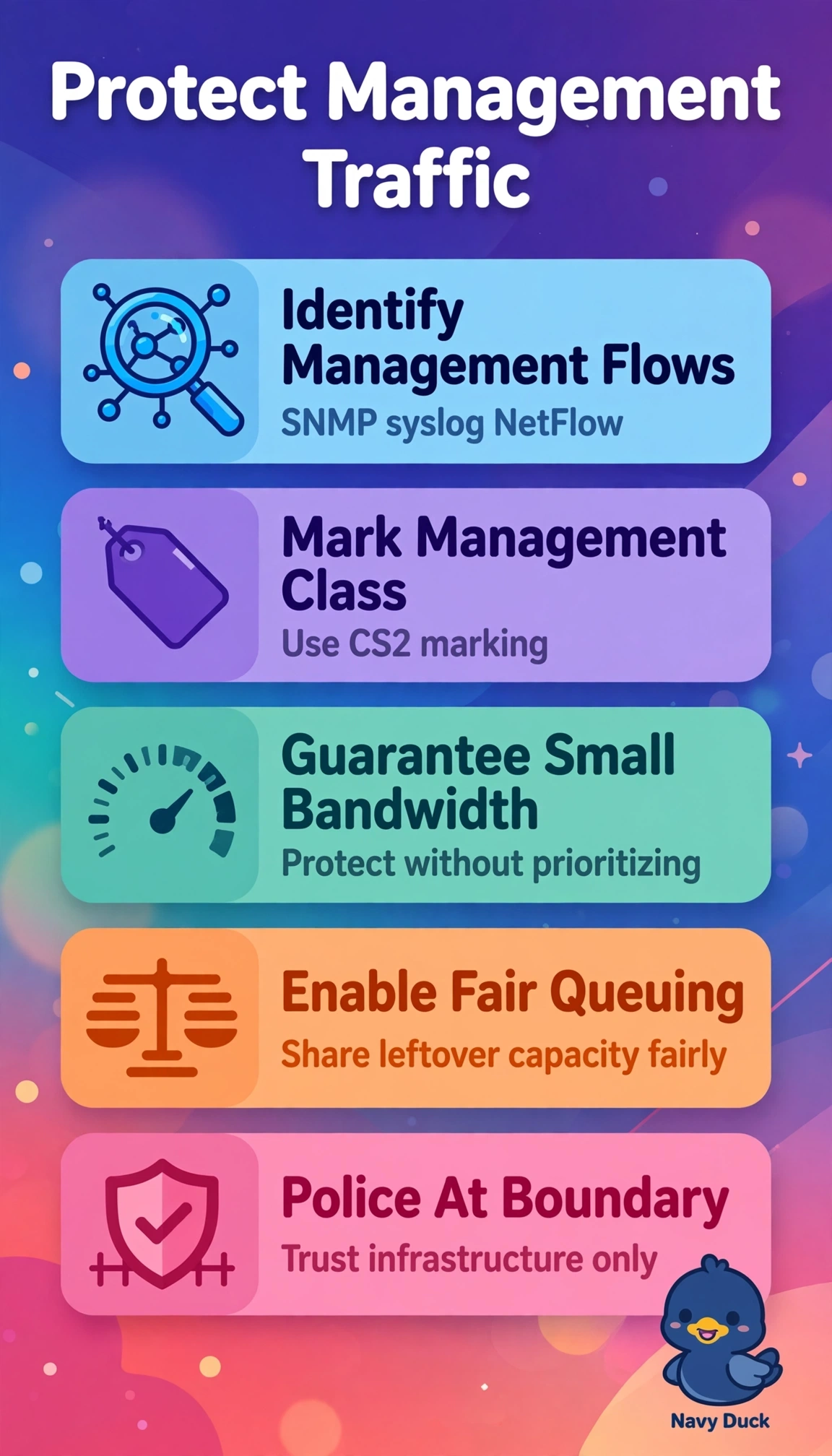
You don't give the janitor's cart a police escort, just a clear hallway. A small guaranteed lane keeps polls alive without bullying sales or voice, and classification is your label maker. Fair queuing shares the leftovers politely.
Full Explanation
A dedicated network-management class with a small bandwidth guarantee and fair queuing protects SNMP, syslog, and telemetry from starvation during congestion while keeping them subordinate to voice, video, and transactional data, preserving both manageability and business priority. Marking management as voice with strict priority fails by concept because expedited forwarding starves real-time media and violates priority hierarchy, giving low-value periodic traffic preferential treatment over latency-sensitive voice. Placing management in scavenger with aggressive policing fails by concept because scavenger is less-than-best-effort for unwanted traffic and would drop polls exactly when visibility is most needed during congestion. Trusting workstation DSCP end to end fails by concept because untrusted endpoints can spoof markings to hijack priority, and allocating leftover bandwidth without classification provides no guarantee when the link saturates. For the exam, remember Cisco QoS puts network-management in a protected but non-priority class, and in practice verify markings are re-marked at the trust boundary and monitor drops in the management queue.