
A branch connects with 100 Mbps Ethernet to a provider policing voice and data to a 50 Mbps contracted rate, with morning bursts dropping critical traffic at handoff. Which shaping versus policing design controls outbound bursts at the WAN edge handoff?
Select an answer to reveal the explanation.
Short Explanation
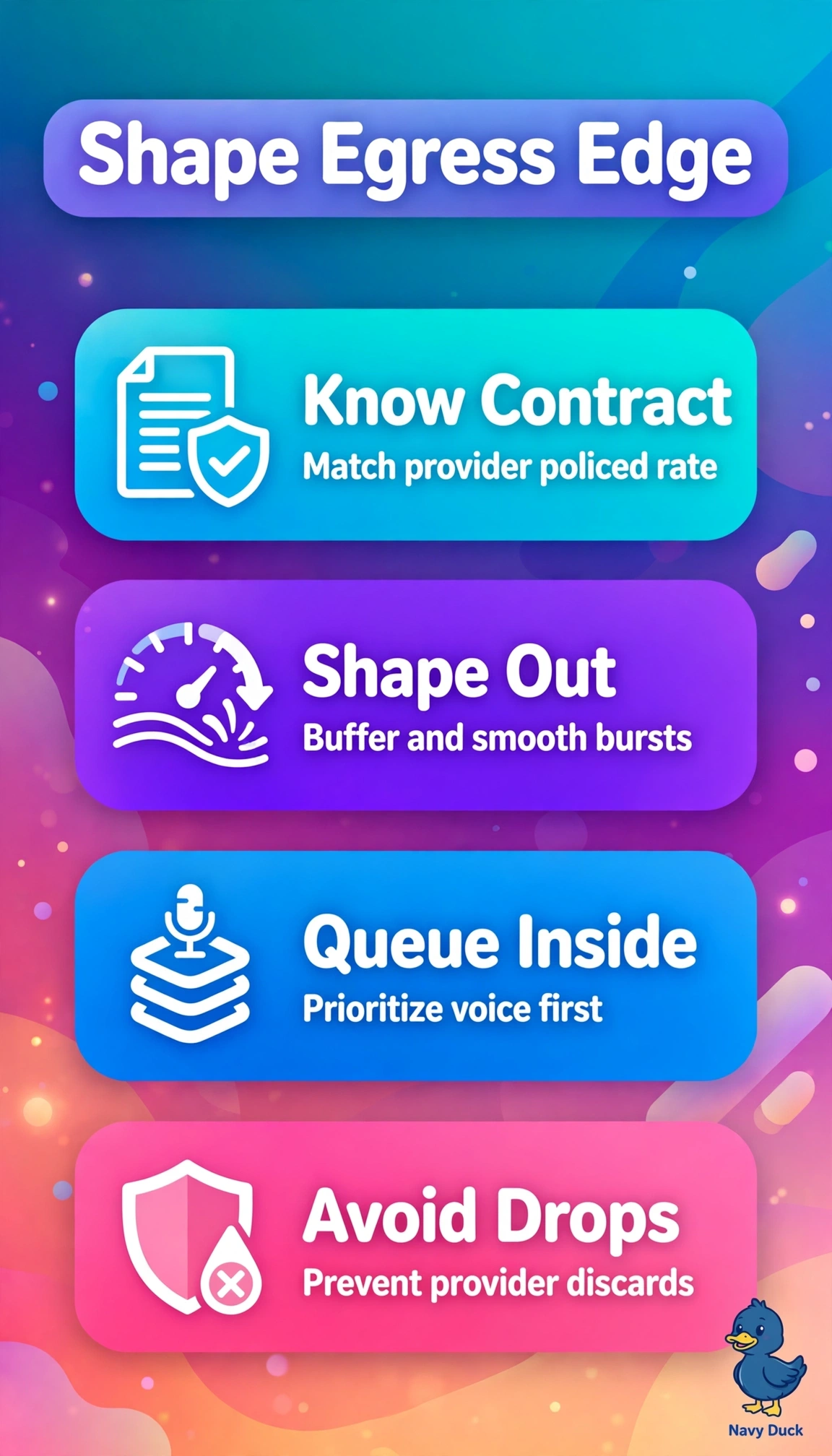
Your edge should play traffic cop with a gentle hand, smoothing bursts before the provider drops them. That measured pacing is shaping keeping voice safe inside the contract.
Full Explanation
Shaping buffers excess outbound traffic and releases it at the provider contracted rate, smoothing bursts to avoid provider policer drops while allowing outbound queuing to prioritize voice inside the shaped rate. Policing on outbound drops or re-marks excess immediately, which can clip bursty TCP and cause retransmissions without smoothing. Shaping inbound on the local edge cannot control arrival rate because packets have already traversed the provider policer, so drops have already occurred upstream; inbound control requires provider cooperation or downstream policing with consequences. Policing only at the core leaves the branch handoff unprotected because the branch burst still hits the provider policer before core policy applies, so congestion happens at the wrong point. Exam caveat: default to shaping on egress toward a slower policed handoff and policing on ingress where you must enforce. Practical check: confirm contracted rate and burst, apply egress shaper at that rate, then verify priority queue behavior under load.