
A 2000-site retail WAN runs SNMP polling, syslog, NetFlow and SSH over the same MPLS QoS profile as point-of-sale traffic. During congestion, polling timeouts and log gaps hide outages. Management must remain reachable without starving sales traffic. Which QoS design for network management traffic ensures reliable monitoring during congestion?
Select an answer to reveal the explanation.
Short Explanation
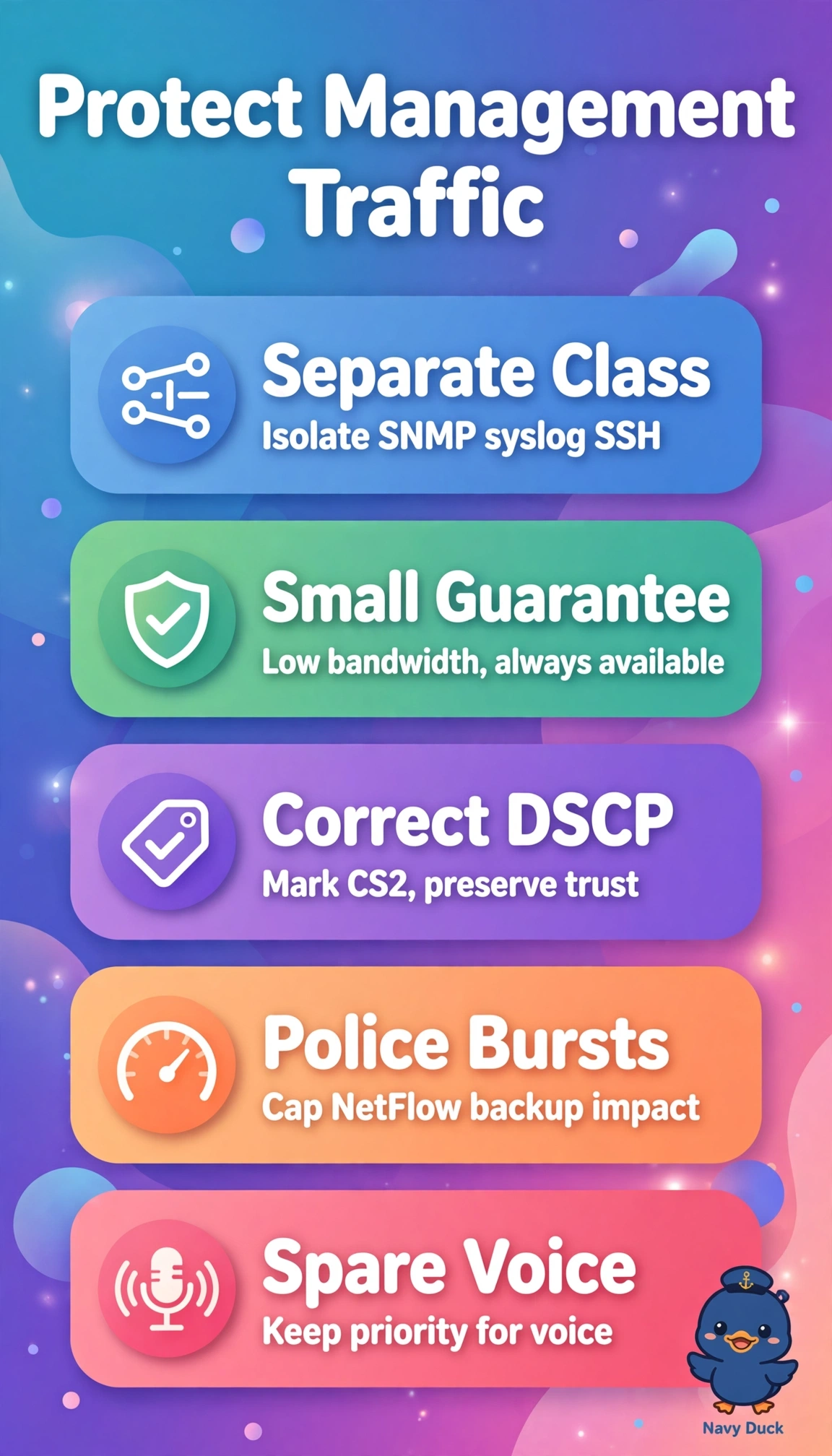
Your monitoring can't go blind right when you need it most. A small guaranteed lane keeps heartbeats alive without stealing from checkout traffic, much like a bike lane beside a highway. Use dedicated class markings end to end.
Full Explanation
Network management protocols need a small, protected allocation separate from both real-time voice and transactional data so polling, traps, syslog, and SSH survive congestion without starving business traffic. A dedicated class with a bandwidth guarantee and appropriate DSCP such as CS2 with admission policing preserves monitoring while bounding its impact, and trust boundaries must preserve markings across MPLS and Internet edges. Placing management in the strict-priority voice queue risks jitter for voice and allows bursty NetFlow or backups to harm real-time quality. Leaving management as best-effort accepts drops exactly during the congestion when visibility matters most, and longer timeouts only mask the loss. Scavenger starves management by design, which is appropriate for bulk entertainment traffic but guarantees monitoring blindness under load. For the exam, remember management belongs in a network-control-related assured class, not priority or scavenger. In practice, verify markings with packet captures and confirm the provider preserves or maps DSCP across the WAN.