
An enterprise IS-IS backbone connects four areas through Level 1-2 routers, with hundreds of branch LANs causing large Level 2 tables and suboptimal paths for shared services. Which IS-IS route leaking, summarization and metric style design stabilizes and optimizes inter-area routing?
Select an answer to reveal the explanation.
Short Explanation
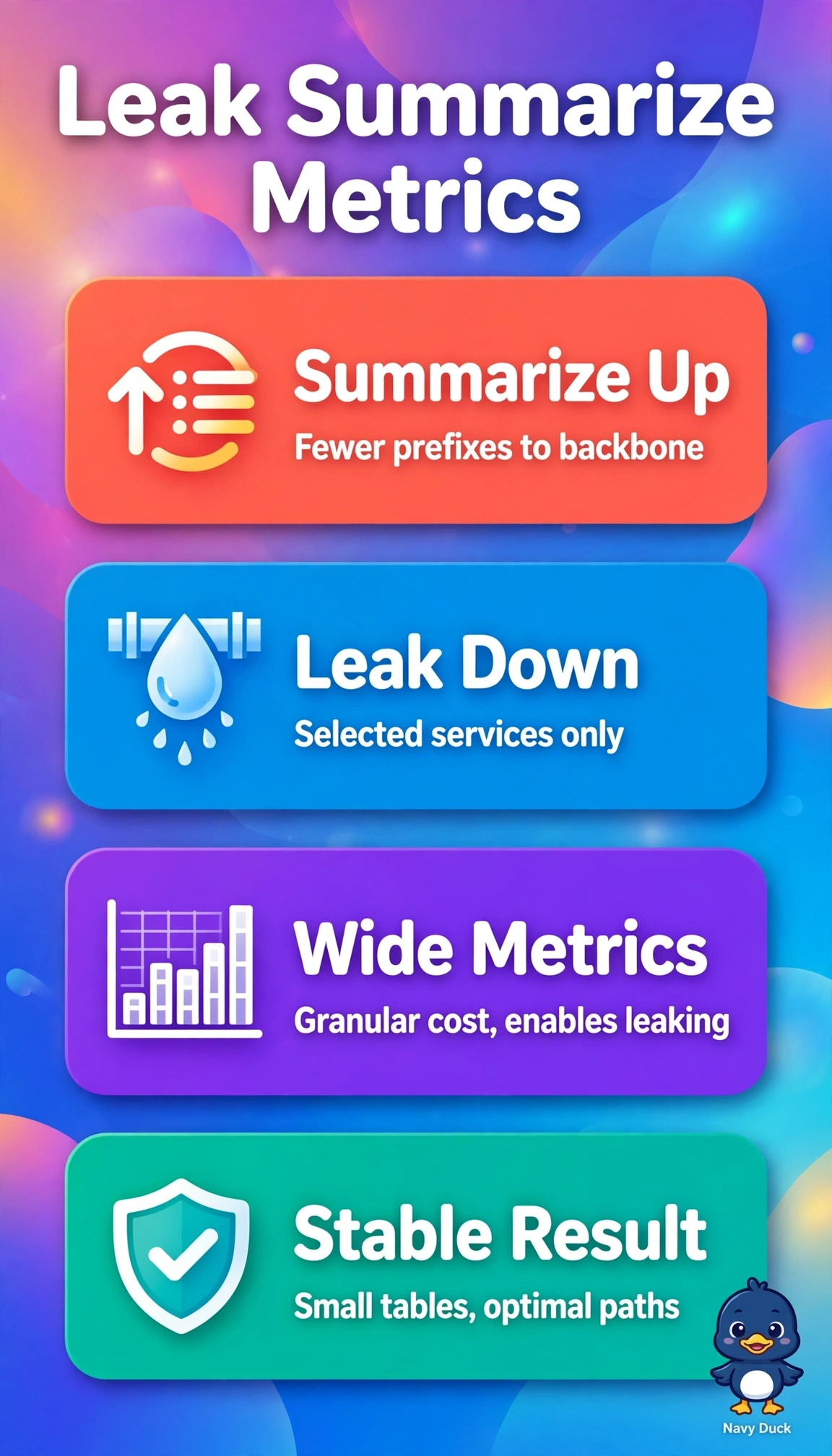
You're drowning the backbone in branch details while hiding the services branches actually need. Summarize up and selectively leak down with wide-metrics and you get clean tables plus good paths.
Full Explanation
IS-IS Level 1-2 routers can summarize Level 1 prefixes into Level 2 to shrink backbone state, and selectively leak specific Level 2 prefixes into Level 1 to fix suboptimal routing to shared services, which requires wide metrics to carry sufficient cost granularity and support functions like leaking and traffic engineering. That combination directly addresses scale and path optimality. Flooding all specifics both ways fails by concept because it removes hierarchy, inflates tables, and risks loops and churn. Summarizing with narrow metrics only fails because narrow metrics lack the width and capabilities needed for modern designs and refusing to leak preserves suboptimal exit selection. Disabling summarization with varied redistribution fails because redistribution adds complexity and inconsistent metrics rather than controlled hierarchy. For the exam, link wide metrics to leaking and summarization scalability; in practice verify summary addresses, leaked prefix lists, and consistent metric style on all routers.