
A high school plans 48-port access switches for classrooms with 30 PoE phones and cameras per closet, future density growth, and nightly Wake-on-LAN to power lab PCs for patching. Budget limits power supplies and heat load matters. Which PoE and Wake-on-LAN design should the designer specify for reliable power and night operations?
Select an answer to reveal the explanation.
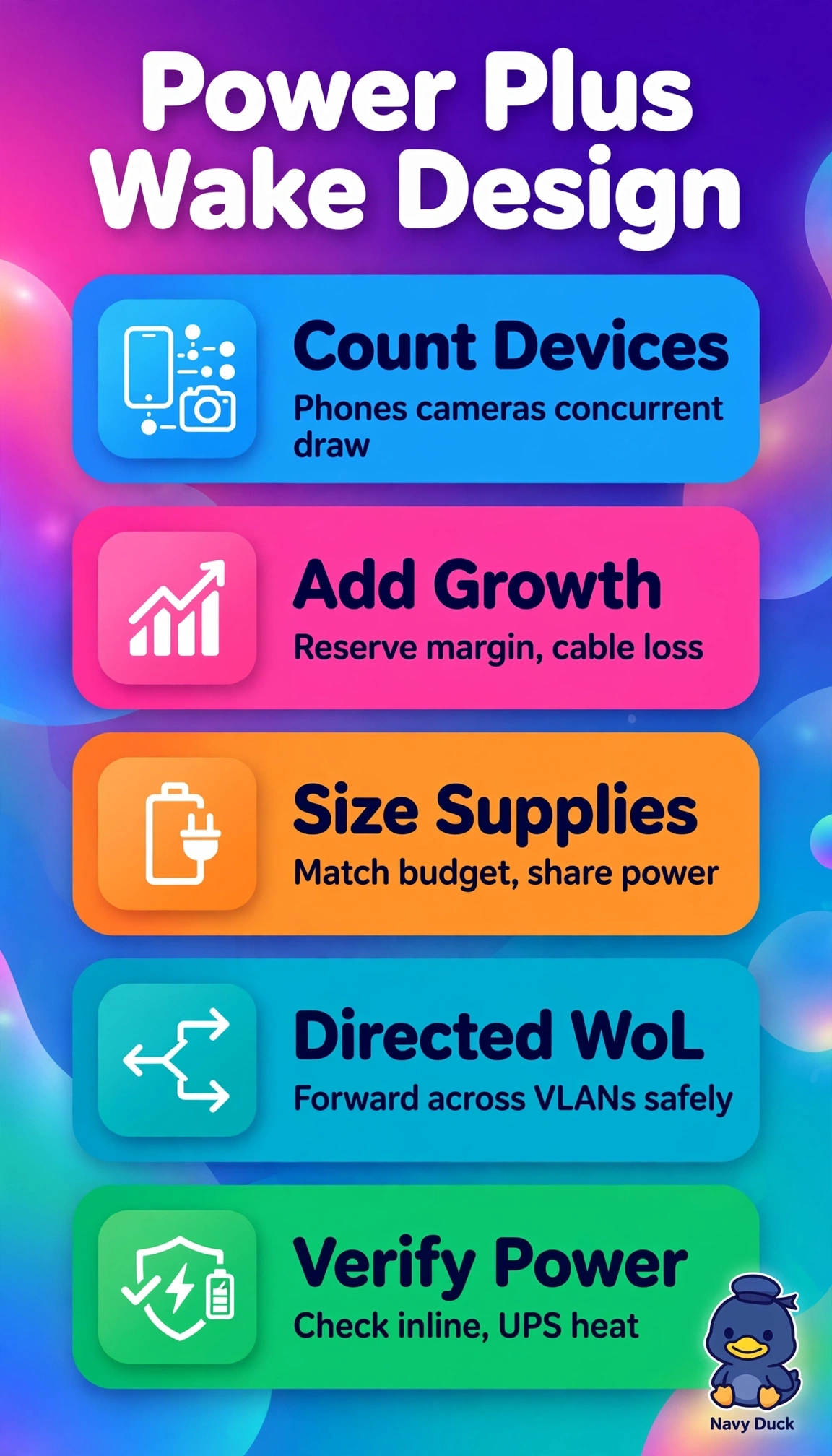
Short Explanation
You’re planning power like seats on a busy bus route. Your PoE budget should cover concurrent Class loads plus room to grow. Then direct Wake-on-LAN packets where they need to go at night.
Full Explanation
Sizing the PoE budget for concurrent Class loads plus growth balances reliable power with the budget and heat limits: it covers the 30 phones and cameras during peak concurrent use without provisioning every port for maximum draw. Directed Wake-on-LAN forwarding lets packets from the management server cross VLANs to wake lab PCs without relying on Layer 2 adjacency. Flooding Wake-on-LAN as a subnet broadcast, even with a growth-ready PoE budget, fails the control-plane and security concept: indiscriminate broadcasts add traffic, are often blocked by default, and complicate ACLs. Budgeting only for current concurrent Class loads with directed forwarding fails capacity planning because it leaves no headroom for future density growth and may force a power upgrade or port denial. Sizing all 48 ports for maximum Class 4 draw with directed forwarding fails the efficiency concept: it oversizes power supplies, cost, and thermal capacity despite the budget and heat constraints. Exam caveat: distinguish concurrent Class-based budgeting with growth from average-load oversubscription and full-maximum provisioning, and distinguish directed forwarding from subnet broadcast flooding. Practical check: inventory device classes, measure peak concurrent draw, confirm switch power and thermal capacity with growth headroom, then test scheduled Wake-on-LAN across VLANs from the patch server and verify delivery with a packet capture.