
A regional office connects to an MPLS provider with a 100-Mbps contracted rate but a 1-Gbps physical handoff, and voice suffers drops during bursts while the provider discards out-of-profile traffic. Which WAN edge and handoff design controls bursts while preserving priority traffic?
Select an answer to reveal the explanation.
Short Explanation
You're merging onto a smaller highway than your on-ramp, so you must meter yourself first. Smoothing to the contracted rate with voice first in line uses shaping to avoid provider discards instead of reacting afterward.
Full Explanation
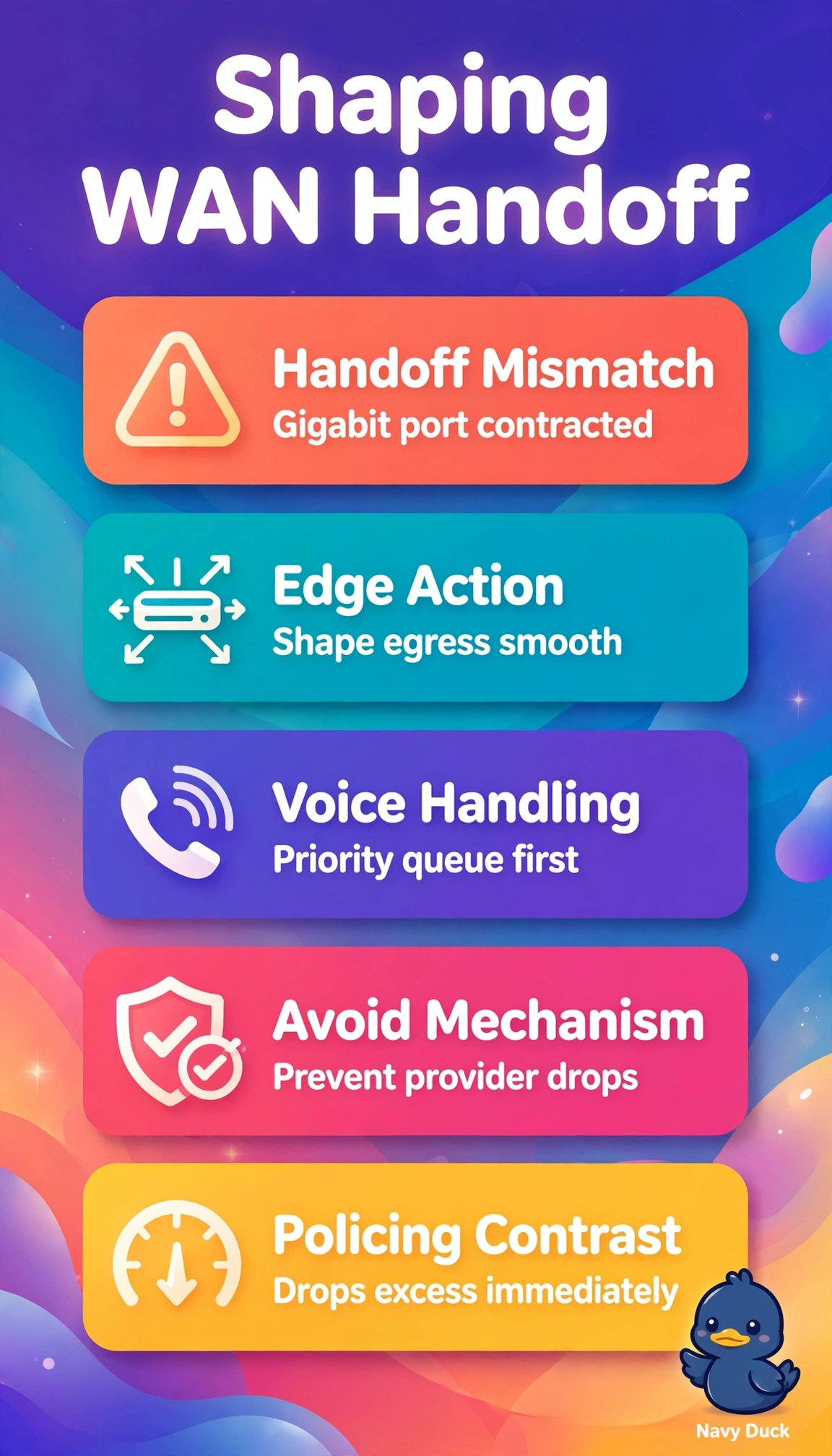
The correct approach works because shaping buffers and paces egress traffic to the contracted rate over time, so bursts on the fast physical interface do not exceed the provider profile, while edge priority queuing services voice first and keeps it out of the drop behavior that affects data. Ingress policing on LAN ports fails by concept because it enforces rate at the wrong boundary and cannot smooth WAN-bound bursts to the provider contract, leaving egress bursts to be discarded downstream. Egress policing at the enterprise edge fails by concept because policing drops or remarks excess immediately rather than buffering it, which increases loss for TCP and voice during transient bursts where shaping would absorb the spike. Relying on provider-core priority queuing fails by concept because once traffic exceeds the contracted profile the provider may already have discarded out-of-profile packets, so downstream priority cannot recover lost voice. For the exam, remember shape to the contracted rate at the enterprise handoff and police only where dropping is intended; in practice verify offered versus shaped rates and monitor voice queue drops during peak bursts.