
A utility operates remote substations where trenching fiber is cost-prohibitive and wired outages last days. Sites need backup connectivity for SCADA telemetry and occasional primary use for new locations. Which 4G/5G transport design as primary or backup best meets resilient requirements?
Select an answer to reveal the explanation.
Short Explanation
You're reaching places where digging is impossible and downtime hurts. Cellular gives rapid backup or primary without wires. It's like carrying a spare tire that can also drive the car.
Full Explanation
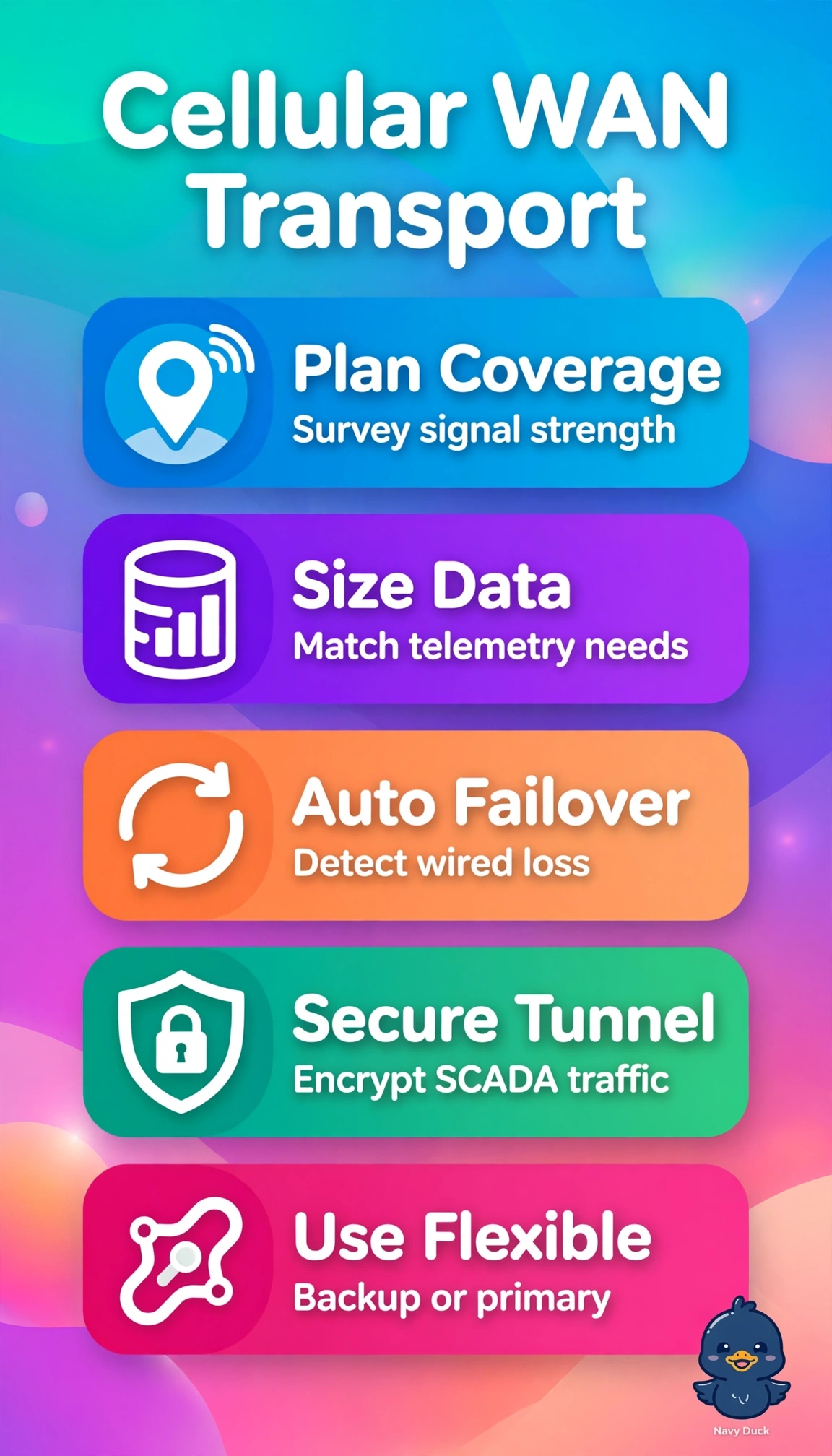
The correct design succeeds because it combines cellular 4G/5G transport with engineered wireless failover and upfront signal planning, which directly addresses cost-prohibitive trenching, multi-day wired outages, low-bandwidth SCADA telemetry resilience, and flexible use as backup at existing substations or primary at new locations. The dual-carrier primary-only design with outdoor antennas and surveys fails by scope because it optimizes new-site primary SCADA but provides no automatic failover integration for existing wired sites that must survive days-long outages. The managed IPsec VPN backup design fails by deployment scope because it hardens backup telemetry for wired substations yet cannot serve as primary connectivity where no wired path exists for new locations. The resilient voice and office data design fails by application priority because substation voice and enterprise traffic have different latency, reliability, and QoS profiles than deterministic SCADA telemetry that must be prioritized during failover. Exam caveat: distinguish primary-capable versus backup-only cellular architectures and always match the payload to SCADA rather than generic broadband or high-throughput use cases. Practical check: validate carrier RSRP/RSRQ/SINR at each substation, confirm failover detection timers and VPN re-establishment, test SCADA poll response under degraded signal, and verify data plans and antenna placement support multi-day operation.