
A port operator runs primary fiber to a terminal and a 5G backup, needing sub-second detection of gateway loss to trigger floating static failover, but must ignore momentary jitter that causes flapping. Which backup connectivity and failover trigger design should the designer propose for fast yet stable detection?
Select an answer to reveal the explanation.
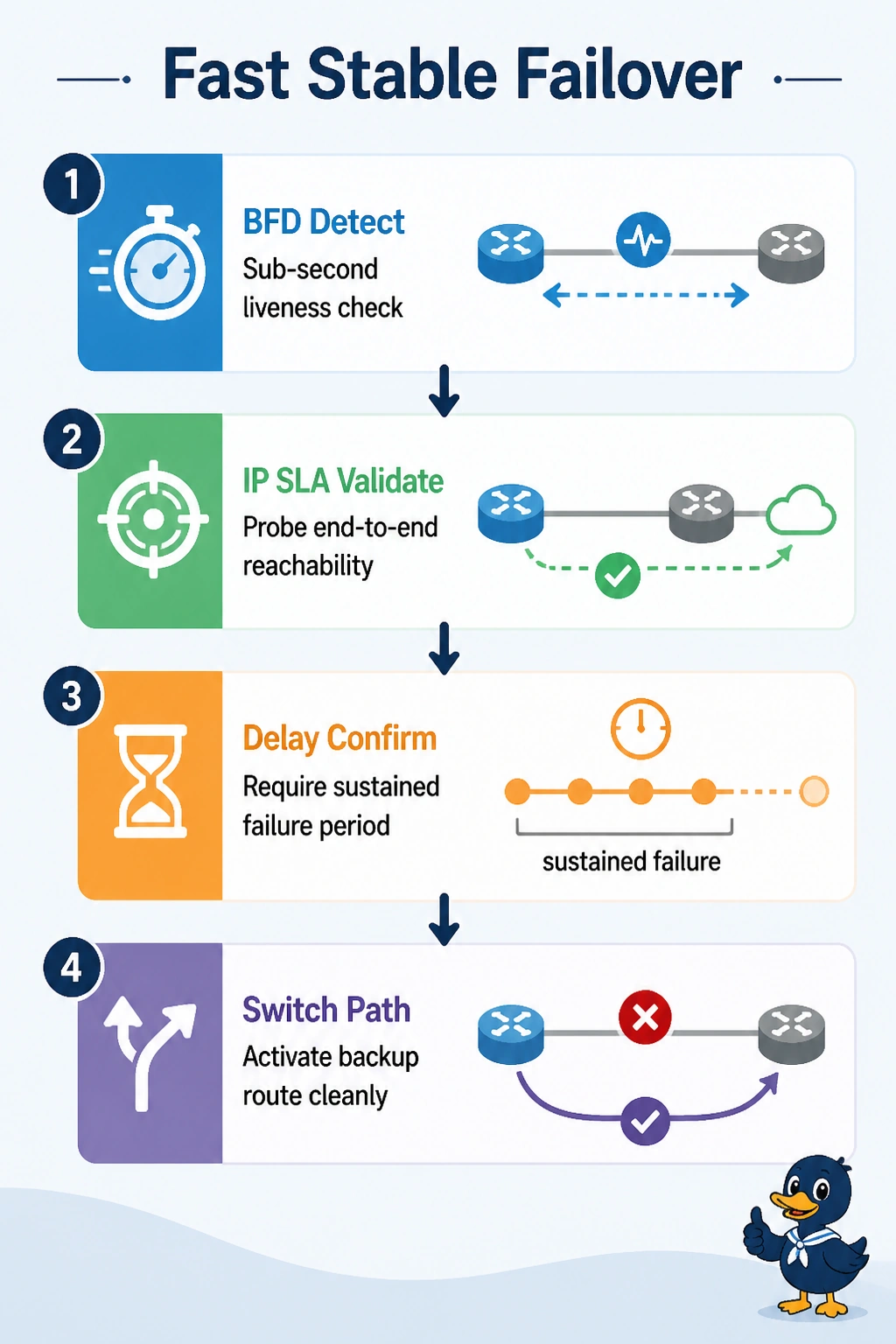
Short Explanation
You're building both a smoke alarm and a calm double-check here. Paired failure detection reacts fast yet waits long enough to avoid false trips.
Full Explanation
Bidirectional forwarding detection provides lightweight sub-second liveness for rapid fault discovery, while IP SLA with delay up and down timers validates sustained degradation before changing the floating static or policy route, which balances speed with dampening against jitter-induced flaps. Relying only on routing holddowns fails by concept because passive timers are slower and do not actively probe end-to-end gateway reachability. Aggressive IP SLA alone with immediate failover fails by concept because single-probe sensitivity triggers churn on transient loss despite meeting speed goals. Tracking local interface state only fails by concept because carrier Ethernet and upstream failures often leave the local link up while the path is broken. For the exam, remember BFD handles fast detect and IP SLA handles intelligent condition plus threshold, and a practical check is to lab-tune intervals and delays against recorded jitter profiles.