
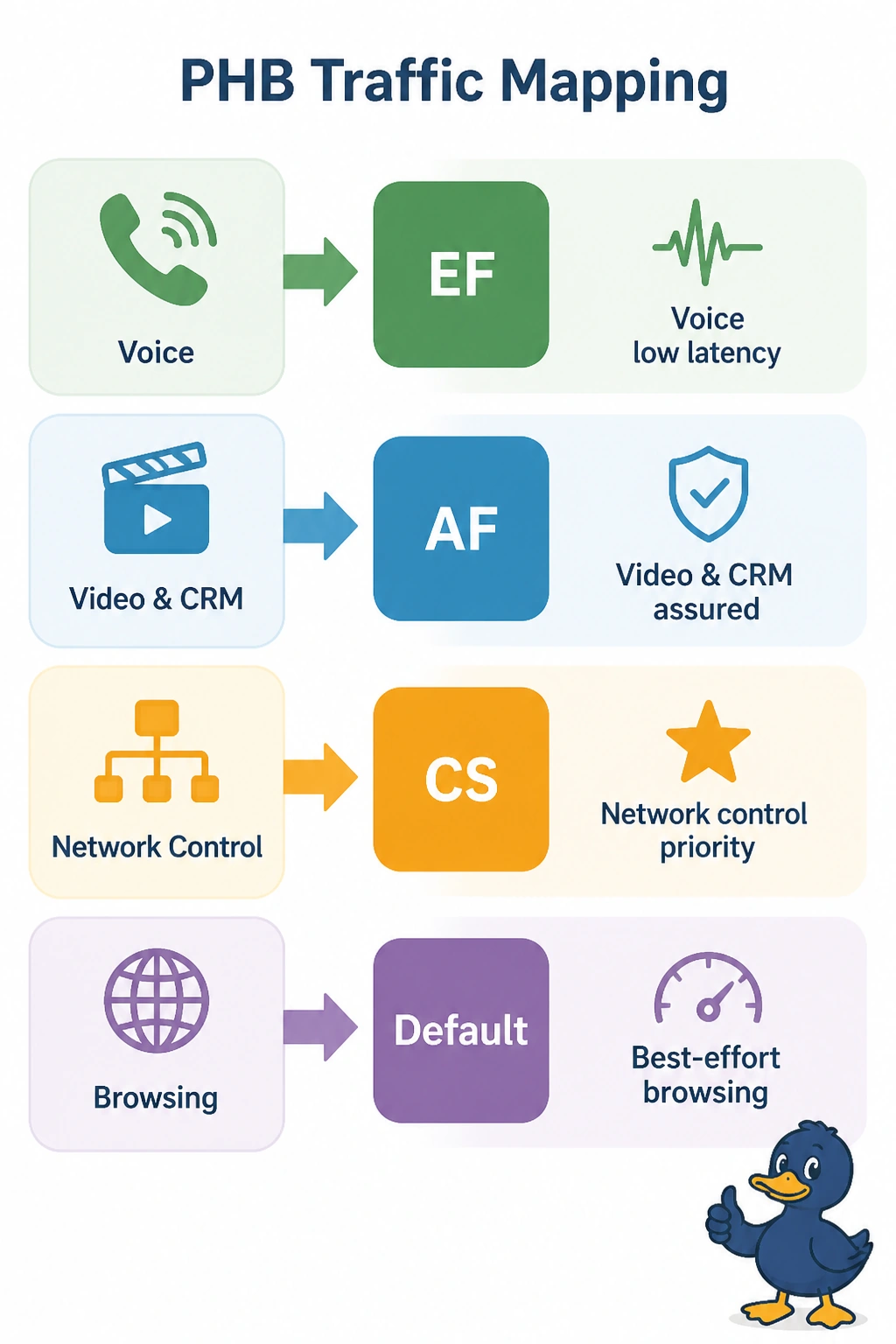
A call center migrates to IP telephony with voice bearer, interactive video, transactional CRM and best-effort browsing sharing a congested WAN. The design must guarantee low latency for voice, assured forwarding for video and CRM, and fair treatment for browsing. Which PHB mapping meets those traffic-class requirements?
Select an answer to reveal the explanation.
Short Explanation
You've got to give the emergency lane to voice while video carpools in assured lanes. This priority-ladder keeps latency-sensitive traffic first and bulk traffic patient.
Full Explanation
The correct mapping follows DiffServ per-hop behavior intent, because Expedited Forwarding provides low loss, latency and jitter for voice bearer, Assured Forwarding classes provide differentiated drop precedence for video and transactional data, Class Selector preserves compatibility for network control, and Default PHB carries best-effort browsing. Assigning EF to video and CS to browsing fails by concept because it inverts priority, starving voice and elevating scavenger traffic. Marking CRM as EF and voice as CS fails by concept because EF is reserved for strict-priority real-time bearer, not transactional data, while CS is for control, not voice media. Marking voice as Default fails by concept because best effort offers no latency guarantee on congested links. Exam caveat: associate EF with voice bearer, AF with bursty assured data and video, CS with control, Default with best effort. Practical check: verify queuing, policing and trust boundaries preserve markings end to end.