
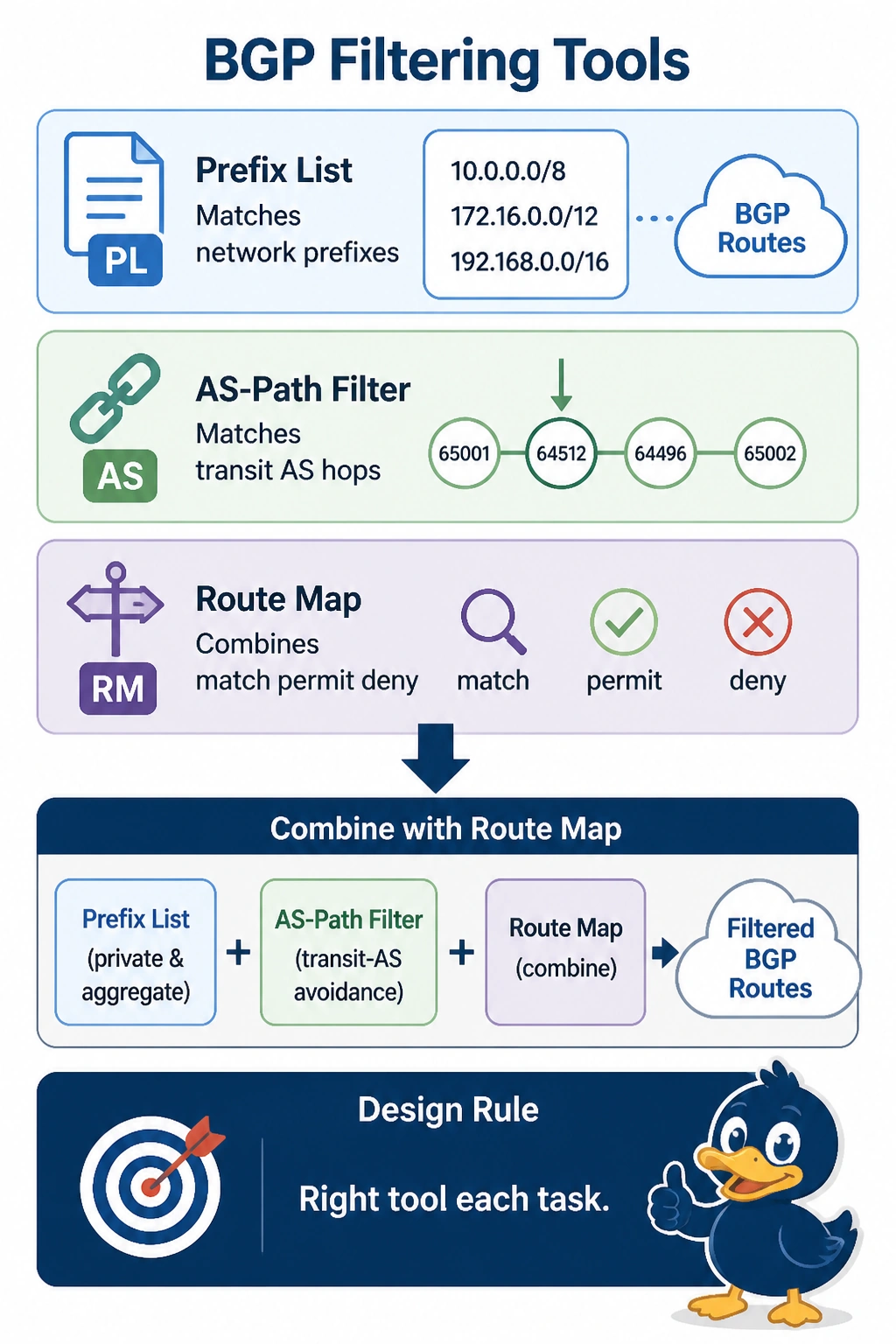
A multihomed enterprise receives full Internet routes from two ISPs and must block private prefixes inbound, limit peer advertisements to its own aggregate, and deny routes with an unwanted transit AS in the path. Which basic BGP route filtering design applies the right tool to each goal?
Select an answer to reveal the explanation.
Short Explanation
You're using the right net for each catch, not one net for everything. This tool-to-task match keeps BGP filtering precise, readable, and safe to scale.
Full Explanation
The correct design uses each mechanism for its strength, because prefix lists efficiently match network prefixes for bogon filtering and advertisement control, AS-path filters match AS-path regular expressions to avoid unwanted transit autonomous systems, and route maps sequence those matches with permit or deny actions and attribute manipulation. Swapping their purposes fails by concept because AS-path filters cannot match prefix values and prefix lists cannot parse AS-path regular expressions. Using only route maps with extended ACLs fails by concept because ACLs are poor for prefix-length logic and obscure intent compared with prefix lists. Claiming prefix lists match AS-paths fails by concept because prefix matching and AS-path matching operate on different BGP attributes and require distinct filter types. Exam caveat: expect scenarios that test whether the condition is a prefix or an AS-path. Practical check: log denied prefixes and test AS-path regex against received paths before applying inbound.