
A retailer is rolling out 200 SD-WAN branches with zero-touch onboarding, centralized templates and monitoring, secure device authentication, and distributed routing decisions. Which mapping of Cisco SD-WAN orchestration, management, control and data plane functions achieves this design?
Select an answer to reveal the explanation.
Short Explanation
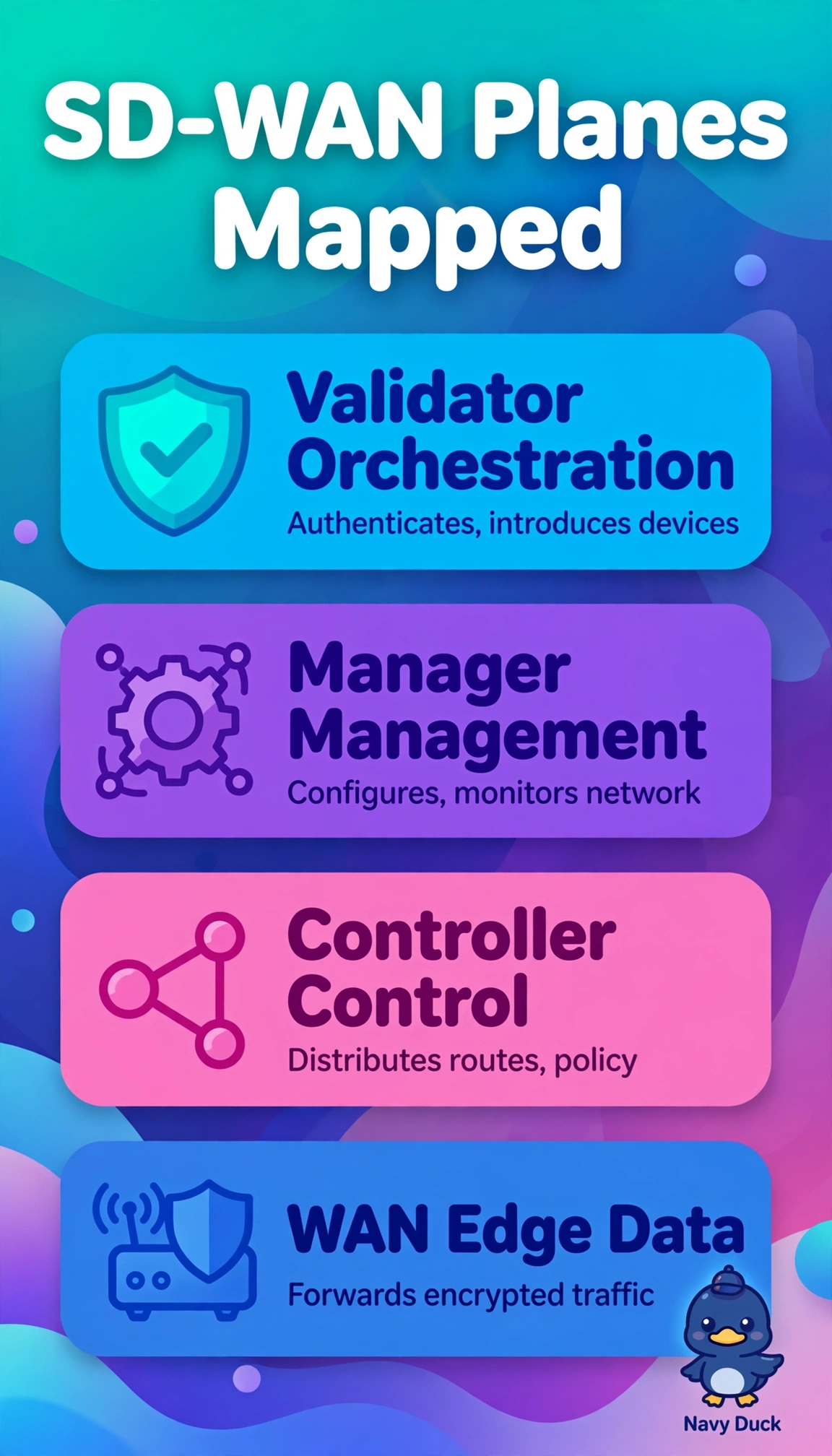
Sorting these boxes keeps your design clean. Validator vouches for identity, Manager supervises, Controller shares directions, and WAN Edge does the hauling on the road.
Full Explanation
Cisco SD-WAN divides duties where the Validator provides orchestration and initial authentication to help WAN Edge devices find the correct Controller and Manager, the Manager provides management plane configuration, templates, and monitoring, the Controller provides control plane route, policy, and security association distribution over secure connections, and the WAN Edge provides data plane forwarding, encryption, and local policy enforcement. Assigning authentication to Manager or Controller, template management to Validator, route distribution to Manager or Validator, or forwarding to Controller breaks this separation because orchestration establishes trust, management defines intent, control distributes reachability, and data executes forwarding. Exam caveat is to distinguish orchestration as introducer and authenticator from management as configurator even though both are centralized. Practical check is to confirm Validator reachability, valid certificates, and that Controllers show expected control connections before pushing centralized policy.