
A service provider manages 2,000 WAN Edges from a single SD-WAN Manager that now suffers slow upgrades, search timeouts, and statistics gaps during peak polling. The team plans a three-node cluster while preserving services. Which Manager cluster scaling description correctly states the role of each node service for this growth?
Select an answer to reveal the explanation.
Short Explanation
Growing pains mean your single brain is overloaded. Spread the load across teammates that each keep a copy — classic divide-and-conquer.
Full Explanation
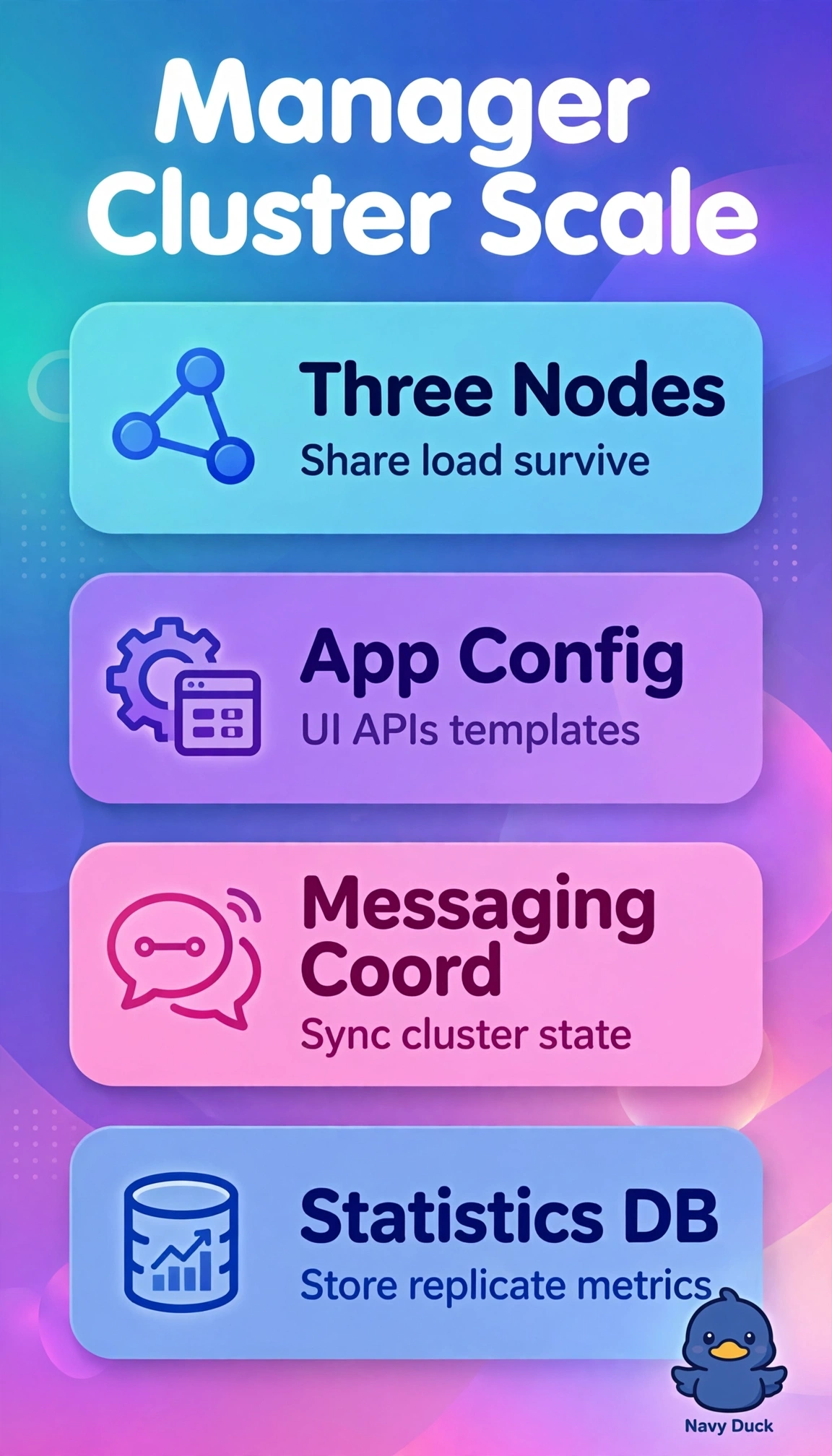
SD-WAN Manager, formerly vManage, clusters as an N-node application tier where each node can host application-server for UI and APIs, configuration-management, messaging, coordination and statistics or database services with replication, so adding nodes distributes polling, storage and processing while surviving a node loss. Assigning OMP reflection, TLOC building or IPsec forwarding to Manager fails by concept because those are SD-WAN Controller and WAN Edge data-plane roles, not management services, just as assigning Validator redirection, DTLS termination or certificate signing to Manager confuses Validator and CA functions with management clustering. Running separate organization names or independent transport tables per node breaks the single-pane cluster domain because all nodes must share org-name, database and VPN 0 reachability. Exam caveat is to follow version-specific cluster bring-up and use the cluster-management interface, and practical check is to verify cluster health, service status and replication on all nodes before peak polling.