
A data-center Edge receives the same 10.50.0.0/16 prefix from two branches over different transports with identical OMP attributes and loss, latency, and weight. Users expect load sharing while preserving deterministic best-path behavior for unequal paths. Which OMP best-path and multipath outcome applies?
Select an answer to reveal the explanation.
Short Explanation
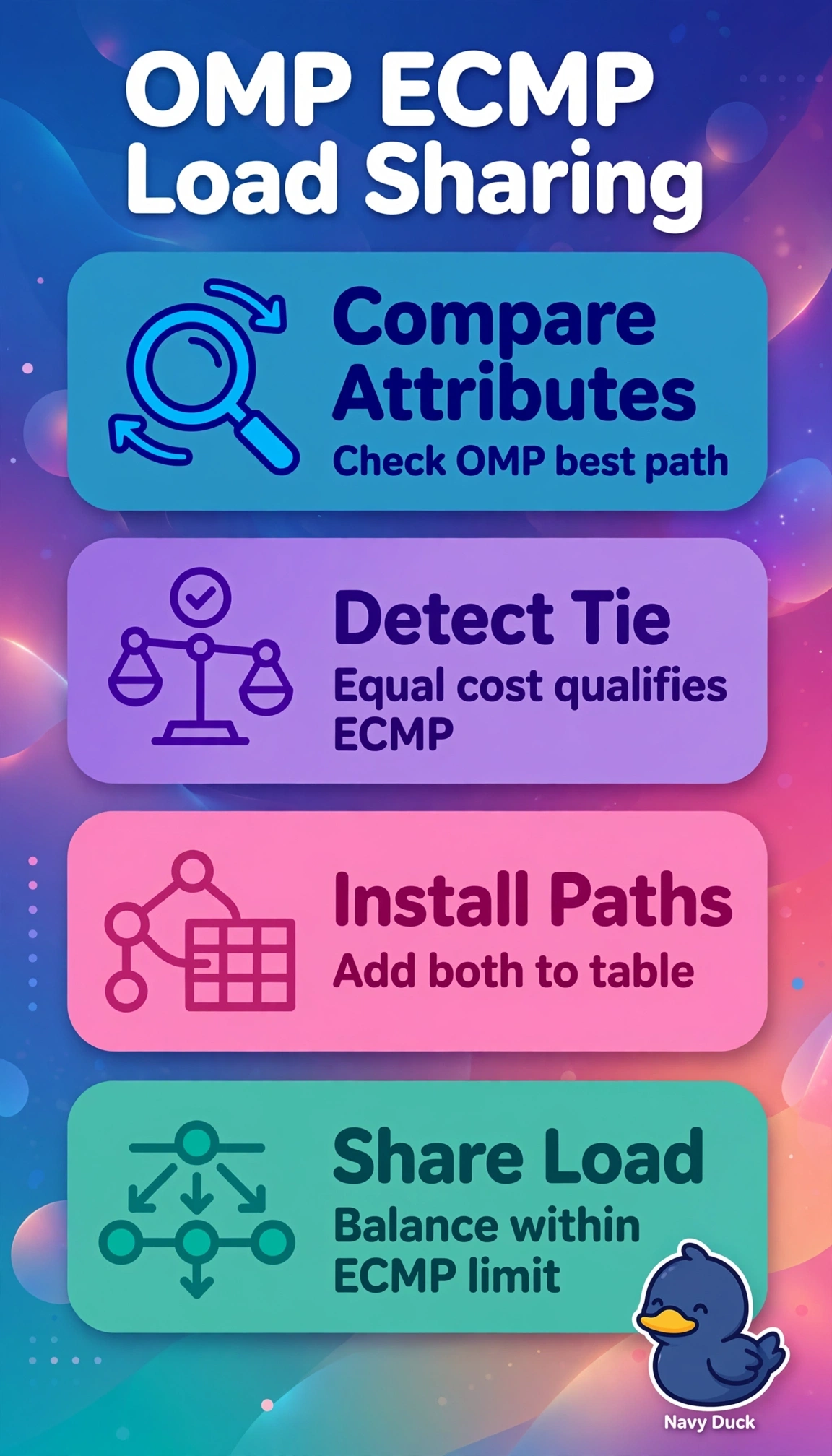
When you've got two perfectly matched routes, you're free to use both at once like two identical checkout lanes. You'll install both equal-cost paths and share the load up to the ECMP limit, while unequal paths still elect a single winner.
Full Explanation
OMP best-path selection compares attributes such as route validity, administrative distance, OMP route preference, TLOC preference, and origin type, and when all tie the prefixes are considered equal-cost so the Edge installs multiple paths for ECMP load sharing subject to platform limits, which is why installing both equal paths is correct; installing only the lowest TLOC IP misunderstands tie-breaking because TLOC IP is not the sole selector when multipath is allowed, pinning all traffic to higher bandwidth ignores the equal-cost result and defeats ECMP, and preferring the higher-loss path has no basis in best-path logic, and when attributes differ one path wins deterministically. The SD-WAN Controller, formerly vSmart, advertises both viable routes so the Edge can multipath. For the exam remember equal attributes enable ECMP while any metric difference elects one best path, and operationally verify with show sdwan omp routes and show ip route vrf for ECMP next hops.