
A retail chain must onboard 120 stores quickly with consistent WAN, LAN and security settings, but junior staff make CLI errors and skip steps. The lead wants guided tasks with validation and reusable site variables. Which Manager capability should the lead use to streamline repeatable onboarding?
Select an answer to reveal the explanation.
Short Explanation
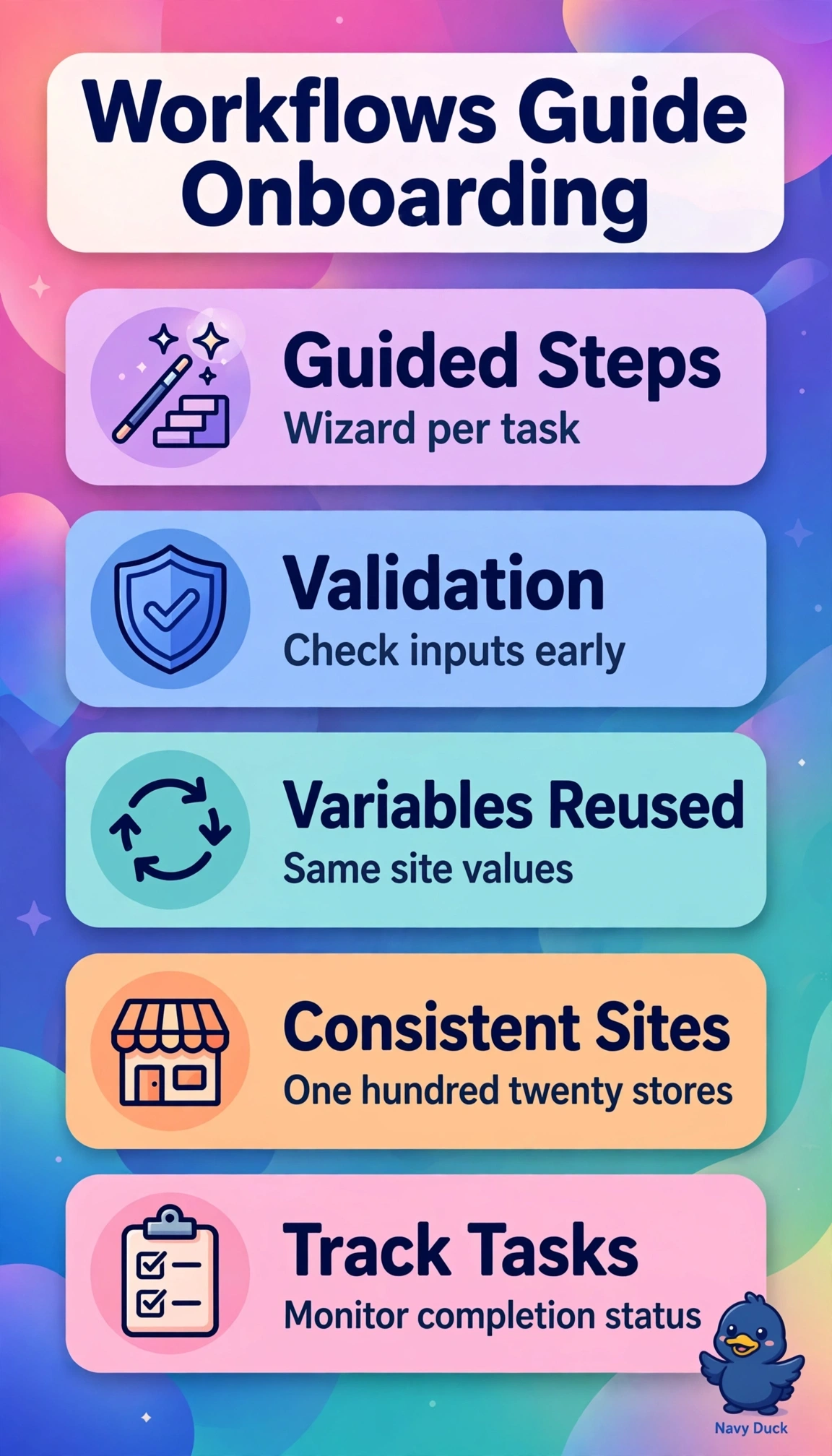
You're giving juniors a GPS instead of a paper map. Workflows walk through each screen, check inputs and reuse variables.
Full Explanation
Workflows in the Manager are the correct choice because they combine ordered guided tasks, input validation, and reusable site variables to enforce consistency across WAN, LAN and security while preventing junior staff from skipping steps or introducing CLI syntax errors during rapid scale to 120 stores. Configuration templates do deploy consistent settings with variables and are widely used for standardization, but they push configuration without orchestrating sequence, checkpoints, or guided user input, so they miss the required step-by-step control. Scheduled bulk deployment jobs do onboard many sites quickly with consistent settings, yet they focus on execution scale and timing rather than interactive guidance and per-step validation, leaving error-prone manual sequencing unaddressed. Custom RBAC roles do reduce risk by limiting what junior staff can change and supporting procedural consistency, but access control alone does not provide reusable variables or validate task completion in order, so it misses automation of the onboarding flow. For exam purposes, distinguish orchestration with validation from distribution mechanisms and from access control, as stems mentioning guided, validated, repeatable tasks with variables point to workflows rather than templates, jobs, or roles. As a practical check, open the Manager capability, confirm it prompts for site variables, enforces order, validates each input, and logs completion before advancing to WAN, LAN and security sections.