
A clinic branch allows USB file transfers and web downloads, but ransomware incidents require blocking known-malicious files and analyzing suspicious ones in the cloud. The WAN Edge has integrated security licensing. Which WAN Edge capability best delivers file reputation and verdicting?
Select an answer to reveal the explanation.
Short Explanation
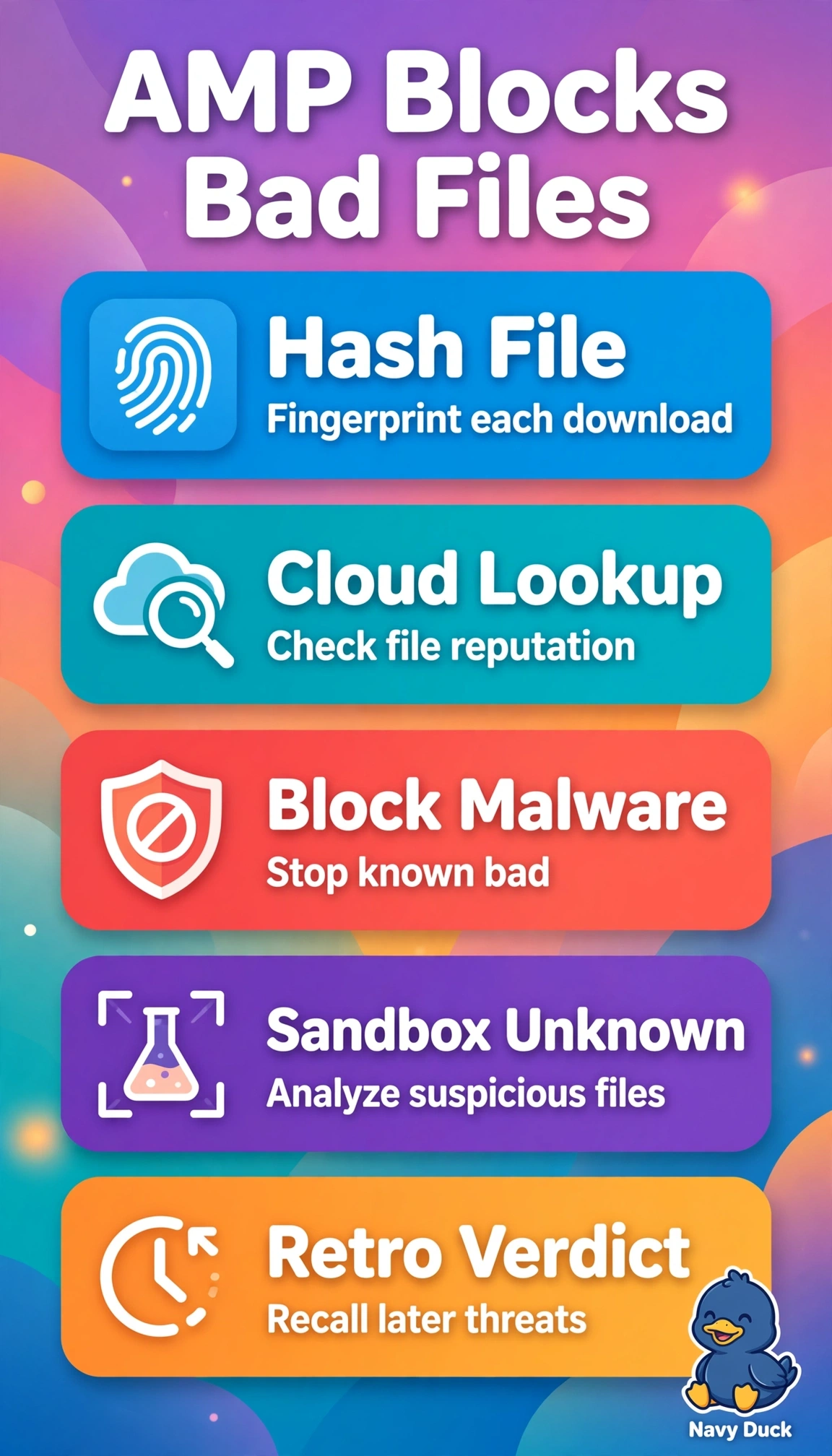
You're hiring a bouncer with a global most-wanted list. AMP lookup checks each file's reputation and recalls it if the verdict turns bad later.
Full Explanation
Advanced Malware Protection on the WAN Edge hashes files traversing the device, queries cloud reputation for known disposition, blocks malicious files and supports retrospective detection plus sandbox detonation for unknown files, which directly addresses executable and document threats in files that cross the WAN Edge, such as web downloads. Zone-Based Firewall with TCP normalization fails by concept because stateful filtering and packet sanity enforce access policy but do not compute file reputation or cloud verdicts. URL Filtering with allow lists fails by concept because web categorization controls destinations rather than analyzing file payload disposition. IPsec encryption with anti-replay fails by concept because tunnel confidentiality and integrity protect transit but provide no malware verdicting. Exam caveat: AMP needs security licensing and cloud connectivity for lookups, and practical check in SD-WAN Manager is to review AMP file events and verify disposition actions and retrospective alerts.