
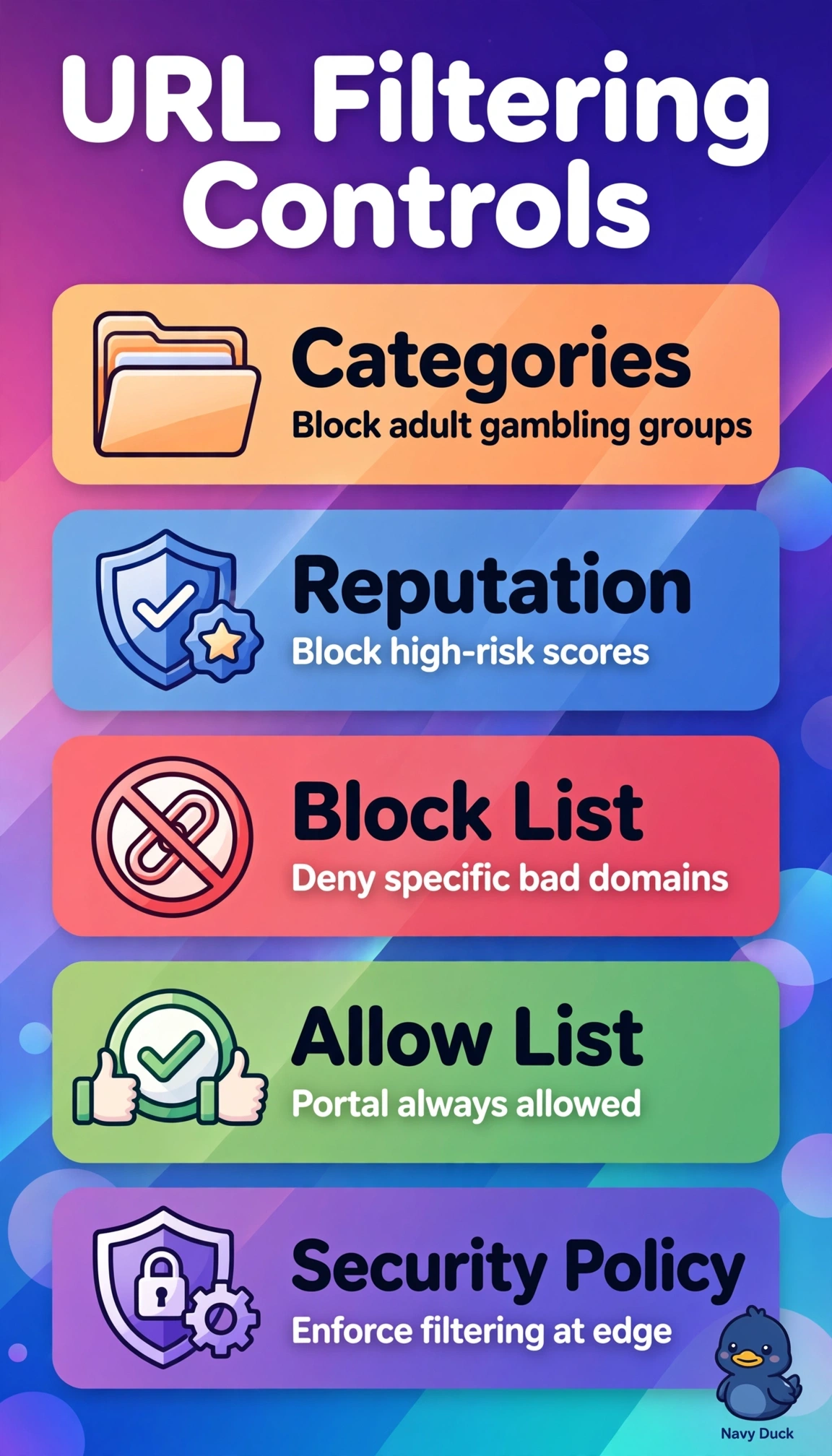
A school district must block adult and gambling sites, block domains with a high-risk web reputation, and always allow the district learning portal even if its category or reputation scores poorly. Which URL filtering design enforces category, reputation and exception needs together?
Select an answer to reveal the explanation.
Short Explanation
You're balancing safety with access, and the allow list saves the day. Like a library with a reserved shelf, a listed exception overrides broad category and reputation blocks.
Full Explanation
The correct design is a security policy with a URL filtering profile that blocks the adult and gambling web categories, applies a web reputation threshold so domains scoring in the high-risk range are blocked, and adds the learning portal to the allow URL list, which is evaluated before category and reputation so the portal stays reachable even when its classification would otherwise block it. Disabling reputation scoring fails by concept because high-risk or newly seen malicious domains outside the blocked categories would then be allowed, missing a stated requirement. Relying on the portal's vendor category fails by concept because it depends on categorization the district does not control, so a low category or reputation score can block the portal, violating the always-allow mandate. A reputation-only design fails by concept because without category controls there is no deterministic way to deny adult and gambling sites regardless of reputation. URL filtering in Catalyst SD-WAN offers block and allow actions for categories and reputation, so the exam-relevant combination is categories, a reputation threshold and explicit allow and block lists. Practical check: validate that adult and gambling test sites are blocked with logging, a known high-risk test domain is blocked, and the portal loads after its category and reputation are forced low.