
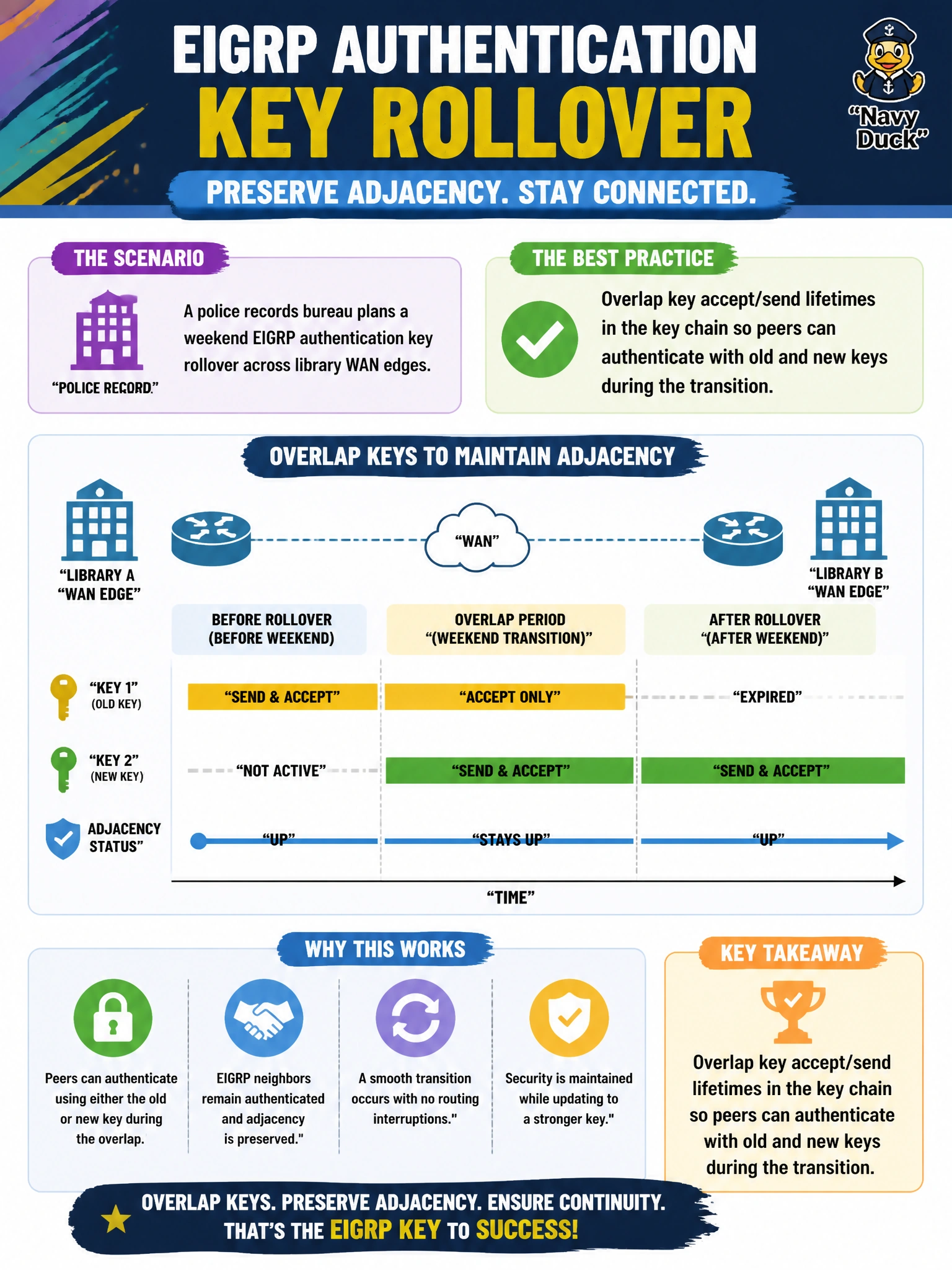
A police records bureau plans a weekend EIGRP authentication key rollover across library WAN edges. What practice best preserves adjacency continuity during the rollover?
Select an answer to reveal the explanation.
Short Explanation
Key rollover is like issuing new building badges while the old badges still work for a day. Overlap the lifetimes so every library edge can still shake hands, then retire the old key. Rip-and-replace with a single key is how you drop neighbors at 2 a.m.
Full Explanation
EIGRP key chains support multiple keys with accept and send lifetimes. Overlapping those lifetimes during a police records bureau weekend rollover across library WAN edges lets peers authenticate using either the old or new key while the fleet transitions, preserving adjacency continuity. After all edges send the new key, retire the old key’s lifetimes. That overlap practice is the standard safe rollover pattern for municipal WAN authentication changes.
Deleting the old key before adding the new key so only one key ever exists risks a window where some peers still send the old key and others expect only the new—dropping neighbors. Disabling authentication on all library links for the weekend removes the protection the key chain was meant to provide and expands the attack/misconfig surface. Changing AS numbers on half the libraries so keys need not match breaks adjacency for a different fundamental reason and does not solve key rollover.
Exam caveat: send versus accept lifetime asymmetry matters—peers must accept what neighbors still send during the overlap; plan the sequence, not just the final key. Operational check: stage overlapping lifetimes on police/library edges, verify neighbors stay up through the send-key switch, confirm all devices send the new key, then remove old key lifetimes and re-verify adjacency and auth counters.