
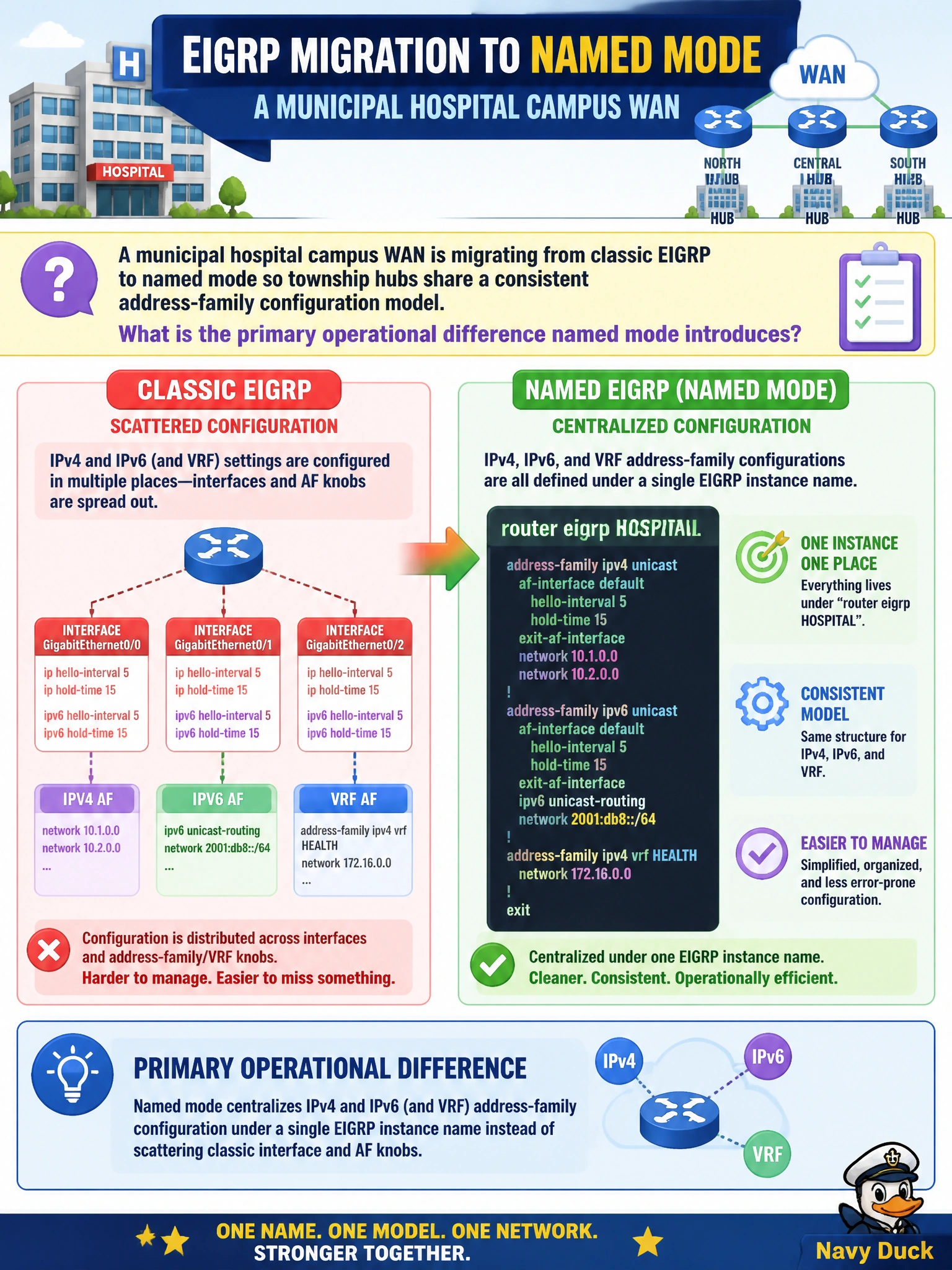
A municipal hospital campus WAN is migrating from classic EIGRP to named mode so township hubs share a consistent address-family configuration model. What is the primary operational difference named mode introduces?
Select an answer to reveal the explanation.
Short Explanation
Classic EIGRP is like sticky notes all over the router—AS here, AF there, interface tweaks everywhere. Named mode is one labeled binder: put the address families under that name and the township hubs finally look the same. Same EIGRP brain, tidier filing cabinet.
Full Explanation
EIGRP named mode’s primary operational difference for a municipal hospital WAN migrating toward consistent township-hub configuration is hierarchical consolidation: a single named EIGRP instance nests IPv4 and IPv6 (and optional VRF) address-family configuration under one process name instead of scattering classic autonomous-system, AF, and interface knobs across the running-config. DUAL, successor selection, and metric concepts remain EIGRP; the change is manageability and a uniform address-family model so dual-stack hospital and township hubs look alike under show and audit.
Claiming named mode removes the need for an AS number and forms adjacencies across any AS fails by concept: peers still must agree on the autonomous-system identity used for that EIGRP domain. Claiming named mode replaces DUAL with OSPF-style link-state flooding fails because the algorithm and update model remain distance-vector/DUAL, not LSA flooding. Claiming named mode only supports stub routers and cannot run on hospital distribution hubs fails because named mode is the modern configuration model for hubs and spokes alike, including stub and non-stub roles.
Exam caveat: migration to named mode can change how metrics are displayed (wide metrics) and where interface commands live; do not confuse a presentation or CLI-hierarchy change with a protocol-behavior rewrite. Operational check after the hospital cutover: compare named address-family configuration across township hubs for IPv4/IPv6 consistency, verify neighbors form under the named process, and confirm critical prefixes remain in the RIB with expected successors before closing the change window.