
A threat hunter inspects a suspicious Windows executable in PE Checker without executing it and notices a section whose virtual size in memory is vastly larger than its raw size on disk. The entry stub decodes a high-entropy region and transfers control into the expanded executable section. What does this structural anomaly most likely indicate?
Select an answer to reveal the explanation.
Short Explanation
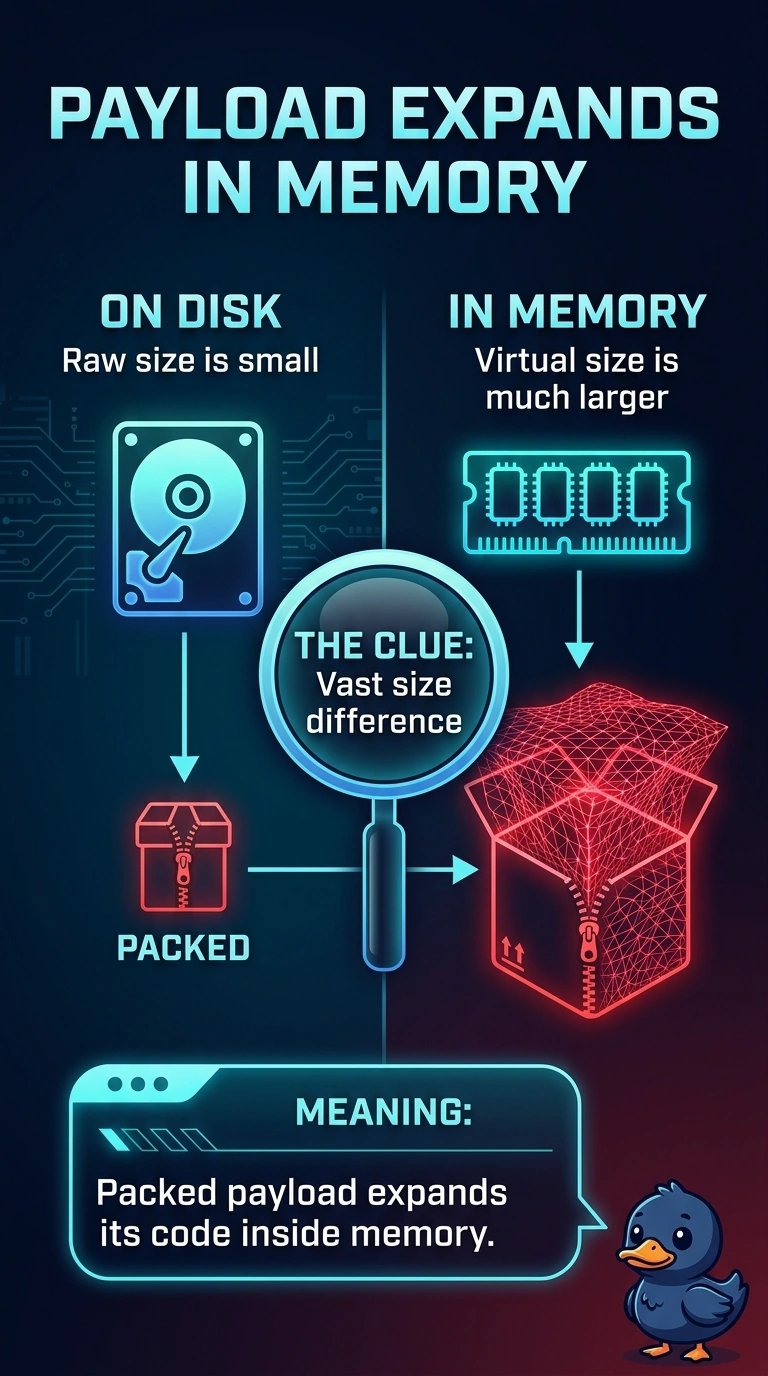
Think of a packed executable like a vacuum-sealed sleeping bag—tiny in the box on disk, but huge once you open it up in memory. The trap is assuming a small file size on disk means harmless code. Spotting a huge gap between raw disk size and virtual memory size in PE Checker is a classic clue that a hidden payload is waiting to unpack itself.
Full Explanation
Portable Executable headers record both the raw byte size stored on disk and the virtual size allocated when the operating system maps the section into memory. A dramatic mismatch where virtual size far exceeds raw size, combined with an entry stub that decodes a high-entropy region and transfers control into the expanded executable section, typically points to A packed or self-extracting payload that expands its code inside memory, because the stub reserves a large buffer to decompress or decrypt the real payload at runtime. Treating the file as A standard digitally signed operating system driver with debug symbols is unsupported because VirtualSize exceeding SizeOfRawData alone is valid for zero-filled uninitialized data and does not establish packing; the decoding stub and executable destination supply the supporting evidence here. Treating the file as A plain-text configuration script accidentally saved with an executable is incorrect because plain-text files do not contain structured PE section tables with virtual memory allocations. Concluding it is A corrupted network download that lacks a valid Portable Executable header contradicts the fact that PE Checker successfully parsed the section headers. As a caveat, legitimate installers also use compression, so check entropy and permissions alongside size ratios.