
A threat hunter reviewing cloud control-plane audit logs suspects that an adversary stole a developer's long-lived API token and is using it from outside the organization. Which hunting technique best surfaces this unauthorized token abuse?
Select an answer to reveal the explanation.
Short Explanation
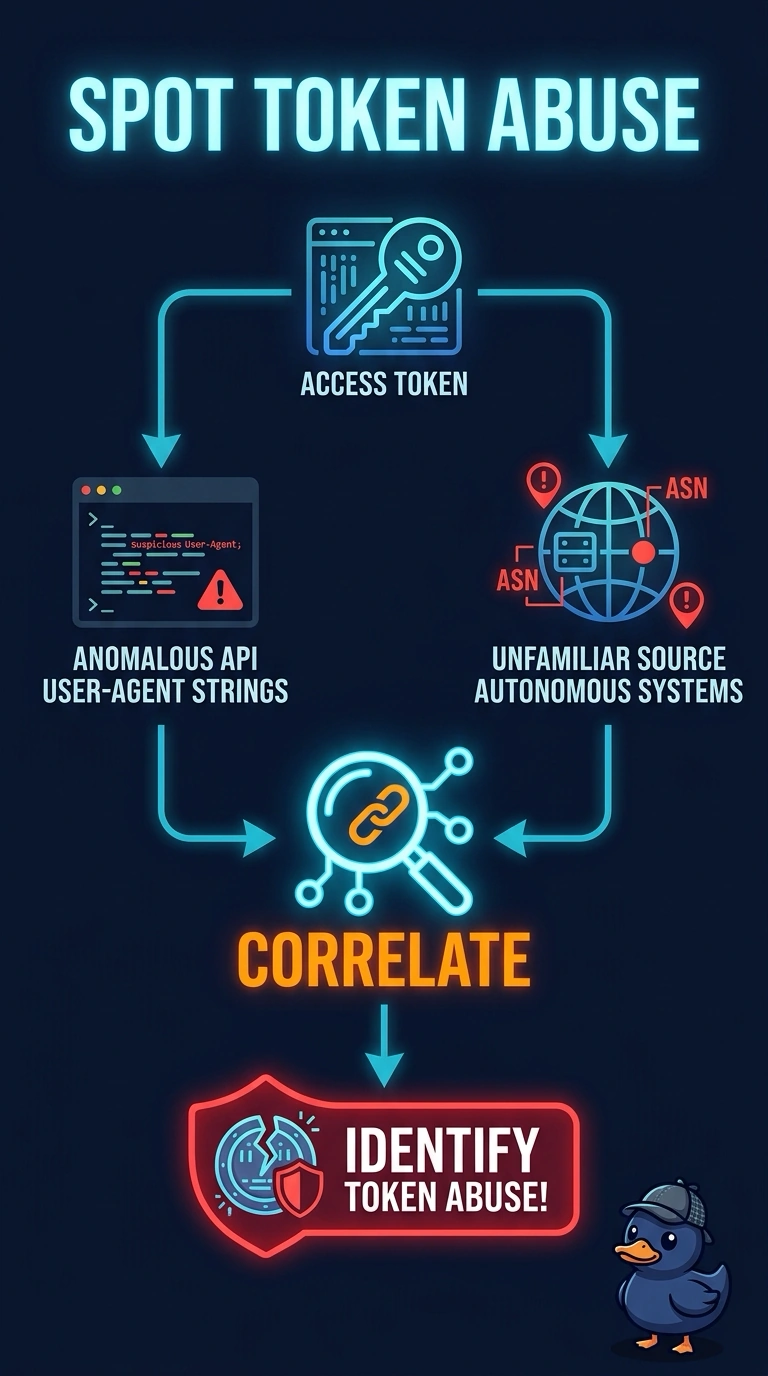
You can catch a stolen cloud token by tracking where its API calls come from and which client strings they use. Correlation of unusual user-agent strings with unfamiliar source networks helps reveal token use from outside your organization.
Full Explanation
Cloud API tokens operate independently of the original endpoint, so an adversary can replay a stolen credential from external infrastructure without touching corporate workstations. Correlating anomalous API user-agent strings with unfamiliar source autonomous systems in cloud control-plane audit logs can reveal scripts or automation frameworks calling APIs from unexpected hosting providers. Inspecting local workstation BIOS versions checks firmware integrity on physical hardware, not cloud identity activity. Blocking outbound ICMP echo requests at the campus perimeter addresses local network diagnostics and does not stop HTTPS-based cloud API calls originating externally. Scanning the developer’s email inbox for expired calendar invites does not reveal active control-plane API use or source-network anomalies. One caveat is that legitimate CI/CD runners or travel VPNs can use unfamiliar autonomous systems, so your baselines should include approved automation. As a practical check, filter cloud audit records for the developer’s token being used outside corporate IP ranges, then verify with the developer whether the recorded user-agent tools match their normal workflow.