
A threat hunter exports 500,000 endpoint process-creation records in JSON format to search for rare parent-child process relationships that might indicate living-off-the-land execution. How should the hunter use Python to surface the highest-priority anomalies efficiently?
Select an answer to reveal the explanation.
Short Explanation
Scanning half a million process logs by hand is like looking for a single misspelled word in an encyclopedia. Writing a quick Python script to count parent-child pairs lets you spot rare, suspicious combinations in seconds. The trap is filtering out built-in utilities when attackers love abusing them.
Full Explanation
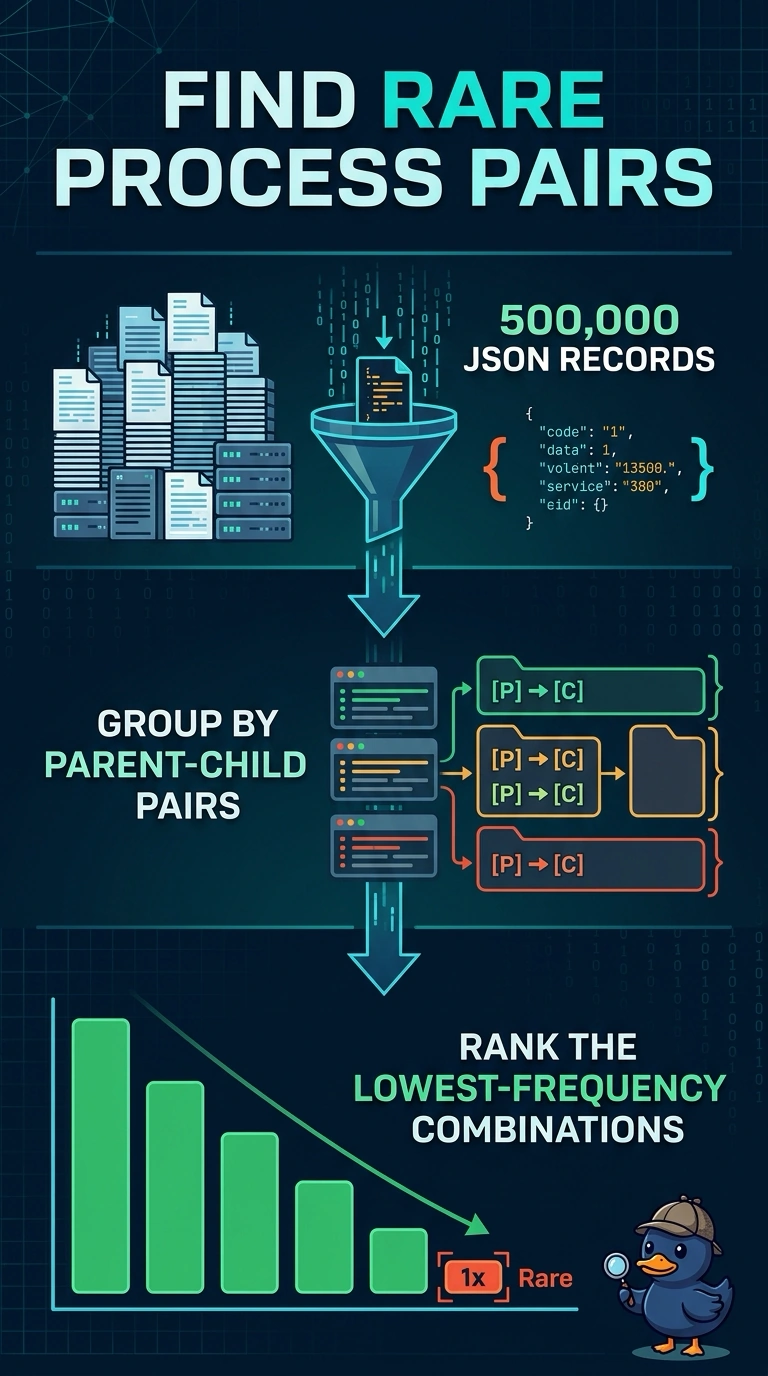
Least-frequency-of-occurrence analysis helps hunters spot anomalous execution in massive datasets, making Group by parent-child pairs and rank the lowest-frequency combinations the most effective Python approach. Normal enterprise workflows produce thousands of identical parent-child pairs, whereas an attacker spawning a scripting engine from a web server or office document appears near the bottom of the frequency distribution. Manually read each JSON record sequentially inside a text editor is impractical at 500,000 records and guarantees analyst fatigue. Sort the records alphabetically by hostname and inspect the first ten lines ignores the vast majority of endpoints and fails to surface behavioral outliers. Delete all records containing built-in Windows utilities before running loops is counterproductive because living-off-the-land attacks specifically abuse native operating system binaries. As a caveat, rare combinations can still represent legitimate one-off administrative tasks or software installers. As an operational check, inspect the full command-line arguments and user context for the lowest-frequency pairs before escalating.