
A threat hunter must estimate the likelihood of successful exploitation against an internal HR server running an unpatched service. The server sits inside an isolated VLAN accessible only through a jump host enforcing hardware-backed MFA. How should these controls affect the likelihood assessment?
Select an answer to reveal the explanation.
Short Explanation
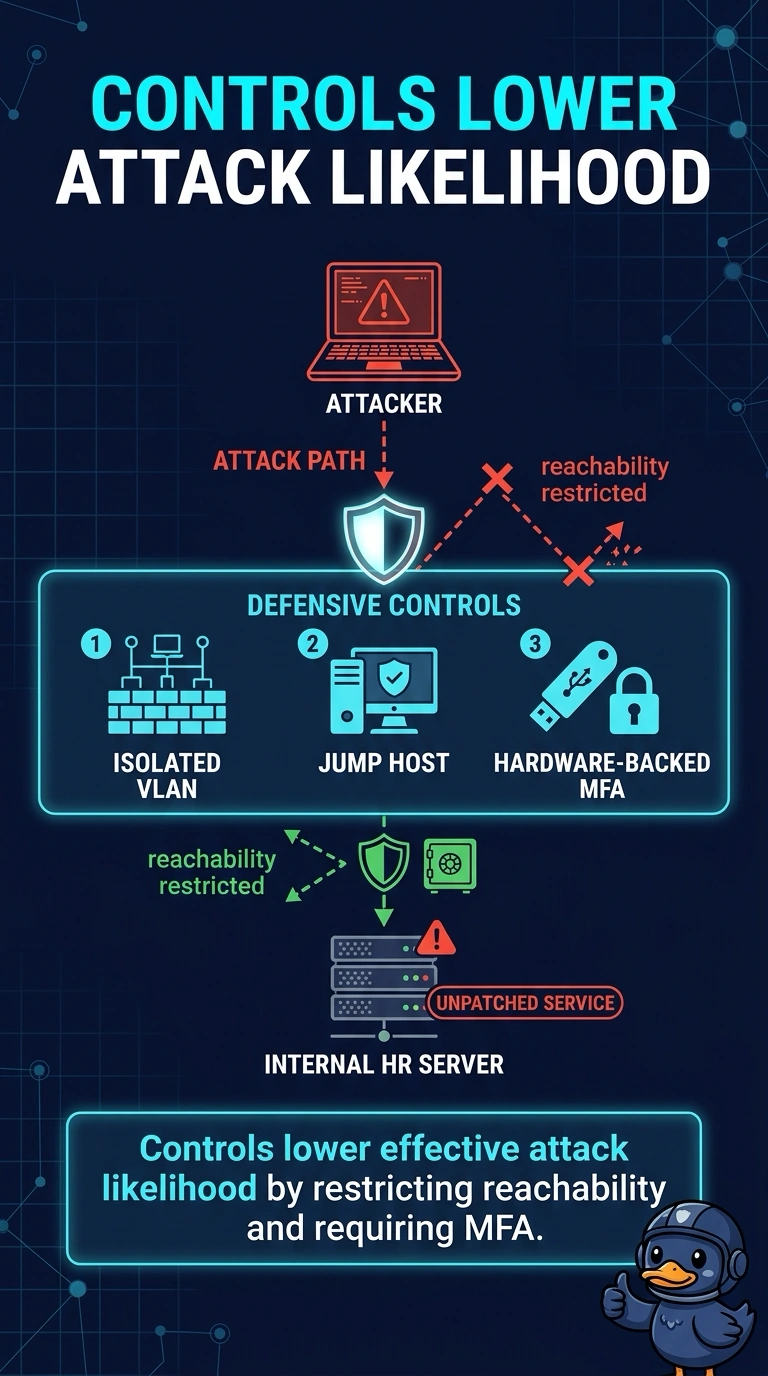
An unpatched lock on a vault door matters far less if the vault sits behind three guarded checkpoints. The trap is treating a raw vulnerability score as your final likelihood, ignoring how segmentation and MFA shrink the reachable attack path.
Full Explanation
They lower effective attack likelihood by restricting reachability and requiring MFA because real-world exploitability depends on whether an adversary can actually reach the vulnerable service and authenticate. Isolating the HR server in a dedicated VLAN behind a hardware-MFA jump host forces an attacker to bypass multiple compensating controls before ever touching the unpatched port. They eliminate all compromise risk completely, allowing the hunter to skip any further monitoring is incorrect because compromised jump-host sessions or insider threats can still reach the segment. They increase the likelihood score because jump hosts automatically expose internal services externally is wrong since properly configured jump hosts restrict rather than broaden network exposure. They have no impact on likelihood because vulnerability severity depends solely on CVSS base scores fails because base scores measure theoretical flaw impact without environmental context. As a caveat, misconfigured firewall rules or shared service accounts can quietly bypass segmentation boundaries. For an operational check, verify the VLAN access control lists and jump-host authentication logs to confirm no direct bypass paths exist.