
A threat hunter at a media company suspects an attacker used a compromised developer token to stage proprietary video assets inside a cloud object storage bucket before exfiltration. Which telemetry source provides the most direct evidence of which objects were read or copied?
Select an answer to reveal the explanation.
Short Explanation
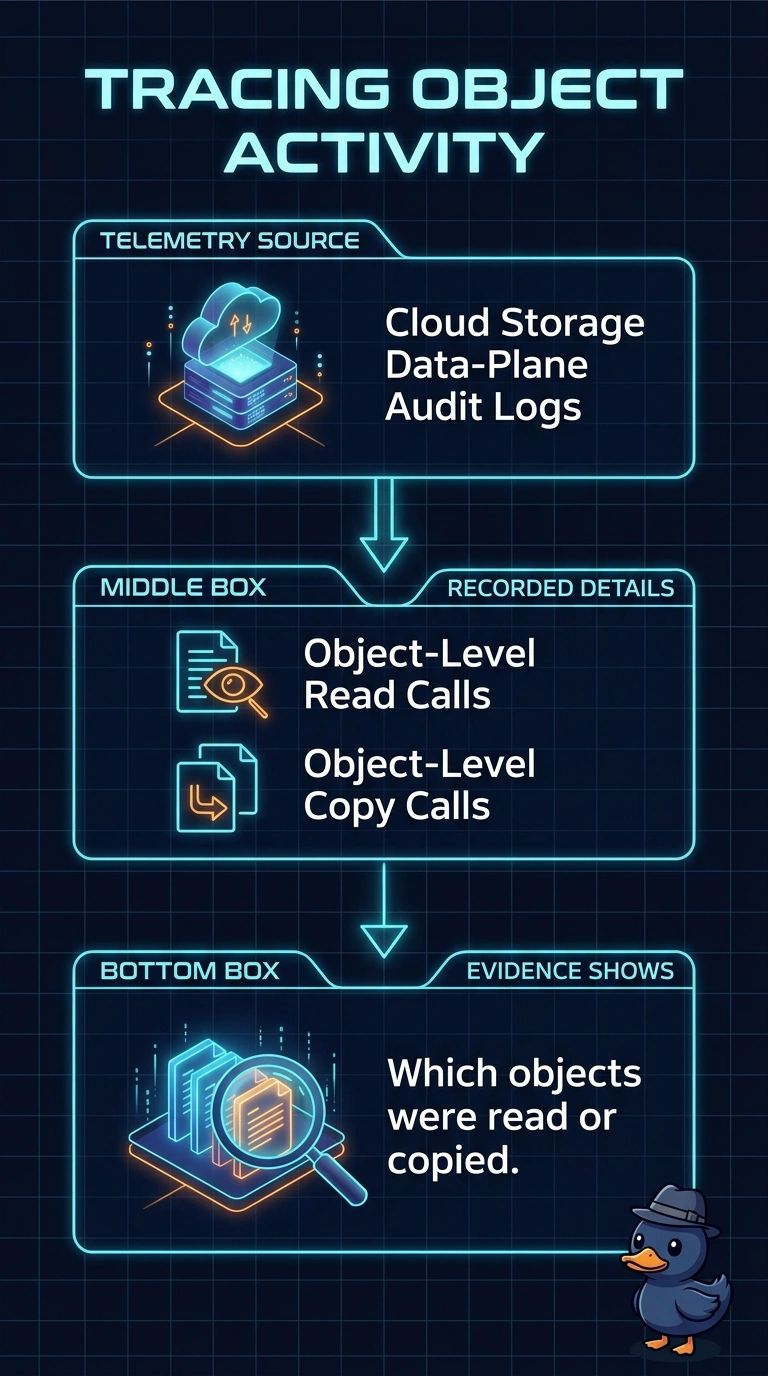
You can think of cloud storage data-plane audit logs as security cameras inside your vault, showing exactly which objects were read or copied. The key is not to rely on workstation or perimeter firewall logs when a stolen token can be used to copy objects directly within the cloud.
Full Explanation
Cloud storage data-plane audit logs recording object-level read and copy calls provide the most direct evidence because they track individual operations against specific buckets and keys. They show which proprietary assets an unauthorized token accessed or copied. Perimeter firewall session logs showing outbound HTTPS connection counts to the cloud region reveal encrypted traffic volumes from the corporate network, not which objects were accessed, and they can miss cloud-to-cloud transfers entirely. Endpoint process-creation logs from the developer’s corporate workstation during business hours do not capture API calls made from an external host using a stolen token. Cloud virtual machine operating system logs tracking local disk utilization and swap activity cannot observe direct API requests to managed object storage. A caveat is that data-plane logging may be disabled by default on high-volume buckets to manage cost, so sensitive repositories may require selective enablement. As a practical check, verify that object-level data-plane logging is enabled on critical buckets, then query for unusual source IP addresses or sudden spikes in object reads and copies.