
A manufacturing security team suspects a newly acquired smart HVAC controller on the plant network contains an undocumented maintenance backdoor, and endpoint agents cannot be installed on the device. Which technique best uncovers hidden accounts or services inside the device?
Select an answer to reveal the explanation.
Short Explanation
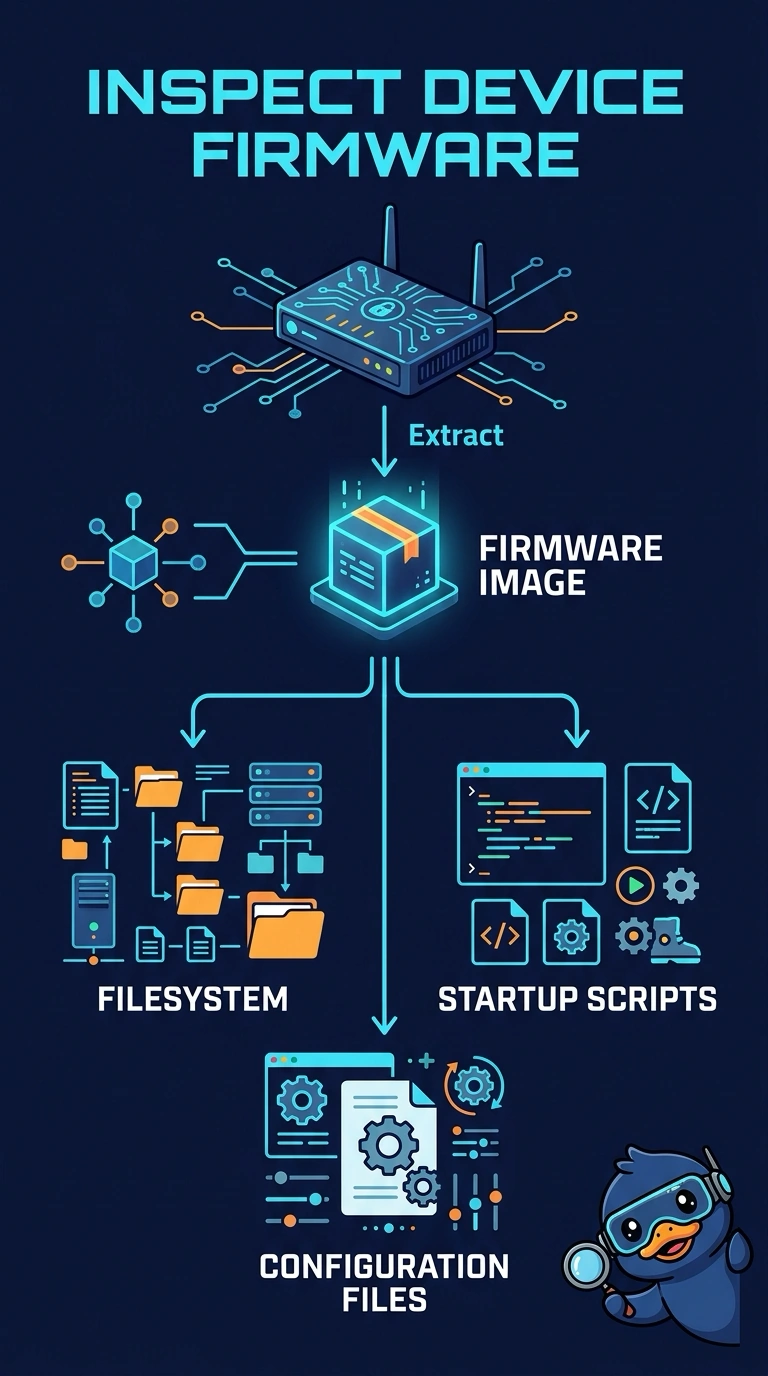
You can uncover hidden accounts and services by inspecting the controller’s firmware, where startup scripts and configuration files may reveal what the device does behind the scenes. Firmware analysis is especially useful when you can’t install an endpoint agent on the controller.
Full Explanation
Extracting the device firmware image and inspecting its filesystem, startup scripts, and configuration files gives you direct visibility into embedded accounts, undocumented listening services, and hardcoded secrets that may never appear in standard host logs. Because IoT devices rarely support third-party security agents, static firmware inspection is essential for uncovering built-in backdoors or unauthorized modifications. Deploying an endpoint detection agent onto the controller’s embedded operating system is not feasible when proprietary, resource-constrained hardware lacks agent support. Scanning the corporate email gateway for phishing messages targeting plant operators misses backdoors embedded in the appliance itself. Reviewing standard Windows domain controller logs for interactive logon failures will not capture local authentication or undocumented services inside an isolated embedded Linux or RTOS controller. One caveat is that encrypted or inaccessible firmware may require vendor assistance or approved hardware acquisition; a signature verifies authenticity but does not by itself hide firmware contents. As a practical check, unpack the firmware image in an isolated lab and audit password files, initialization scripts, and listening-port configurations.