
A threat hunter examines corporate web proxy session logs for signs of covert data exfiltration over HTTPS. TLS is terminated at the trusted web proxy, which logs HTTP methods and byte counts, but full packet bodies are not retained. Which session pattern most strongly warrants deeper endpoint investigation?
Select an answer to reveal the explanation.
Short Explanation
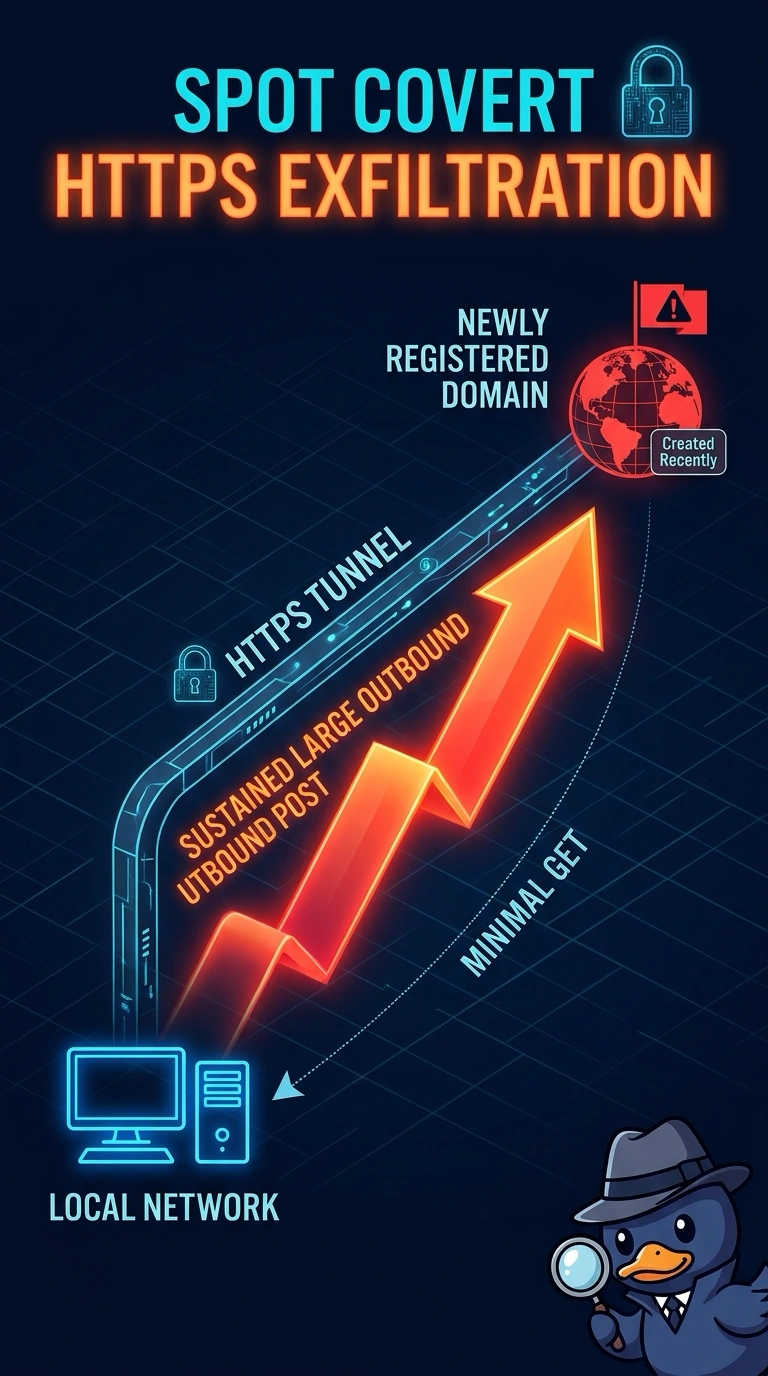
Even when an envelope is sealed, you can still tell when someone is mailing heavy boxes out the back door. Large outbound POST uploads to an uncategorized domain signal potential exfiltration, while the trap is wasting time on routine software downloads or normal browsing.
Full Explanation
Sustained large outbound POST transfers to a newly registered domain with minimal GET traffic strongly indicate covert exfiltration because legitimate web applications rarely upload large volumes to unfamiliar domains without normal interactive browsing. HTTP methods are visible after TLS termination or through trusted application/endpoint telemetry; a passive observer of undecrypted HTTPS sees no inner GET/POST methods, while byte counts and domain reputation remain observable in session metadata. By contrast, Repeated small GET requests fetching static stylesheet files from a well-known content delivery network reflect ordinary web page rendering. Likewise, A single large file download from an approved software vendor domain during a scheduled patch window represents inbound authorized maintenance rather than outbound theft. Finally, Normal web browsing sessions showing balanced request and response sizes across categorized sites align with expected user behavior. As an analytical caveat, legitimate cloud backup utilities or SaaS sync clients can also generate upload-heavy sessions if not excluded. As an operational check, pivot from the proxy session timestamp and source IP to endpoint process telemetry to verify which executable initiated the outbound POST connections.