
A threat hunter at a SaaS company suspects an attacker compromised an internal cloud database instance that lacks a host-based endpoint agent. Which network telemetry pattern in cloud VPC flow logs best supports this hypothesis?
Select an answer to reveal the explanation.
Short Explanation
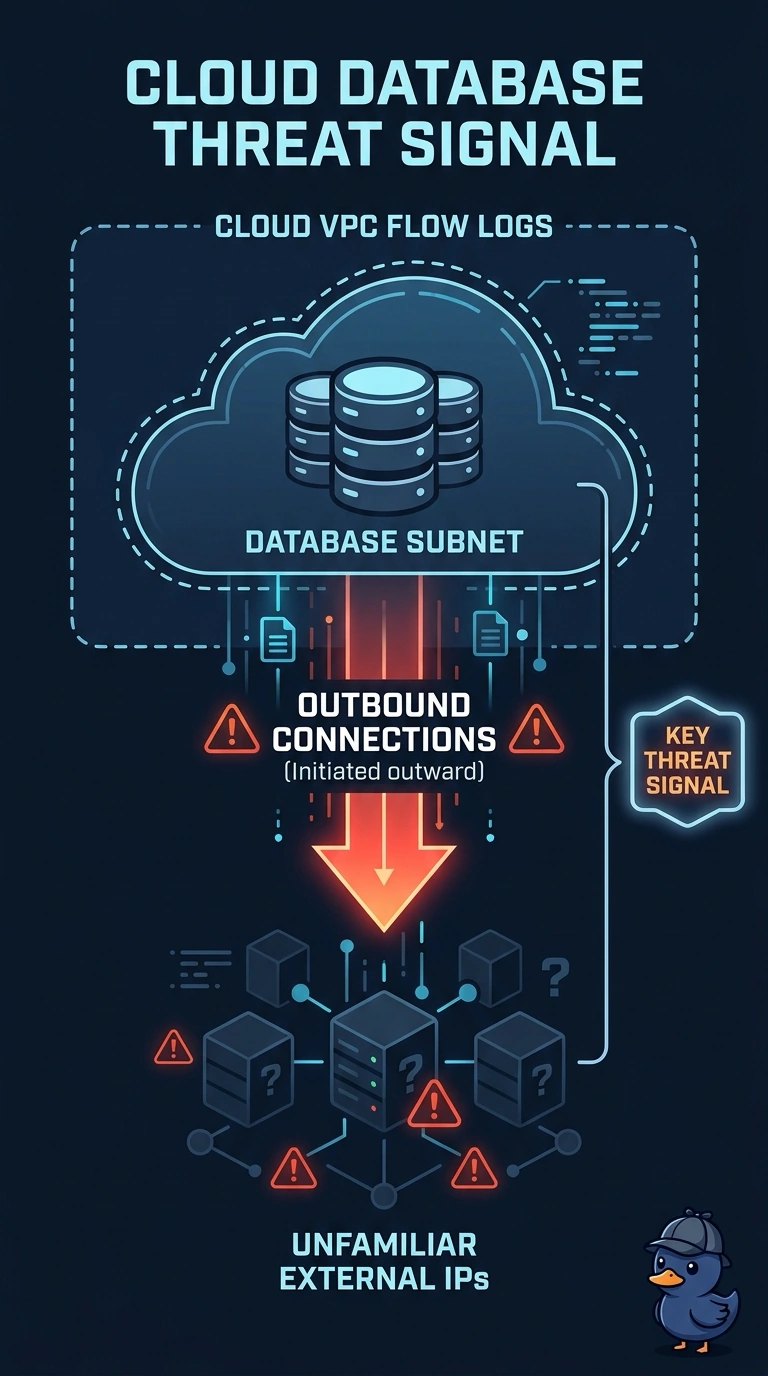
A locked vault should never reach out and call a stranger on the phone. In cloud environments, you should watch for internal database subnets initiating outbound connections, while the common trap is getting distracted by routine perimeter port scans that never reach your backend tier.
Full Explanation
Outbound connections initiated from the database subnet toward unfamiliar external IP addresses strongly indicate compromise because internal database tiers are architected to receive queries rather than initiate internet egress. When an attacker gains execution on a database host without an endpoint agent, reverse shells, tool downloads, or data staging often appear first in cloud flow records as unexpected outbound sessions. By contrast, Inbound TLS connections arriving from the application tier over the standard database service port represent normal expected workload communication. Similarly, Scheduled internal replication traffic flowing between primary and standby database availability zones reflects routine high-availability synchronization rather than unauthorized egress. Finally, Blocked inbound port scans originating from external internet scanners against the perimeter load balancer represent everyday internet background noise that was already stopped at the edge. As an operational caveat, legitimate cloud-managed patching or telemetry endpoints may occasionally require controlled egress through a proxy or NAT gateway. As an operational check, filter VPC flow records for accepted outbound sessions originating from database CIDR blocks and verify every external destination against approved egress allowlists.